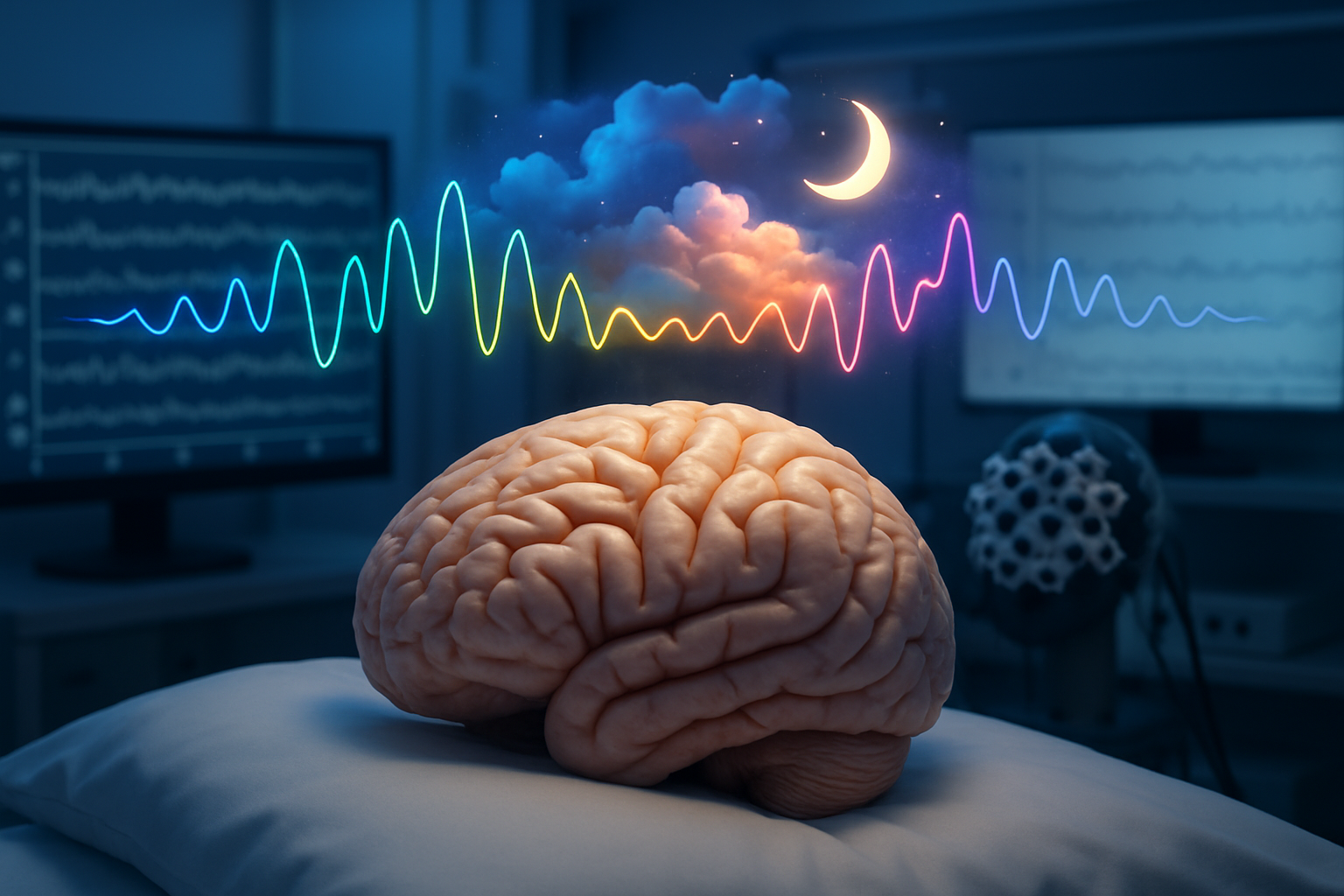
Everyone dreams, but not everyone remembers their dreams. New scientific research is revealing the complex neurobiological factors that determine why some people vividly recall their nocturnal adventures while others claim they "don't dream at all."
The reality is that all humans experience dreams during REM (Rapid Eye Movement) sleep phases, typically occurring multiple times throughout the night. The difference lies not in whether dreams occur, but in the intricate mechanisms that govern dream recall—a process influenced by everything from medication timing to individual brain chemistry variations.
The Medication Connection
Recent research has identified medications as one of the most significant factors affecting dream recall. Antidepressants, particularly selective serotonin reuptake inhibitors (SSRIs), can dramatically suppress REM sleep, the stage when most vivid dreaming occurs. Similarly, sedatives and sleep aids, while helping people fall asleep, often interfere with the natural sleep architecture necessary for dream formation and retention.
"The timing of when you take medications can be just as important as the medication itself," explains a leading sleep researcher. "Some drugs that might suppress dream recall when taken at bedtime could have less impact if administered earlier in the day."
"Some medications, such as antidepressants and sedatives, can affect your dream recall. And timing plays a big role."
— Sleep Science Research, New Zealand
The Timing Factor
Sleep timing emerges as another crucial element in dream recall. The phenomenon isn't simply about getting enough sleep—it's about when that sleep occurs and how it aligns with natural circadian rhythms. Research conducted during the "Therapeutic Revolution of 2026" has revealed that sleep chronotypes are far more diverse than previously understood, challenging the traditional "night owl versus early bird" binary.
Austrian international studies using advanced brain scanning technology have identified multiple distinct chronotypes, each with unique implications for dream recall. What researchers previously dismissed as individual quirks are now recognized as biologically programmed variations that affect not just when people sleep best, but how they process and remember dreams.
The Sleep Architecture Mystery
The complexity of sleep cycles plays a fundamental role in dream recall. Argentine neurologist Conrado Estol's groundbreaking research has debunked common misconceptions about sleep quality, including the myth that falling asleep within five minutes indicates healthy rest. Instead, this rapid sleep onset often signals chronic sleep deficit—a condition that can significantly impact dream recall mechanisms.
During healthy sleep, the brain cycles through light sleep, deep sleep, and REM phases in a carefully orchestrated pattern. Dream recall is highest when people awaken during or shortly after REM periods, when dreams are most vivid and recent. Those who sleep deeply through multiple REM cycles without awakening often lose access to dream memories before they can be consolidated into long-term recall.
Individual Neurological Differences
Emerging neuroscience research suggests that dream recall ability may be partially determined by individual differences in brain structure and function. Some people possess neural configurations that naturally favor memory consolidation during sleep transitions, while others have brain chemistry that prioritizes other functions over dream retention.
These differences aren't necessarily advantageous or disadvantageous—they represent natural human variation. People who don't recall dreams aren't missing out on essential psychological processes; their brains are simply processing nocturnal experiences differently.
Environmental and Lifestyle Factors
Beyond biology and medication, environmental factors significantly influence dream recall. Stress levels, sleep environment quality, alcohol consumption, and even dietary choices can affect both dream intensity and memory retention. The modern digital environment, with its blue light exposure and constant stimulation, has created new challenges for natural sleep architecture.
Recent research has confirmed that individuals spending four or more hours daily on screens face increased risks of sleep disruption, which can cascade into altered dream patterns. The melatonin suppression caused by blue light exposure doesn't just delay sleep onset—it can fundamentally alter the quality and recall of dream experiences.
The Age Factor
Dream recall patterns typically change throughout life. Children and young adults often report more vivid dream recall, while older adults may experience decreased dream memory—though not necessarily decreased dreaming. This shift reflects natural changes in sleep architecture as people age, with older adults spending less time in REM sleep and experiencing more fragmented sleep patterns.
Implications for Sleep Medicine
These findings have significant implications for sleep medicine and mental health treatment. Healthcare providers are increasingly recognizing that dream recall differences aren't pathological but represent normal human variation. However, sudden changes in dream patterns—either increased nightmares or complete dream recall loss—can indicate underlying health conditions requiring attention.
The research contributes to a broader transformation in healthcare approaches, moving away from one-size-fits-all solutions toward personalized medicine that acknowledges individual biological variations. As part of the global "Therapeutic Revolution of 2026," sleep medicine is embracing prevention-first strategies that work with natural human diversity rather than attempting to standardize all patients.
Practical Applications
For individuals interested in improving dream recall, research suggests several evidence-based approaches. Maintaining consistent sleep schedules that align with natural chronotypes, minimizing medication timing conflicts, and creating optimal sleep environments can enhance dream memory. However, experts emphasize that lack of dream recall isn't a problem requiring correction—it's simply one way human brains can function normally.
The key insight from current research is acceptance: some people are natural dream recallers, others aren't, and both experiences represent healthy variations in human neurobiology. Rather than trying to force dream recall, individuals can focus on overall sleep quality and let their natural patterns determine their dream memory experiences.
Future Research Directions
As sleep science continues advancing, researchers are exploring how emerging technologies might offer insights into individual dream patterns without disrupting natural sleep processes. The goal isn't to standardize dream experiences but to better understand the full spectrum of healthy human sleep variation.
This research represents a significant shift in scientific thinking—moving from deficit models that view differences as problems to diversity models that celebrate the range of human neurological experiences. In the realm of dreams, as in many areas of human experience, variation is not just normal but beneficial for our species' overall adaptability and resilience.