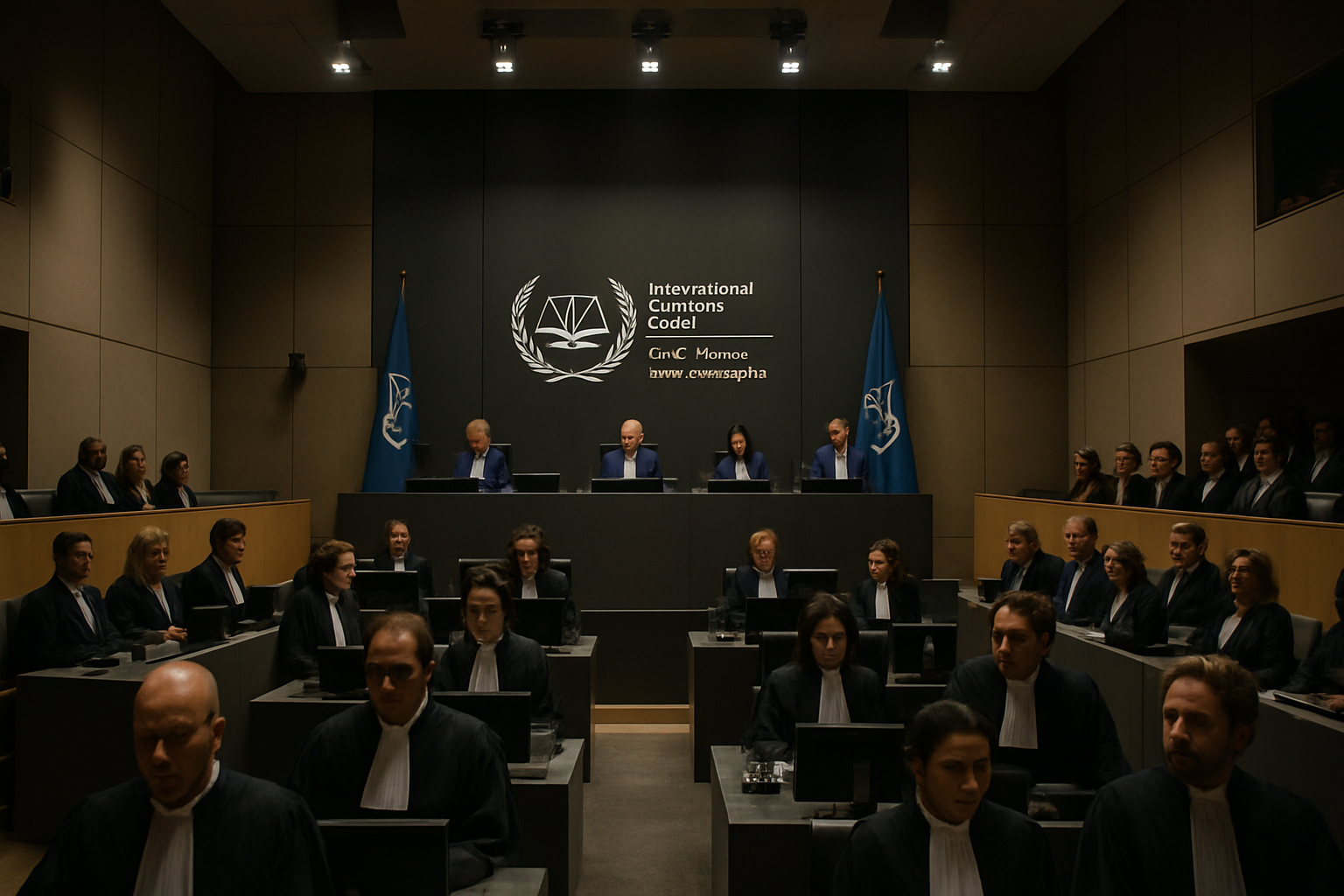
The defense team for former Philippine President Rodrigo Duterte took center stage on the third day of historic confirmation hearings at the International Criminal Court in The Hague, presenting their case against charges of crimes against humanity in what has become the most significant international justice proceedings against a Southeast Asian leader in modern history.
As judges prepare to determine whether there are substantial grounds to proceed to trial, the February 26 proceedings represent a pivotal moment in a case that has captivated international attention and exposed deep divisions within Philippine society over accountability for the brutal "war on drugs" campaign that defined Duterte's presidency from 2016 to 2022.
Unprecedented Scale of International Justice
The confirmation hearings, which commenced February 23, mark a watershed moment for international criminal law in Southeast Asia. Prosecutors have presented evidence alleging Duterte played a "pivotal" role in systematic murders of thousands during his anti-narcotics campaign, with charges extending back to his tenure as Davao City mayor prior to assuming the presidency.
The three counts of crimes against humanity involving murder span both Duterte's presidential term and his earlier period as mayor, representing what prosecutors describe as evidence of a "systematic attack against civilian population" under the Rome Statute definition of crimes against humanity.
More than 500 victims have been granted participation rights in the proceedings - the largest number in ICC history - marking an evolution toward victim-centered international justice. This unprecedented level of victim participation includes families of anti-drug operation victims, communities affected by vigilante killings, and civil society organizations that documented violations throughout Duterte's rule.
Defense Strategy and Jurisdictional Challenges
Duterte's legal team has mounted a multifaceted defense challenging both the court's jurisdiction and the substance of the charges. Central to their strategy is the Philippines' 2019 withdrawal from the ICC, though the court maintains jurisdiction over crimes committed before the withdrawal under Rome Statute provisions.
The former president himself has refused to participate in the proceedings, calling them "illegitimate" and maintaining his defiant stance against what he characterizes as foreign interference in Philippine sovereignty. This non-cooperation strategy has forced prosecutors to rely heavily on documentary evidence, international investigative work, victim testimonies, and civil society documentation.
Legal observers note that the confirmation hearings will determine whether prosecutors have established "substantial grounds" for believing crimes were committed - a lower threshold than the "beyond reasonable doubt" standard required for conviction at trial.
Political Implications and Regional Impact
The proceedings unfold against a complex political backdrop in the Philippines, where Duterte family influence remains substantial, particularly in Mindanao. Current President Ferdinand Marcos Jr. has adopted a more cooperative stance with international institutions while stopping short of explicitly endorsing the ICC proceedings.
Adding to the political intrigue, Vice President Sara Duterte - Rodrigo's daughter - announced her candidacy for the 2028 presidential election, framing the ICC case as an example of foreign interference in Philippine affairs. Her political positioning suggests the international justice proceedings will remain a central issue in Philippine politics for years to come.
"This case represents a critical test of the ICC's effectiveness in addressing alleged crimes by powerful political figures who refuse to cooperate with international justice mechanisms."
— International Legal Expert
Evidence and Prosecutorial Challenges
Prosecutors face significant evidentiary challenges given the non-cooperative stance of the accused and the Philippine government during the relevant period. They have assembled their case through documentary evidence, international investigations, victim testimonies, and extensive civil society documentation of alleged violations.
The charges allege systematic killings, enforced disappearances, and torture carried out by security forces and vigilante groups as part of what prosecutors characterize as a widespread attack against civilian populations. Evidence includes allegations of personal authorization of murders, victim selection processes, and coordination of extrajudicial killings that prosecutors argue constitute crimes against humanity.
Defense attorneys are expected to challenge both the factual foundations of these allegations and the legal characterization of anti-drug operations as constituting systematic attacks against civilians rather than legitimate law enforcement activities.
Broader Implications for International Criminal Law
The Duterte case carries significant implications extending far beyond the Philippines. It represents a crucial test of the ICC's capacity to address alleged state-sponsored violence in Asia, where the court has traditionally had limited reach compared to its extensive African and European case load.
Regional observers throughout Southeast Asia are monitoring the proceedings closely, particularly governments that have implemented similar hard-line anti-narcotics policies. The case could establish important precedents for international law application to state anti-narcotics campaigns that result in civilian casualties.
The European Union has expressed support for the proceedings as part of upholding international criminal law, while some Asian governments remain skeptical, viewing the case through the lens of sovereignty concerns and potential overreach by international institutions.
Victims at the Center
The unprecedented scale of victim participation marks a significant evolution in international criminal justice from earlier tribunals that focused primarily on prosecutorial evidence. The 500+ victims granted participation rights provides a platform for those affected to seek justice after alleged systematic persecution during the "war on drugs."
Victim representatives have emphasized that the confirmation hearings represent more than legal proceedings - they offer recognition of suffering and a pathway toward accountability that has been absent in domestic Philippine forums.
The victim-centered approach reflects broader changes in international criminal law emphasizing restorative justice alongside punitive measures, though critics note the limitations of international proceedings in providing direct reparations to affected communities.
Timeline and Next Steps
The multi-week confirmation hearings are expected to conclude in the coming days, with judicial decisions on trial authorization anticipated within months. If judges determine there are substantial grounds to believe crimes were committed, full trial proceedings could commence, potentially lasting years as one of the ICC's most high-profile cases.
Given Duterte's non-participation, any authorized trial would likely proceed in absentia, continuing the pattern of non-cooperation that has characterized the case since its inception. The absence of the accused, while legally permissible, raises questions about the practical impact and enforcement capabilities of any eventual judgments.
Impact on Philippine Democracy and Regional Stability
The proceedings occur during a crucial period for Philippine democratic institutions, testing the country's relationship with international law while domestic political dynamics continue evolving. The case highlights tensions between national sovereignty claims and international accountability mechanisms in an interconnected world.
International observers note that the outcome will significantly affect the deterrent value of international criminal law in Southeast Asia, where authoritarian tendencies and human rights concerns persist across multiple countries implementing hard-line security policies.
The confirmation hearings represent a defining moment for international justice in Asia, with implications extending well beyond the specific charges against Duterte to broader questions about accountability, deterrence, and the role of international law in addressing state violence against civilian populations.
As judges deliberate on whether to authorize full trial proceedings, the international community watches closely to see whether the ICC can effectively assert its authority in one of its most geopolitically complex cases, potentially setting precedents that will influence international criminal law for decades to come.