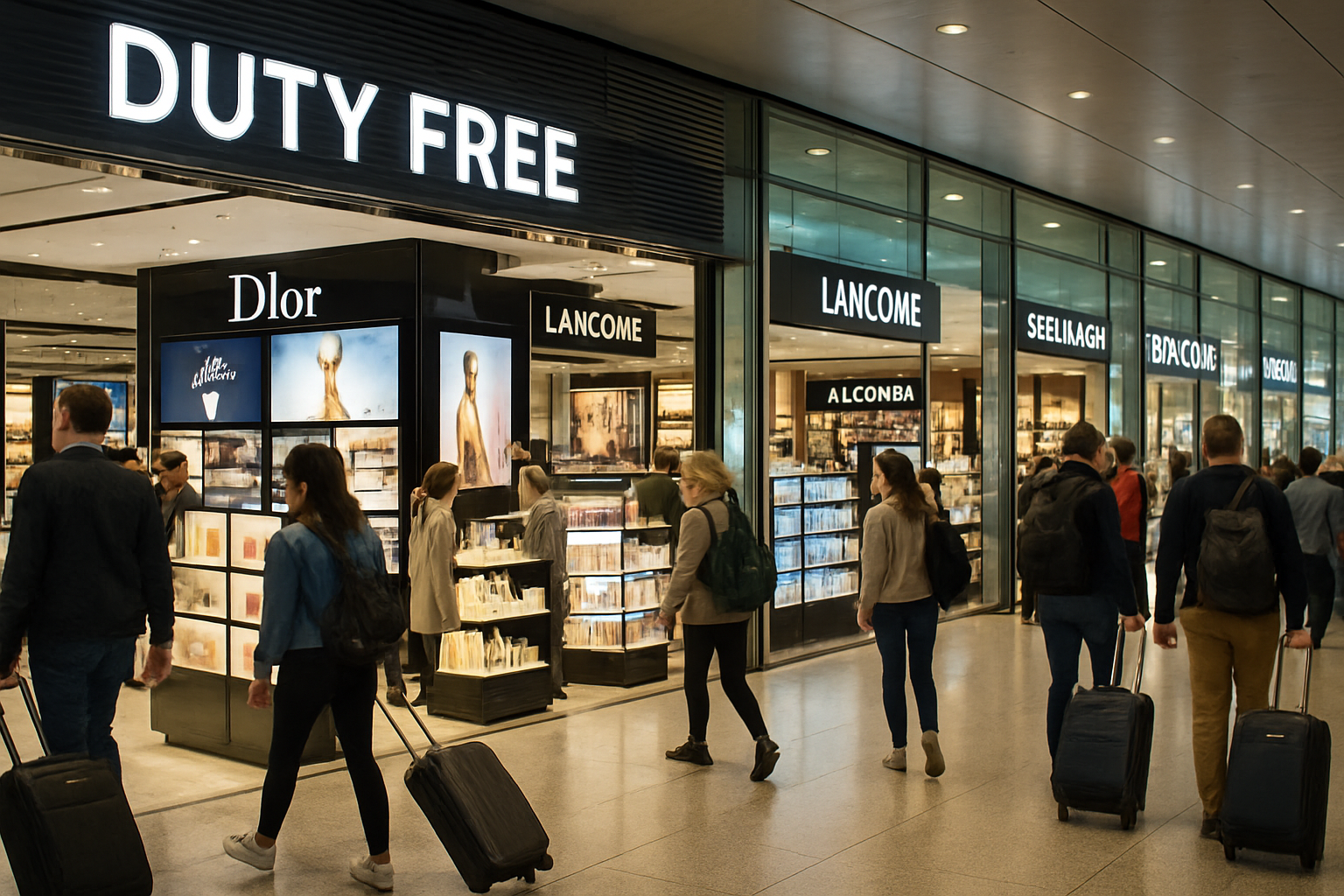
Many travelers find it tempting to shop at airports, but can you really get a bargain at the so-called duty-free shops? As global travel continues its post-pandemic recovery and consumer spending patterns shift, this question has become more complex than ever before.
The duty-free shopping experience, once a hallmark of international travel, faces unprecedented challenges in 2026. From evolving tax structures to changing consumer preferences, the traditional advantages of airport retail are being questioned by increasingly sophisticated travelers.
The Changing Landscape of Airport Retail
Airport duty-free shopping has undergone significant transformation in recent years. What began as a simple tax exemption for international travelers has evolved into a complex retail ecosystem worth billions of dollars globally. However, the value proposition for consumers has become increasingly murky.
Traditional duty-free savings were most pronounced on items with high tax rates – tobacco, alcohol, and luxury goods. But as tax structures have evolved globally and online shopping has become ubiquitous, the competitive advantage of airport retail has diminished considerably.
The post-pandemic travel recovery has further complicated the landscape. Airlines and airports, facing reduced revenues, have increasingly relied on retail partnerships to generate income. This shift has sometimes prioritized revenue over consumer value, leading to pricing strategies that may not always benefit travelers.
Chinese Travelers Leading the Recovery
Recent data reveals that Chinese travelers have emerged as the highest-spending airport passengers in the Asia-Pacific region, outspending the regional average by 100% on luxury goods, gifts, and food. This trend has significantly influenced airport retail strategies across major international hubs.
"Chinese passengers logged the highest spend per passenger across all demographics in the region, spending twice the regional average on luxury items, driving post-pandemic airport retail recovery."
— Airports Council International Asia-Pacific Study
This spending behavior has created a two-tiered market where premium brands cater to high-spending travelers while traditional duty-free savings may be less attractive to budget-conscious consumers.
The Reality Check: When Duty-Free Isn't Cheaper
Contrary to popular belief, duty-free doesn't always mean cheaper. Several factors have eroded the traditional price advantages:
- Limited Competition: Airport locations often feature monopolistic retail environments with limited price competition
- High Operating Costs: Airport rent and operational expenses are among the highest in retail, costs often passed to consumers
- Currency Fluctuations: International pricing can be affected by exchange rate variations
- Product Selection: Limited inventory may not include the most competitively priced options
Smart travelers increasingly compare prices before traveling, using apps and websites to track duty-free pricing against local retail and online alternatives.
What Still Offers Value
Despite these challenges, certain categories continue to provide genuine savings in duty-free environments:
- Premium Alcohol: High-end spirits and wines often remain competitively priced due to significant tax savings
- Tobacco Products: Despite health concerns, cigarettes and cigars typically offer substantial savings in duty-free
- Regional Specialties: Local products unavailable elsewhere can provide unique value beyond pure price savings
- Last-Minute Convenience: Items needed for immediate travel, despite higher prices, offer convenience value
The Impact of Global Travel Disruptions
The aviation industry has faced unprecedented challenges in 2026, from severe weather disruptions affecting major hubs to geopolitical tensions closing airspace across entire regions. These disruptions have significantly impacted duty-free retail operations.
Recent crises, including the complete closure of Dubai International Airport - the world's busiest - and massive flight cancellations affecting over 18,000 flights globally, have highlighted the vulnerability of airport retail models that depend on consistent passenger flow.
Technology and the Future of Airport Shopping
Modern airports are increasingly integrating technology to enhance the shopping experience. Digital platforms now enable global sharing of duty-free pricing, making price comparisons more transparent than ever before.
Some airports have implemented sophisticated management systems, like Rome's Trevi Fountain model, which generates €6 million annually while managing crowds - a template that could be adapted for retail space optimization.
Regional Variations and Strategies
The value of duty-free shopping varies significantly by region and airport. Asian airports, particularly those in Hong Kong and Singapore, continue to offer competitive pricing on luxury goods, while European airports may focus more on convenience and experience.
Infrastructure investments exceeding $570 billion globally in 2026 have created new opportunities for enhanced retail experiences, but haven't necessarily translated to better prices for consumers.
Smart Shopping Strategies for Modern Travelers
To maximize value from airport duty-free shopping, experts recommend:
- Research prices before traveling to establish baseline comparisons
- Focus on items with traditionally high tax rates for genuine savings
- Consider the total cost including currency conversion fees
- Factor in convenience value for last-minute purchases
- Be aware of customs limits and restrictions at your destination
The Verdict: Buyer Beware
The golden age of guaranteed duty-free savings has largely passed. While opportunities for value still exist, they require more discerning shopping strategies than in previous decades. The most successful airport retail experiences now combine convenience, unique product access, and selective price advantages rather than across-the-board savings.
As global travel continues its complex recovery amid economic uncertainties and changing consumer behaviors, duty-free shopping remains a fixture of international travel - but one that demands more sophisticated consumer awareness than ever before.
For travelers in 2026, the key is managing expectations: duty-free shopping can still provide value, but success requires research, selectivity, and an understanding that the landscape has fundamentally changed from the days when airport shopping was automatically synonymous with bargains.