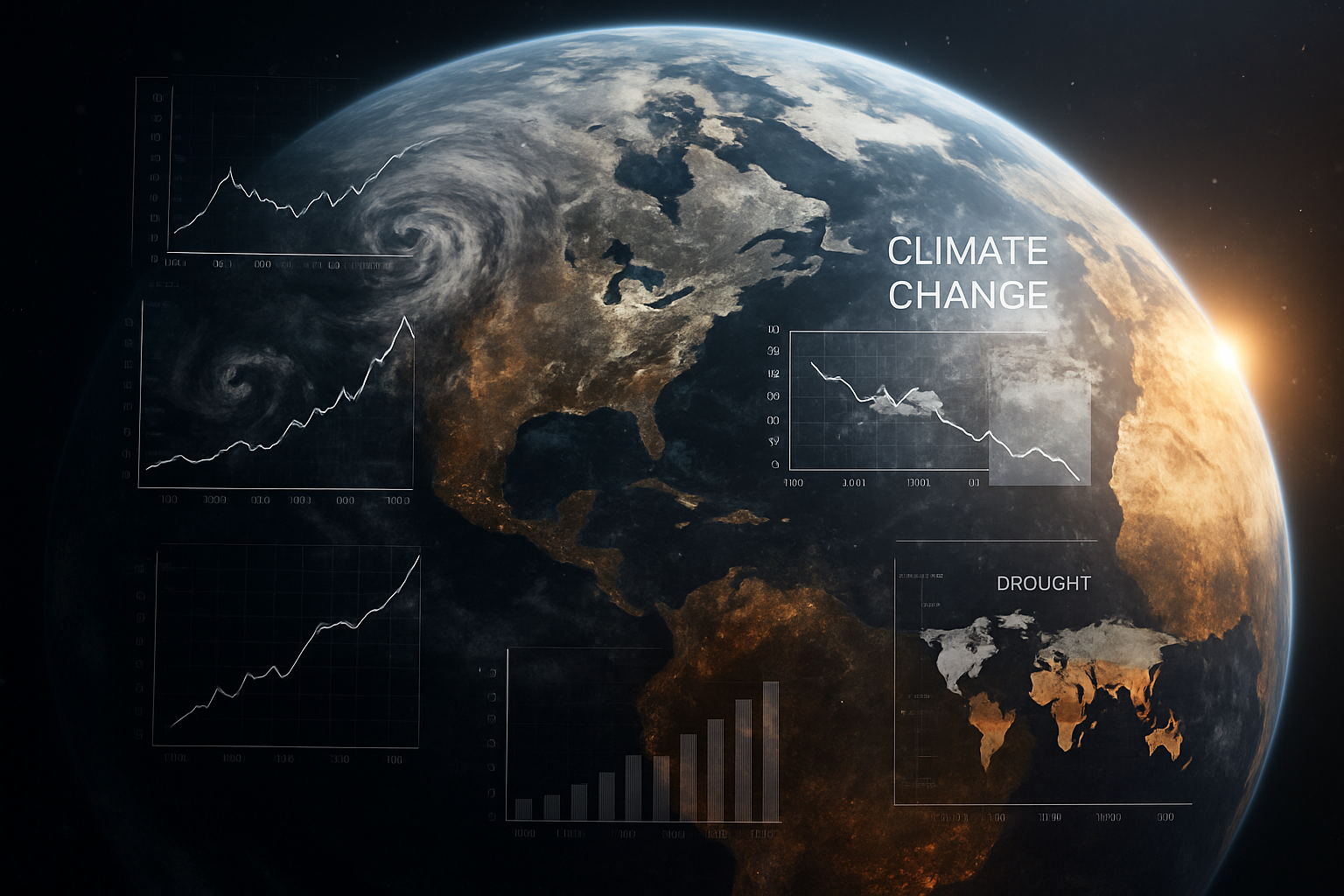
Climate scientists have issued their most urgent warning yet, declaring that Earth is entering a climate phase that may no longer support human survival as dangerous tipping points approach faster than previously anticipated.
The alarming assessment comes from top researchers who warn that our planet is shifting toward irreversible changes, with potential "hot house" scenarios where extreme greenhouse conditions could accelerate beyond human control. The warnings emerge as January 2026 was confirmed as the hottest month in recorded history, marking the 18th consecutive month exceeding 1.5°C above pre-industrial levels.
Critical Tipping Points Accelerating
According to recent reports from Finland's climate research community, the likelihood of climate tipping points has become increasingly probable. Once these tipping points occur, stopping climate warming becomes exponentially more difficult, potentially triggering cascading effects across Earth's interconnected systems.
Dr. Hans Joachim Schellnhuber's research, published in the journal "One Earth," confirms that humanity has pushed planetary systems closer to irreversible changes than previously understood. His findings provide scientific justification for the unprecedented scale of climate investment now required globally.
"The research confirms dangerous climate tipping points are approaching faster, with potential hot house scenarios where extreme greenhouse conditions accelerate beyond human control."
— Climate Research Institute Analysis
Regional Health Impacts Already Visible
Portugal is experiencing the devastating reality of these climate shifts firsthand. A new report points to increasing mortality from extreme heat in Galicia and northern Portugal, with urban planning identified as crucial for human survival. Report director emphasizes that municipal councils must decide "how and where to build," noting that 80% of factors influencing human health depend on urban planning decisions.
The intersection of climate change and public health has reached a critical threshold, with extreme heat events becoming more frequent and deadly across European regions that were historically temperate.
Global Temperature Anomalies Defy Natural Cycles
The climate data presents a sobering picture: despite La Niña conditions that should provide cooling effects, global temperatures continue to shatter records. This warming trend now overrides natural climate variability, indicating that human-driven climate change has fundamentally altered Earth's atmospheric systems.
January 2026's temperature milestone affects millions across small island developing states through extreme weather, sea level rise, and ecosystem disruptions. The Western Pacific has recorded 2025 as one of its warmest years, continuing unprecedented warming trends that are reshaping weather patterns across the Pacific basin.
Infrastructure and Emergency Response Under Strain
Emergency services across multiple continents report reaching operational capacity limits as simultaneous climate disasters strain international response capabilities. The convergence of extreme weather events - from unprecedented cold snaps in Europe killing over 140 people to devastating storms causing billions in damages - exposes critical infrastructure vulnerabilities.
Portugal has deployed 26,500 rescue personnel in its largest peacetime operation, while emergency warming centers have been activated across multiple European countries. The Sweden-Denmark €246 million assistance package and EU Civil Protection Mechanism activation demonstrate the scale of international coordination now required for basic emergency response.
Economic and Agricultural Cascades
The economic implications extend far beyond immediate emergency costs. Spanish reservoirs have surged to 67.3% capacity with 31 at maximum levels following extreme rainfall events, while olive groves and citrus operations face destruction across the Iberian Peninsula. Agricultural sectors report billions in damages as extreme weather destroys crops and infrastructure during critical growing seasons.
Recovery timelines now span months to years rather than weeks, indicating that climate impacts are overwhelming society's adaptive capacity. The traditional pattern of regional compensation - where unaffected areas assist disaster zones - has broken down as disasters become simultaneous and global.
Scientific Consensus on Urgent Action
The scientific community emphasizes that the frequency and intensity of extreme events will continue increasing as global warming progresses. Current climate models suggest that the conditions witnessed in early 2026 represent a preview of routine circumstances expected in the 2030s without significant climate action and adaptation investment.
Research institutions across multiple countries are documenting how climate change amplifies existing vulnerabilities in fire-prone regions, coastal areas, and agricultural zones. The interconnected nature of global environmental systems means that regional climate impacts cascade across continents through disrupted weather patterns and supply chains.
International Cooperation at Crossroads
The climate crisis occurs amid broader geopolitical tensions that complicate international cooperation. While the European Union moves toward a 90% greenhouse gas emissions reduction target by 2040, other major powers are pulling back from climate commitments, creating significant global leadership divides at this critical moment.
China controls 60% of global production and 90% of refining capacity for lithium, cobalt, and rare earth elements essential for renewable energy infrastructure, creating strategic dependencies that complicate the energy transition required to address the climate emergency.
"Success depends on accelerated implementation as the action window narrows, requiring integrated solutions for sustainable environmental protection in the climate change era."
— International Climate Analysis
The Path Forward
Climate experts stress that 2026 represents a critical inflection point where evidence-based prevention strategies, cultural wisdom, and technological innovation must converge to create comprehensive transformation opportunities. The movement from reactive crisis management to proactive ecosystem service management requires unprecedented coordination across governments, communities, and sectors.
The window for effective climate action continues to narrow, but the technological innovation, political will, and economic incentives needed for transformation are beginning to align. However, success requires acknowledging that current environmental protection approaches must evolve to match the scale and urgency of the challenges now facing human civilization.
As Earth transitions into climate conditions potentially incompatible with human society as we know it, the scientific consensus is clear: immediate, coordinated global action is not just recommended - it is essential for human survival on our changing planet.