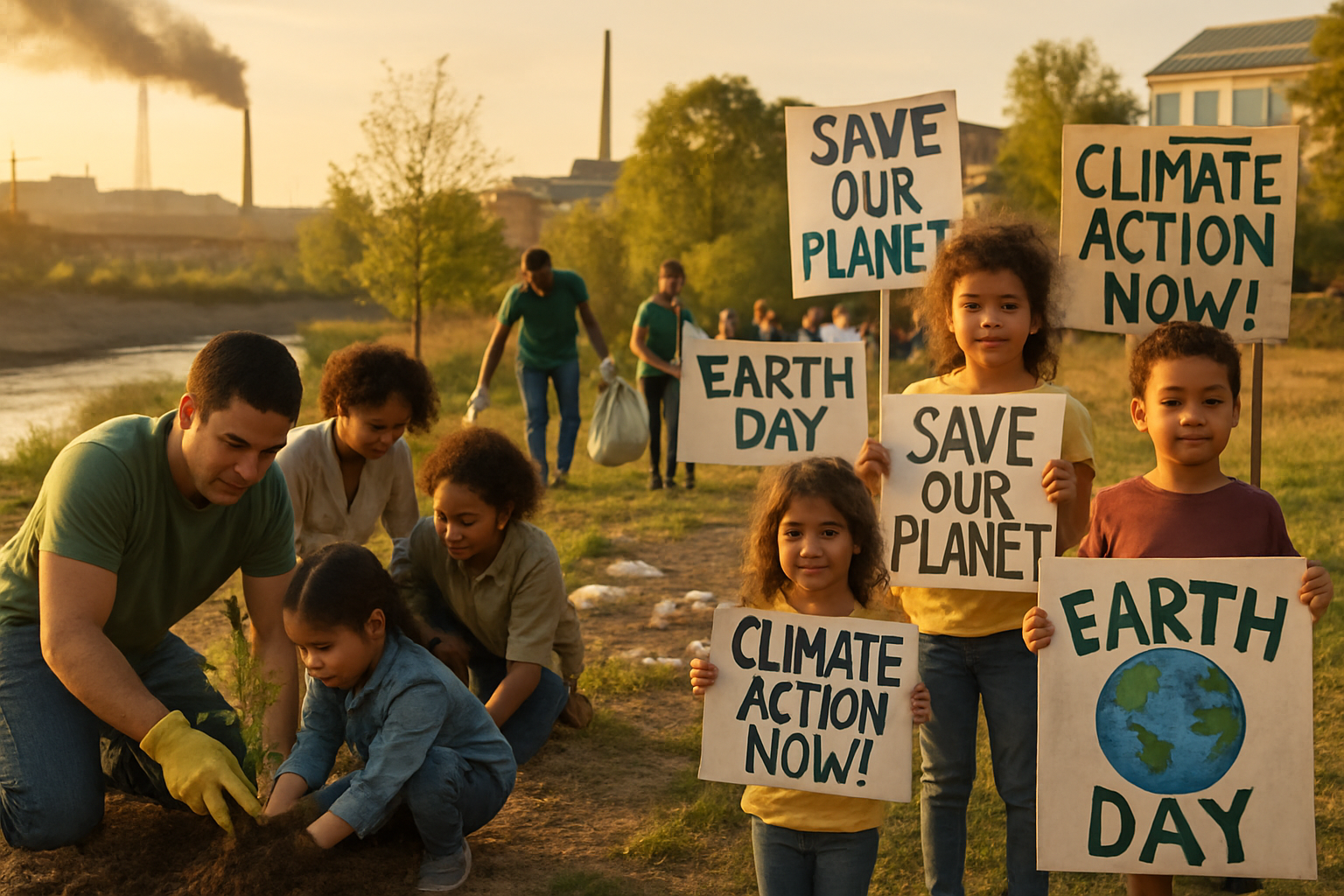
Twenty years after its inception, Earth Hour 2026 represents more than a symbolic gesture of turning off lights—it has evolved into a global rallying cry for urgent climate action as Earth experiences its most challenging environmental period in recorded history.
On March 28, over 190 countries and territories will participate in the World Wildlife Fund's flagship environmental initiative, marking two decades since the movement began in 2007 as a simple call to switch off lights for one hour. Today, as the planet endures its 22nd consecutive month of temperatures exceeding the critical 1.5°C threshold above pre-industrial levels, Earth Hour has transformed into a comprehensive platform for climate activism and environmental protection.
Unprecedented Climate Emergency Unfolds
The World Meteorological Organization has confirmed that January 2026 was the hottest month ever recorded, extending the longest sustained extreme warming streak in human history. This unprecedented warming pattern has completely overridden natural climate variability, including the La Niña cooling effects that historically moderated global temperatures.
Bulgaria's environmental reporting highlights the gravity of the situation, noting that Earth's climate is not merely changing—it is "losing balance" in ways that scientists describe as unprecedented in human history. The planet is now absorbing significantly more thermal energy than it can release, creating a dangerous accumulation of heat that threatens global stability.
"The red lamp of climate has lit up—Earth is overheating beyond anything we've seen before."
— Bulgarian Environmental Scientists
Earth Hour's Evolution: From Lights Out to Action Up
WWF Bulgaria has released 20 environmental action items that citizens can implement throughout the year, reflecting Earth Hour's evolution from a single-night event to a year-round commitment. The organization emphasizes that modern environmental challenges require sustained behavioral changes and policy commitments rather than symbolic gestures alone.
In Denmark, organizers are encouraging participants to use their hour without electricity to engage in nature-positive activities, emphasizing that the gesture must translate into lasting environmental impact. The Danish approach reflects a broader European commitment to environmental action, with the EU targeting a 90% emissions reduction by 2040.
Global Environmental Crisis Convergence
The 2026 Earth Hour occurs against a backdrop of converging environmental crises. Recent months have witnessed simultaneous extreme weather events across multiple continents, overwhelming emergency response systems designed for sequential rather than concurrent disasters. The EU Civil Protection mechanism has been repeatedly activated, with assistance operations like the €246 million support for Sweden and Denmark representing the largest coordinated European response on record.
Climate scientists warn that current conditions represent a preview of routine circumstances in the 2030s without immediate adaptation investment. The acceleration of global warming—now occurring at 0.35°C per decade since 2015, a 75% increase from previous rates—demonstrates that human-induced climate change has fundamentally altered Earth's atmospheric systems beyond natural recovery mechanisms.
Technology Meets Tradition in Climate Action
Modern environmental protection efforts increasingly demonstrate the power of combining cutting-edge technology with traditional ecological knowledge. Satellite monitoring, environmental DNA sampling, and AI-powered analysis are being integrated with community-based management systems and indigenous environmental wisdom to create comprehensive conservation frameworks.
Estonia exemplifies this approach, achieving 88% renewable electricity while operating continental Europe's largest battery storage facility serving 90,000 households. However, supply chain vulnerabilities persist, with China controlling 60-90% of critical materials essential for renewable energy infrastructure, highlighting the complex geopolitical dimensions of climate action.
Emergency Response Systems Under Strain
Traditional mutual aid mechanisms designed for sequential regional disasters are proving inadequate for the simultaneous multi-continental emergencies now becoming routine. Emergency services globally report operating at or beyond capacity limits, with transportation networks, power grids, and communication systems repeatedly exceeding their design parameters.
The Australian Fire Emergency Services Authority has identified a shift from isolated regional disasters to "compound disasters"—multiple emergency types occurring concurrently, fundamentally challenging resource allocation and traditional response capabilities. This evolution represents a new phase in climate-related emergency management.
Economic and Social Transformation Imperative
Environmental protection is increasingly recognized as essential economic infrastructure rather than a regulatory burden. Countries implementing comprehensive environmental protection consistently demonstrate greater economic resilience and attract sustainable investment across multiple sectors, including eco-tourism, green technology manufacturing, and environmental services.
However, the economic costs of climate inaction continue to mount. Agricultural systems face billions in losses as extreme weather destroys crops and disrupts supply chains during critical growing seasons. Tourism industries experience extended cancellations due to infrastructure damage, while families face the prospect of losing generational homes to repeated climate disasters.
International Cooperation at a Critical Juncture
The simultaneity of global environmental disasters is testing international cooperation mechanisms that were developed assuming stable regions could assist others during isolated emergencies. Atmospheric systems, ocean currents, and climate effects operate regardless of political boundaries, making unilateral adaptation efforts insufficient.
Success in addressing the climate crisis requires unprecedented coordination, enhanced multi-sector cooperation, and sustained financial commitments recognizing environmental protection as essential infrastructure for human prosperity and planetary sustainability. The diversity of approaches being implemented—from technological innovation to community-based conservation—provides resilience against single-solution dependencies.
Building Climate Resilience for the Future
March 2026 represents a critical juncture between reactive crisis management and proactive ecosystem service management. The concept of "building back better" has evolved from an optional enhancement to an essential survival strategy as traditional seasonal patterns that guided infrastructure design, agricultural planning, and emergency preparedness for centuries become increasingly unreliable.
Current environmental conditions require adaptive management strategies that can respond to rapidly changing baseline conditions while maintaining long-term sustainability goals. The integration of traditional ecological knowledge with modern conservation science creates adaptable frameworks that respect cultural diversity while leveraging global technological capabilities.
The Decisive Decade for Climate Action
The window for effective climate action continues to narrow as ecological systems approach critical thresholds that could trigger irreversible changes affecting global food security, climate stability, and human settlements. Scientists warn that the tools, knowledge, and cooperation frameworks exist for comprehensive environmental protection, but success depends on implementing solutions at unprecedented speed and scale.
As Earth Hour 2026 approaches its 20th anniversary, the event serves as both a celebration of global environmental awareness and an urgent reminder that the choices made in the coming months will be decisive for climate resilience strategies affecting generations. The question is no longer whether transformative climate action is needed, but whether humanity can organize and implement solutions rapidly enough to maintain planetary habitability during Earth's most environmentally challenging period in recorded history.
"This year's Earth Hour represents more than turning off lights—it's about turning on our collective commitment to the planet's future."
— WWF International
The convergence of extreme weather events, infrastructure vulnerabilities, and emergency response limitations underscores the urgent need for coordinated international action. With additional weather systems developing across the Atlantic and Pacific, authorities remain on high alert as conditions may persist for weeks, potentially establishing a "new normal" of extreme weather frequency and intensity that will permanently challenge traditional frameworks.
As millions prepare to participate in Earth Hour 2026, the symbolic act of switching off lights for one hour has become a powerful metaphor for the much larger transformation required—turning off our dependence on systems that harm the planet and turning on innovative solutions that can secure a sustainable future for all.