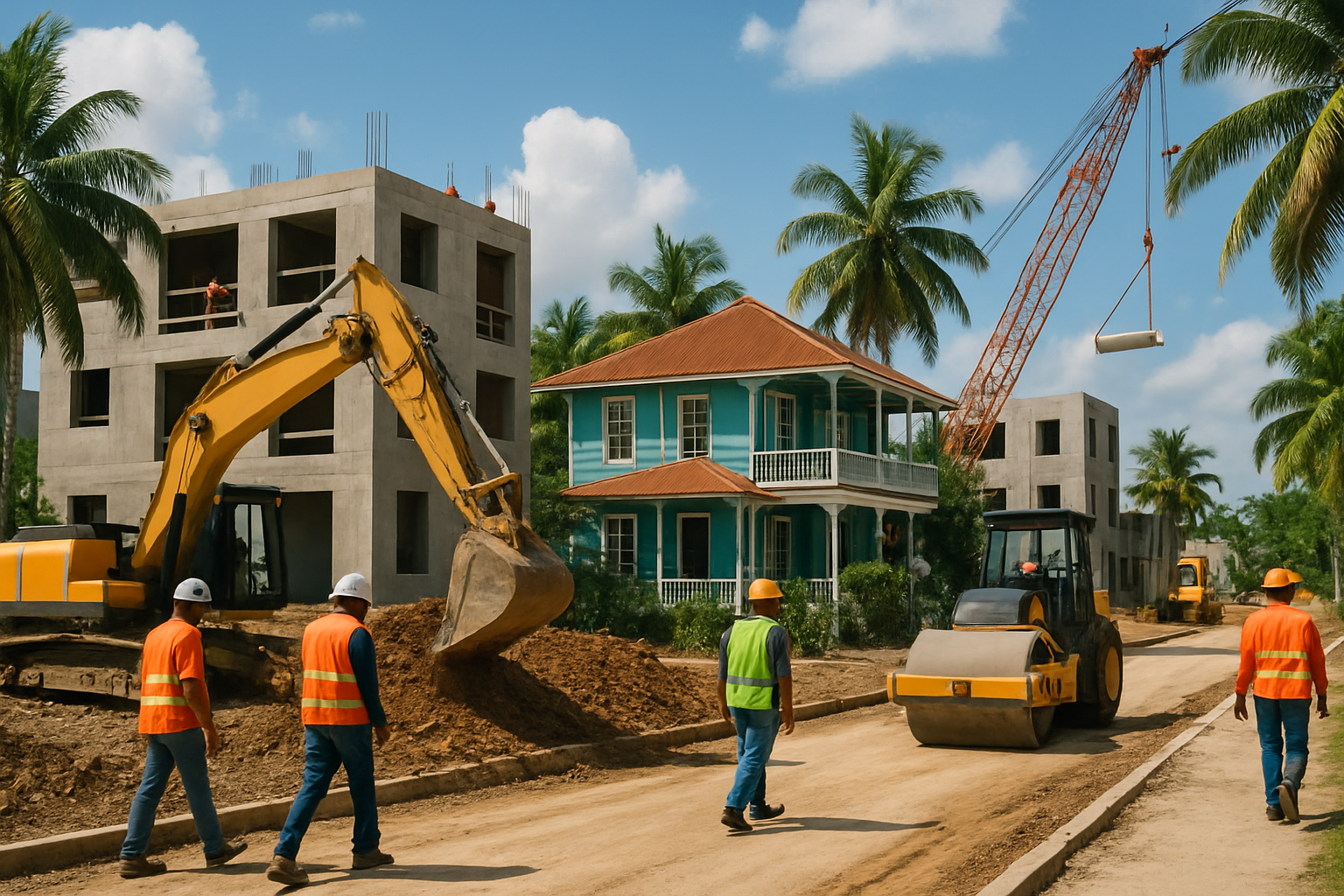
Saint Vincent and the Grenadines is positioning itself at the forefront of the Caribbean's infrastructure renaissance as Representative Fitzgerald Bramble unveiled extensive development plans for the East Kingstown constituency during a community consultation at Peace Memorial Hall on March 21, 2026.
The ambitious infrastructure agenda, announced during the constituency meeting, represents part of a broader Caribbean development surge that has seen unprecedented investment flowing into the region. The announcements come as Saint Vincent and the Grenadines benefits from an estimated $300+ million infrastructure allocation, representing the largest per-capita Caribbean infrastructure commitment in recent history.
Major Infrastructure Projects Transform East Kingstown
Representative Bramble's comprehensive development plan addresses multiple aspects of community infrastructure, focusing on enhancing connectivity, economic opportunities, and quality of life for constituents. The projects align with the government's broader strategy to modernize infrastructure while maintaining the cultural identity that defines Vincentian communities.
The infrastructure initiative comes as part of a documented global surge, with over $570 billion in infrastructure investments announced worldwide in 2026. The Caribbean region has emerged as a significant beneficiary of this trend, with nations across the archipelago implementing sophisticated development strategies that balance economic growth with environmental sustainability.
"These infrastructure developments represent a fundamental transformation in how we approach community development in the Caribbean. We're not just building roads and buildings; we're creating the foundation for sustainable prosperity."
— Regional Development Expert
Rise East Kingstown: Community-Centered Economic Development
Complementing the infrastructure investments, Representative Bramble introduced the "Rise East Kingstown" initiative, a monthly street fair program designed to rotate through various neighborhoods within the constituency. This innovative approach to economic development provides a public platform for local entrepreneurs while strengthening community bonds.
The program represents a sophisticated understanding of modern economic development, recognizing that infrastructure investment must be accompanied by initiatives that directly benefit local residents. By creating regular opportunities for small business development and community engagement, the Rise East Kingstown program addresses economic inclusion alongside physical development.
This community-focused approach reflects broader Caribbean trends toward inclusive development models. Across the region, governments are implementing programs that ensure infrastructure investment translates into tangible benefits for local communities, avoiding the exclusionary development patterns that have affected other regions.
Regional Context: Caribbean Infrastructure Renaissance
The East Kingstown developments occur within a broader Caribbean infrastructure renaissance that has gained momentum throughout 2026. The African Development Bank's (AfDB) decision to increase Caribbean investment allocation from $3 billion to $5 billion represents unprecedented international confidence in the region's development potential.
Saint Vincent and the Grenadines has particularly benefited from this investment surge. The nation recently completed significant projects including the Athletes' Facility at Sir Vincent Beache Athletic Stadium, which reached 90% completion ahead of its April 2026 opening. Additionally, J.F. Mitchell Airport in Bequia completed crucial runway upgrades, enhancing regional connectivity and supporting both tourism and athletic program access.
These developments position Saint Vincent and the Grenadines as a leader in Caribbean infrastructure modernization. The nation's approach emphasizes climate resilience, technological integration, and community benefits rather than isolated facility construction, creating templates that other Caribbean nations are studying for potential replication.
Technology Integration and Climate Adaptation
Modern infrastructure projects across the Caribbean, including those planned for East Kingstown, incorporate sophisticated technology integration from the design phase. This includes real-time monitoring systems, predictive maintenance capabilities, digital payment systems, and environmental optimization measures that enhance both efficiency and sustainability.
Climate adaptation has evolved from an optional consideration to a fundamental design requirement. With January 2026 marking the 18th consecutive month of temperatures exceeding 1.5°C above pre-industrial levels, infrastructure projects must serve future climate conditions rather than historical patterns. This includes enhanced drainage systems, weather-resistant materials, and backup power capabilities.
The global semiconductor shortage, which has driven memory chip prices to increase sixfold, has paradoxically accelerated innovation toward more efficient and sustainable technology integration approaches. Caribbean nations are developing solutions that enhance rather than replace human relationships while building adaptive capacity for changing environmental conditions.
Economic Multiplier Effects and Regional Integration
Infrastructure investments in East Kingstown and across Saint Vincent and the Grenadines create substantial economic multiplier effects beyond immediate construction employment. These include reduced logistics costs, enhanced market access, improved business productivity, and support for regional integration objectives within the Caribbean Community (CARICOM) framework.
The success of infrastructure development in small island developing states requires sophisticated coordination between immediate economic needs and long-term sustainability. Saint Vincent and the Grenadines has demonstrated particular expertise in this balance, creating development models that other Caribbean nations are adapting to their specific contexts.
Regional cooperation has replaced competition as the dominant approach to Caribbean development. The coordinated response to infrastructure challenges, exemplified by shared best practices and multi-destination tourism experiences, strengthens the entire region's competitiveness in global markets.
International Cooperation and Financing Innovation
The financing approaches supporting East Kingstown's development reflect the evolution of international cooperation beyond traditional aid models. Contemporary projects utilize diverse financing mechanisms including public-private partnerships, bilateral cooperation agreements, and innovative funding instruments that respect national sovereignty while accessing global expertise.
Saint Vincent and the Grenadines has particularly benefited from partnerships with international organizations and development banks that provide technical assistance, knowledge sharing, and coordinated procurement strategies. This approach addresses supply chain challenges while maintaining local ownership and operational control of development projects.
The nation's success in attracting investment reflects its commitment to transparent governance, comprehensive stakeholder engagement, and adaptive management practices that have become essential for securing international development financing in the current global environment.
Challenges and Success Factors
Implementation of major infrastructure projects faces universal challenges including material cost inflation, skilled labor shortages, environmental compliance requirements, and the complexity of coordinating multiple stakeholders. The global construction industry currently experiences negative developer profit margins due to material cost increases, requiring innovative approaches to project viability.
Success factors identified across Caribbean infrastructure projects include sustained political commitment that survives electoral cycles, comprehensive community engagement processes, balance between technological advancement and human development priorities, and international cooperation that enhances rather than undermines local capacity building.
Environmental sustainability has evolved from regulatory compliance to fundamental design philosophy, requiring renewable energy integration, climate resilience planning, and waste reduction protocols as standard components of project approval and financing processes.
Future Implications and Strategic Significance
The March 2026 infrastructure announcements for East Kingstown represent a critical juncture in Caribbean development, potentially influencing regional strategies for decades ahead. The convergence of technological advancement, environmental awareness, and international cooperation creates new development models that prioritize comprehensive sustainability alongside economic growth.
Saint Vincent and the Grenadines' approach to infrastructure development provides valuable lessons for small island developing states worldwide facing similar challenges related to climate adaptation, economic diversification, and sustainable development. The nation's success in balancing modernization with cultural preservation offers templates for maintaining authentic identity while achieving international competitiveness.
The infrastructure decisions being implemented in 2026 will determine the region's adaptive capacity for thriving in an increasingly interconnected and climate-challenged world. The choice between transformative infrastructure adaptation and reactive crisis management represents one of the most significant policy decisions of the current decade, with implications extending far beyond immediate project outcomes.
As Representative Bramble's comprehensive development plan for East Kingstown demonstrates, the Caribbean is embracing a sophisticated understanding of infrastructure as the foundation for sustainable prosperity, community empowerment, and regional leadership in global development innovation.