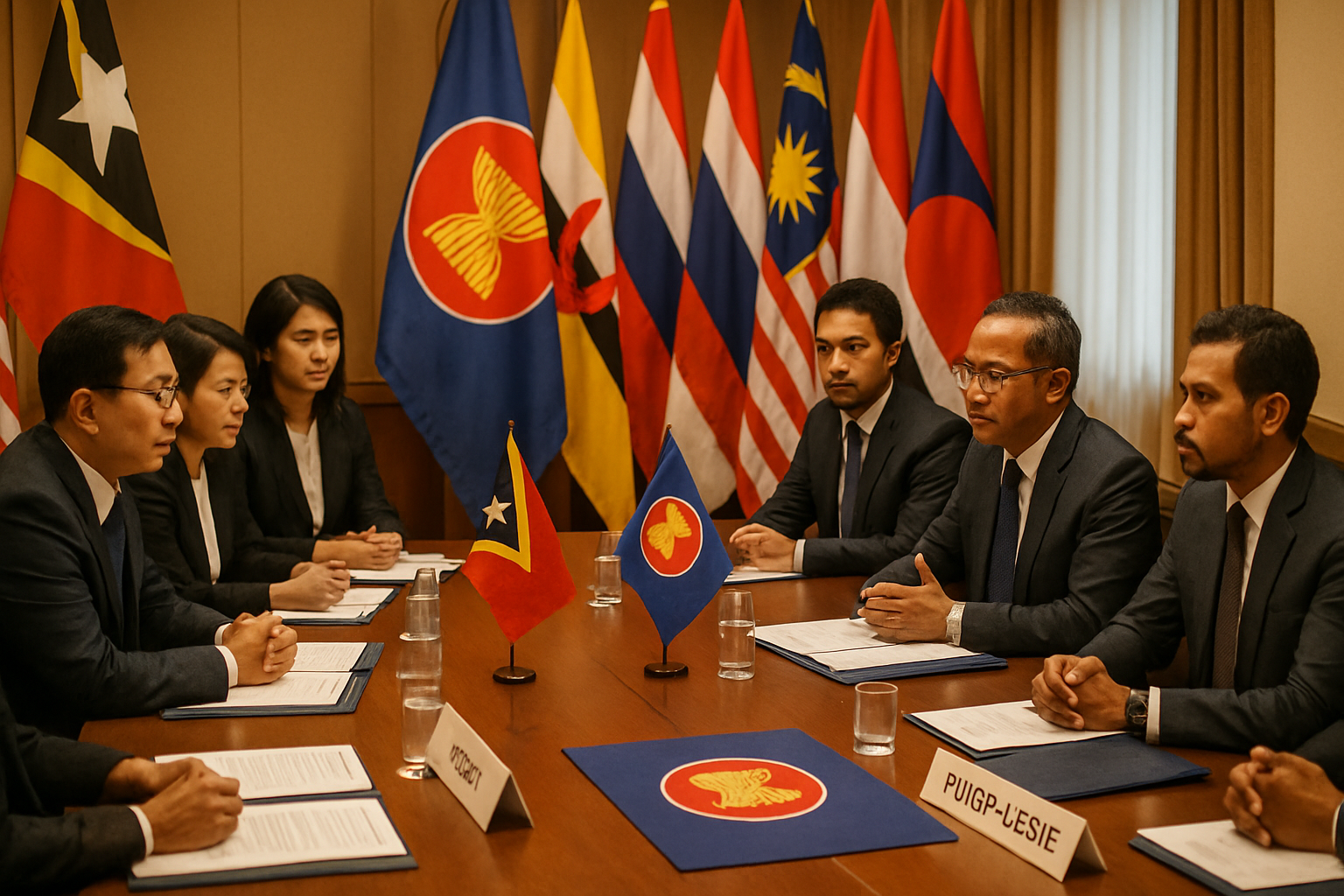
East Timor has positioned itself as a voice for balanced, inclusive economic security cooperation within ASEAN while simultaneously strengthening bilateral development partnerships with France, signaling the nation's strategic approach to regional integration and international collaboration.
Vice-Minister of Commerce and Industry Augusto Júnior Trindade, representing East Timor at the ASEAN Senior Economic Officials Meeting (SEOM) and the 49th High-Level Task Force on ASEAN Economic Integration (HLTF-EI) meeting in Iloilo on February 25, 2026, articulated the country's commitment to a "balanced, inclusive, and rules-based approach" to ASEAN economic security. His intervention emphasized that regional resilience should "strengthen, not replace, openness and multilateral cooperation."
East Timor's Vision for ASEAN Economic Integration
Speaking at the Roundtable on ASEAN Economic Security organized by the Philippines' Department of Trade and Industry under the Philippine presidency theme "Navigating our future, together," Trindade's position reflects East Timor's nuanced understanding of regional economic dynamics. The roundtable, which preceded the formal HLTF-EI meeting, provided a platform for discussing the intersection of economic policy and security considerations in Southeast Asia.
East Timor's advocacy for maintaining multilateral cooperation principles comes at a critical juncture for ASEAN economic integration. The organization faces mounting pressures from global supply chain disruptions, trade tensions between major powers, and the need to balance economic openness with strategic autonomy. As one of ASEAN's newest members, East Timor brings a fresh perspective that emphasizes inclusive growth over protectionist approaches.
"Resilience should strengthen, not substitute, openness and multilateral cooperation."
— Augusto Júnior Trindade, Vice-Minister of Commerce and Industry
Strategic Partnership with France Deepens
Concurrently with its ASEAN engagements, East Timor has been strengthening its relationship with France through high-level diplomatic exchanges. President José Ramos-Horta, accompanied by Foreign Minister Bendito dos Santos Freitas, undertook an official visit to Paris on February 25, 2026, at the invitation of French President Emmanuel Macron.
This meeting marked the third direct dialogue between the two heads of state, building on a foundation of cooperation that spans multiple sectors. The France-East Timor partnership represents a significant evolution in the young nation's international relations, moving beyond traditional donor-recipient relationships toward strategic cooperation in human capital development and economic modernization.
The timing of this diplomatic engagement alongside ASEAN meetings demonstrates East Timor's sophisticated approach to international relations—pursuing regional integration while maintaining diverse global partnerships that can contribute to national development goals.
Human Capital Development as Strategic Priority
The discussions between Presidents Ramos-Horta and Macron focused significantly on human capital development, reflecting East Timor's recognition that sustainable economic growth requires investment in education, skills training, and institutional capacity building. This emphasis aligns with broader regional trends toward knowledge-based economies and positions East Timor to participate more effectively in ASEAN's economic integration processes.
France's expertise in education, technology transfer, and sustainable development provides valuable resources for East Timor's ongoing nation-building efforts. The partnership offers opportunities for technical cooperation, educational exchanges, and collaborative approaches to development challenges that many small island developing states face.
Regional Context and Global Implications
East Timor's diplomatic activities in February 2026 occur within a broader context of evolving regional economic architectures. ASEAN faces increasing pressure to navigate between maintaining economic openness and ensuring strategic resilience in an era of great power competition. The organization's approach to economic security will significantly influence regional stability and prosperity.
The Philippines' presidency theme of "Navigating our future, together" reflects the collective challenge facing Southeast Asian nations as they balance competing demands from global partners while pursuing shared development goals. East Timor's advocacy for inclusive, rules-based approaches provides a counterpoint to more nationalist or protectionist tendencies that could fragment regional cooperation.
Balancing Multilateralism and Bilateral Partnerships
East Timor's simultaneous engagement with ASEAN economic security discussions and bilateral partnership development with France illustrates a sophisticated understanding of contemporary international relations. Rather than viewing regional integration and global partnerships as competing priorities, the country is pursuing both tracks as complementary elements of its development strategy.
This approach recognizes that small states like East Timor can maximize their international influence and development opportunities by maintaining diverse partnerships while contributing meaningfully to regional institutions. The country's emphasis on multilateral cooperation principles within ASEAN, combined with strategic bilateral relationships, provides multiple avenues for achieving development objectives.
Looking Forward: Sustainable Development Through Strategic Cooperation
As East Timor continues to navigate its dual role as an ASEAN member and global partner, the country's February 2026 diplomatic initiatives suggest a maturing foreign policy approach that prioritizes sustainable development through strategic cooperation. The emphasis on human capital development in the France partnership complements the advocacy for inclusive economic security within ASEAN.
The success of these initiatives will likely influence how other small states in Southeast Asia and beyond approach the challenge of balancing regional integration with global partnerships. East Timor's experience offers valuable lessons for nations seeking to maximize their development potential through diversified international engagement while maintaining principled positions on multilateral cooperation.
The convergence of regional economic security discussions and bilateral development partnerships reflects the complex realities of contemporary international relations, where nations must simultaneously pursue multiple tracks of engagement to achieve their development aspirations and contribute to regional stability and prosperity.