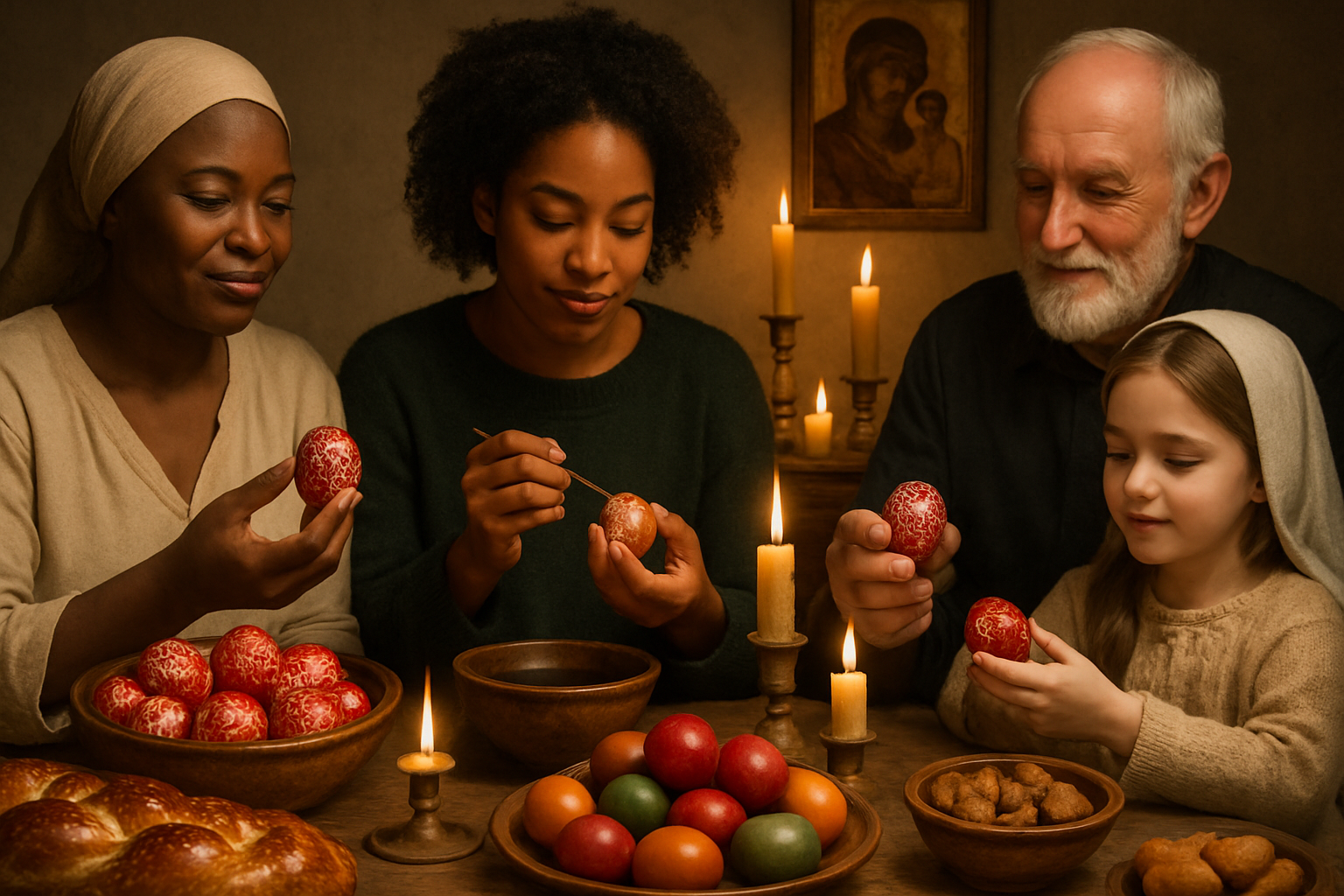
As Orthodox Christians across the Balkans and Mediterranean prepare for Easter, centuries-old traditions of egg decoration, sacred bread-making, and ritual processions demonstrate the enduring power of cultural customs that unite communities while preserving distinct regional identities.
From the wax-resist egg painting techniques passed down through generations in Serbian households to the intricate preparation of flaouna pastries in Cyprus, Easter celebrations across different cultures reveal a fascinating tapestry of customs that have evolved while maintaining their sacred significance. These traditions, documented across Bosnia and Herzegovina, Serbia, Cyprus, and Greece, showcase how food, art, and faith interweave to create meaningful community experiences.
The Art of Sacred Egg Decoration
In Serbian households, the tradition of egg dyeing represents one of the most cherished Easter customs. Nataša Jasika, who inherited her technique from her grandmother, demonstrates the intricate wax-resist method that creates elaborate patterns on colored eggs. This ancient practice, documented in Bosnia and Herzegovina, involves applying molten wax to create designs before dyeing the eggs in vibrant red - a color symbolizing Christ's sacrifice and the promise of resurrection.
The red egg holds profound symbolic meaning in Orthodox tradition, representing both Christ's suffering and believers' faith in renewal. Serbian families gather on Holy Friday to color eggs together, creating not just decorative items but tangible connections to their ancestors and faith. These eggs serve multiple purposes: they're exchanged as gifts, used in traditional games, and incorporated into Easter meals as symbols of new life.
"The tradition of coloring eggs in red is a symbol of Christ's suffering, but also of our faith in renewal and new beginnings."
— Traditional Serbian Easter Practice
Cyprus: The Flaouna Tradition
In Cyprus, the preparation of flaouna - traditional Easter pastries - begins during Holy Week and represents a cornerstone of Cypriot Easter celebrations. These cheese-filled pastries, often enhanced with raisins and aromatic herbs, require days of preparation and bring families together in kitchens across the island. The tradition is particularly strong in the Paphos region, where entire communities participate in flaouna-making sessions.
The timing of flaouna preparation is crucial, with many families beginning their work on Holy Friday. This scheduling connects the culinary tradition directly to the religious calendar, making the food preparation itself a form of spiritual observance. The pastries are then enjoyed throughout Easter week, served to visitors and shared among neighbors in a practice that strengthens community bonds.
Greek Easter: A Culinary Renaissance
Greek Easter celebrations showcase some of the most sophisticated culinary traditions in the Orthodox world. The preparation of mageiritsa - a traditional soup made from lamb organs, herbs, and rice - represents a culinary art form that has been perfected over centuries. This dish, consumed after the midnight Easter service, breaks the Lenten fast and symbolizes the transition from sacrifice to celebration.
Greek families invest considerable time in preparing traditional Easter foods, with recipes that have remained largely unchanged for generations. Beyond mageiritsa, Greek Easter tables feature tsoureki bread, red-dyed eggs, and lamb dishes prepared according to regional variations that reflect Greece's diverse culinary landscape. These foods are not merely meals but cultural artifacts that connect modern families to their ancestral heritage.
Living Traditions: The Procession of the Holy Cross
Cyprus demonstrates how Easter traditions extend beyond food to encompass dramatic religious performances. In the village of Kathikas, a 40-year-old tradition comes alive each Holy Friday through the reenactment of Christ's crucifixion procession. This community-driven performance involves elaborate staging, with villagers taking on roles that bring biblical narratives to life for local audiences.
These processions represent more than entertainment; they serve as living theology that makes abstract religious concepts tangible for participants and observers. The tradition in Kathikas exemplifies how rural communities maintain cultural practices that might otherwise disappear, creating meaningful connections between faith, history, and community identity.
The Science Behind Sacred Traditions
Modern research validates many traditional Easter foods as nutritionally beneficial, adding scientific backing to cultural practices. The Mediterranean dietary patterns evident in Greek Easter celebrations have been linked to significant health benefits, including a 25% reduction in stroke risk over twenty years. Similarly, the herbs and ingredients used in traditional Easter dishes often possess anti-inflammatory properties and other health benefits that ancient peoples understood intuitively.
The timing of traditional food preparation also reflects sophisticated understanding of food safety and preservation. The specific scheduling of egg dyeing, bread baking, and meat preparation follows patterns that optimize both flavor and safety, demonstrating how cultural wisdom often contains practical knowledge refined over centuries.
Global Connections and Local Authenticity
Easter 2026 represents a remarkable period of cultural preservation and innovation, as communities worldwide demonstrate how traditional practices can thrive while adapting to contemporary realities. Digital platforms now enable family members separated by geography to participate virtually in egg-dyeing sessions or bread-making tutorials, while social media helps younger generations learn techniques from elderly relatives.
The economic impact of these traditions extends far beyond individual households. Traditional Easter food preparation supports local agriculture, artisan networks, and cultural tourism. In regions like Cyprus and Serbia, Easter customs generate substantial revenue while preserving cultural authenticity, creating sustainable models for heritage preservation.
Technology Meets Tradition
Contemporary Easter celebrations demonstrate successful synthesis between modern technology and ancient practices. Families now use social media to share egg-decorating techniques across continents, while maintaining the hands-on, communal aspects that give these traditions their meaning. Mobile applications help coordinate family gatherings and share traditional recipes, enhancing rather than replacing human connections.
This technology integration proves particularly valuable for diaspora communities seeking to maintain cultural connections across distances. Serbian families in multiple countries can simultaneously participate in virtual egg-dyeing sessions, while Greek communities worldwide share traditional recipes and cooking techniques through digital platforms.
Preserving Heritage for Future Generations
The continuation of these Easter traditions requires active effort from families and communities committed to cultural preservation. Educational initiatives, community workshops, and intergenerational knowledge transfer ensure that techniques like wax-resist egg decoration and traditional bread-making survive in an increasingly globalized world.
Success stories from across the region demonstrate how cultural preservation creates economic opportunities while maintaining authenticity. Traditional food producers, artisan workshops, and cultural tourism enterprises generate sustainable income streams that incentivize heritage preservation, creating positive feedback loops that benefit entire communities.
As Orthodox communities prepare for Easter 2026, these traditions continue to evolve while preserving their essential spiritual and cultural significance. The enduring appeal of practices like Serbian egg decoration, Cypriot flaouna preparation, and Greek Easter feasting demonstrates humanity's deep need for meaningful customs that connect us to our heritage, our communities, and our faith.
The rich tapestry of Easter traditions across different cultures serves as a powerful reminder that cultural diversity and spiritual unity can coexist beautifully. These practices offer hope that ancient wisdom can thrive in contemporary contexts, providing stability and meaning in an ever-changing world while fostering the community bonds that strengthen societies across generations.