Christians across seven nations celebrated Easter and Holy Week 2026 with a remarkable blend of ancient traditions and contemporary innovation, demonstrating the enduring power of faith to unite communities while adapting to modern realities.
From the Balkans to Central America, from West Africa to Iberia, Easter celebrations this year showcased the global reach and cultural diversity of Christianity while maintaining the essential spiritual message of resurrection and hope that has defined the faith for two millennia.
Record-Breaking Celebrations and Cultural Innovations
In Bosnia and Herzegovina, the town of Kraljeva Sutjeska unveiled what organizers claim is the largest Easter egg in the Balkans—a towering 3.33-meter creation that was ceremonially blessed as part of the local Easter festivities. The massive egg, standing over 10 feet tall, became a symbol of renewal and community pride, drawing visitors from across the region.
Meanwhile, El Salvador demonstrated exceptional organization in managing its Holy Week celebrations. Municipal teams collected an impressive 74 tons of debris following the multitudinous Good Friday procession in San Salvador's Historic Center. The city's comprehensive cleanup operation, conducted through the night despite rainfall, ensured that the traditional alfombras (decorative carpets) created for the procession were properly cleared while maintaining the dignity of the sacred observance.
Portugal faced unique weather challenges as unseasonably warm temperatures—exceeding 25 degrees Celsius—drew thousands to the beaches during the Easter weekend. Authorities reinforced coastal surveillance through April 12, recognizing this period as one of the year's highest drowning risks due to the unexpected convergence of warm weather and holiday travel.
Spiritual Reflection Amid Global Challenges
In Burkina Faso, Pastor Vincent Ilboudo, president of the Federation of Evangelical Churches and Missions (FEME), delivered a powerful Easter message emphasizing hope, faith, and resilience amid the country's ongoing security and humanitarian challenges. His message of spiritual strength in the face of adversity resonated with Christians throughout the Sahel region.
"This foundational event of our faith is a permanent invitation to live in love, forgiveness and justice."
— Pastor Vincent Ilboudo, FEME President
Bulgaria's celebrations took on a particularly introspective character, with widespread emphasis on the importance of forgiveness during the pre-Easter period. Bulgarian Orthodox communities highlighted forgiveness as a central theme, describing it not as forgetting past wrongs but as a liberating act that allows individuals to move forward "lighter, calmer, and freer."
Challenges and Community Response
Colombia's celebrations were marked by both tragedy and resilience. During a Good Friday Santo Sepulcro procession in Cauca, a motorcycle accident injured six people, including minors, highlighting the challenges of managing large public religious gatherings. Despite the incident, communities demonstrated their commitment to maintaining these centuries-old traditions while working to improve safety measures.
Nicaragua took a different approach to Easter weekend management, with health authorities intensifying anti-dengue campaigns during Holy Week in Managua. The coordinated public health effort, featuring elimination of mosquito breeding sites and community education programs, demonstrated how modern public health initiatives can be integrated with traditional religious observances.
International Coordination and Local Adaptation
Building on the successful international religious coordination seen throughout 2026—including the unprecedented convergence of Ramadan and Lent earlier in the year—Easter celebrations showcased sophisticated global cooperation while preserving distinctive local traditions.
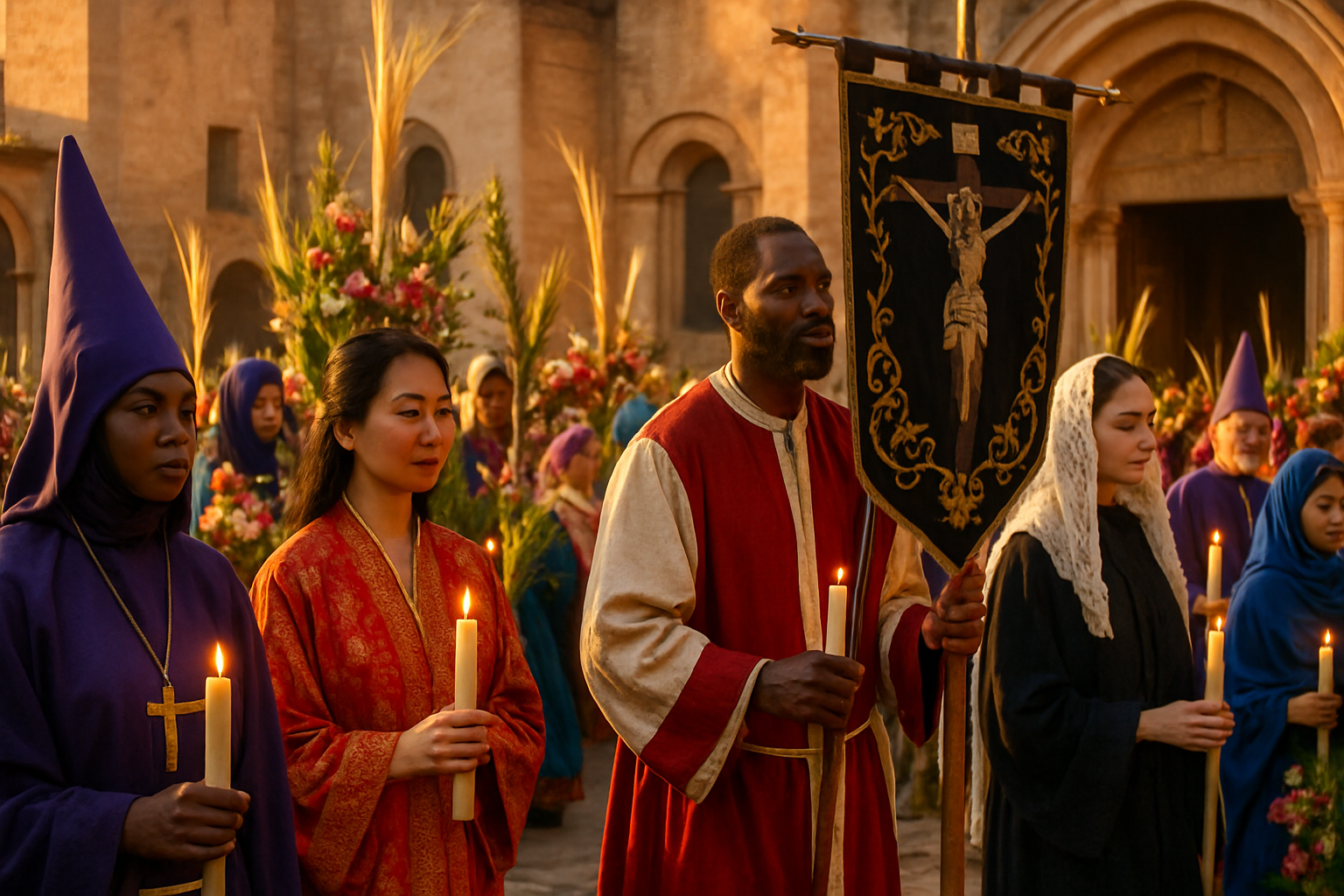
The success of these celebrations reflects lessons learned from earlier religious observances in 2026. From the technology-tradition synthesis enabling global diaspora participation to enhanced security measures ensuring peaceful celebrations, Easter 2026 demonstrated how ancient spiritual practices can thrive through thoughtful adaptation and international cooperation.
Economic and Social Impact
The economic multiplier effects of Easter celebrations extended well beyond traditional religious boundaries. El Salvador's cleanup operations alone employed hundreds of municipal workers in what authorities described as one of their largest coordinated efforts. Portugal's beach tourism surge provided an unexpected boost to coastal businesses, while Nicaragua's integrated health campaign supported community welfare during peak travel periods.
These celebrations also demonstrated the growing sophistication of religious tourism management. From Bosnia's record-breaking Easter egg attracting regional visitors to Bulgaria's emphasis on spiritual introspection drawing contemplative tourists, communities successfully balanced authentic spiritual expression with economic opportunities.
Technology Meets Tradition
Across all seven nations, Easter 2026 showcased successful integration of digital technologies with traditional observances. Mobile applications provided prayer schedules and scripture readings, while social media platforms enabled separated families to share in celebrations virtually. This technology-tradition synthesis avoided the "wellness paradox" by enhancing rather than replacing human spiritual connections.
The digital dimension proved particularly valuable for diaspora communities. Portuguese emigrants worldwide participated in virtual Easter services, while Salvadoran communities abroad connected with homeland celebrations through livestreamed processions and digital prayer groups.
Looking Forward: Template for Future Celebrations
Easter 2026 established important precedents for international religious cooperation and cultural preservation. The success factors identified across these seven nations—cultural authenticity preservation, strategic technology integration, enhanced security, meaningful community involvement, and adaptive management—offer a framework for future religious observances worldwide.
Perhaps most significantly, these celebrations demonstrated that spiritual traditions can maintain their essential character while adapting to contemporary realities. From climate challenges in Portugal to security concerns in Colombia, from public health initiatives in Nicaragua to economic opportunities in Bosnia, Easter 2026 showed how faith communities can address modern challenges while preserving ancient wisdom.
As Christian communities worldwide concluded their Easter celebrations, the fundamental message remained constant across cultures, languages, and national boundaries: faith endures, hope survives, and communities persevere through both challenges and celebrations. This Easter, spanning from the mountains of the Balkans to the beaches of Central America, proved once again that the resurrection story continues to offer meaning, purpose, and unity in an interconnected yet diverse world.