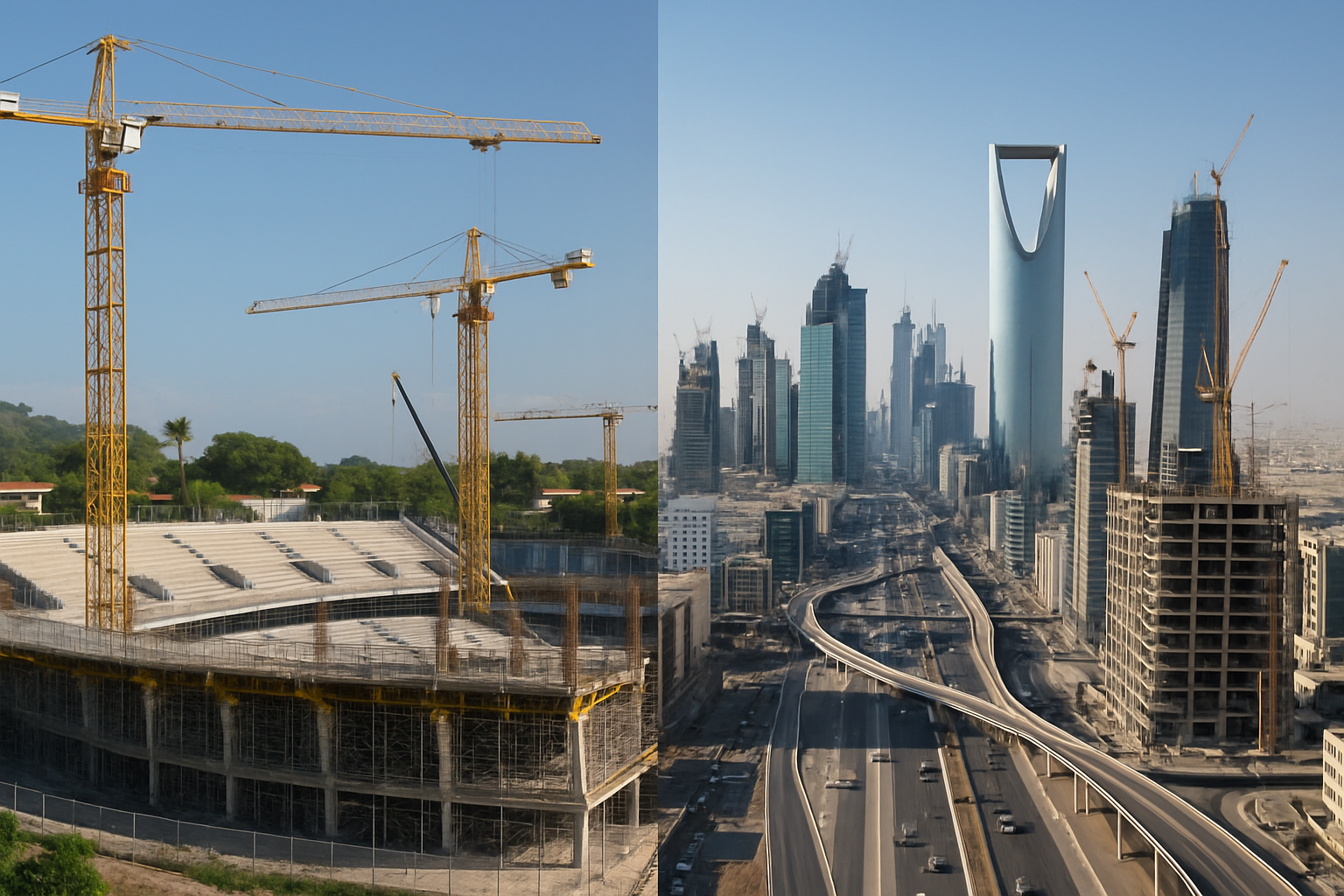
El Salvador closed 2025 with remarkable 3.9% economic growth, significantly outpacing the regional Latin American average, while global construction markets face mounting pressure from rising material costs and supply chain constraints.
According to official data and assessments by economist Carlos Acevedo, former president of the Central Reserve Bank, El Salvador's performance represents a significant reversal of historical trends where the country typically grew below regional averages. Speaking in a recent interview, Acevedo described the GDP growth as "positive news," highlighting how the nation positioned itself above Latin America's average during a period of reduced regional economic dynamism.
Breaking Historical Economic Patterns
The analyst emphasized that El Salvador had historically lagged behind regional growth rates, making the 2025 performance particularly noteworthy. This economic recovery is beginning to impact broader social indicators, with the poverty rate declining to 22.5% - the lowest level ever recorded in the country. This progressive reduction demonstrates how sustained economic growth can translate into meaningful improvements in living standards.
The economic transformation builds upon El Salvador's broader infrastructure and development initiatives. Under President Nayib Bukele's administration, the country has undertaken significant investments in tourism infrastructure, including the construction of a new 50,000-capacity National Stadium and airport hotel developments that position El Salvador as a Central American destination and business hub.
Global Construction Cost Pressures
While El Salvador celebrates economic progress, other regions face mounting construction industry challenges. Saudi Arabia's construction cost index recorded a 2% increase in March compared to the same month in 2025, driven primarily by rising residential and non-residential construction expenses.
The annual construction cost index for Saudi Arabia's residential sector rose 1.9%, propelled by a 4.5% increase in equipment and machinery rental costs. This surge was influenced by a significant 6.1% rise in operating costs, while labor costs increased 2.7% and energy prices jumped 3%. Basic materials saw a modest 0.3% increase, though cement and concrete prices rose 0.4% and timber costs climbed 1.3%.
"The Kingdom's construction sector continues to adapt to global supply chain pressures while supporting Vision 2030 development goals."
— Construction Industry Analysis
Regional Economic Divergence
The contrasting economic trajectories between El Salvador's robust GDP growth and Saudi Arabia's construction cost inflation highlight the complex global economic landscape. While El Salvador benefits from improved security conditions and strategic tourism investments, construction-dependent economies face universal challenges from material cost inflation and supply chain disruptions.
Global construction industries are experiencing what experts describe as a crisis of negative developer profit margins worldwide. Memory chip shortages have driven semiconductor prices up sixfold, affecting smart building technologies and adding 20-30% to construction costs until new fabrication facilities come online in 2027.
Investment and Development Strategies
El Salvador's economic success stems from comprehensive policy approaches combining security improvements, infrastructure development, and strategic international partnerships. The country's "Surf City" tourism branding and airport hotel development represent coordinated efforts to diversify the economy beyond traditional sectors.
The poverty reduction to historic lows suggests that economic growth is translating into broad-based improvements rather than concentrating benefits among limited populations. This achievement positions El Salvador as a regional model for combining growth with social progress.
Global Economic Context
These developments occur within a broader context of shifting global economic patterns. Central banks worldwide are pursuing increasingly independent monetary policies, moving away from the post-2008 era of coordinated international responses. The European Central Bank maintains its 2% deposit rate while other economies pursue markedly different approaches, creating complex currency dynamics.
Investment strategies are evolving toward country-specific fundamental analysis rather than broad regional themes. This shift rewards sophisticated understanding of local conditions, regulatory environments, and political dynamics over traditional geographic categorizations.
Infrastructure as Economic Foundation
Both regions demonstrate how infrastructure investment serves as a foundation for economic development. El Salvador's comprehensive approach includes transportation improvements, tourism facilities, and educational infrastructure modernization. These investments create economic multiplier effects through reduced logistics costs, enhanced market access, and improved business productivity.
The construction cost pressures in Saudi Arabia reflect the ambitious scale of Vision 2030 infrastructure development, even as global supply chain constraints challenge project economics. The Kingdom's commitment to diversification continues despite these headwinds, with projects incorporating advanced technology integration and climate adaptation measures.
Looking Forward
The divergent experiences of El Salvador's GDP growth acceleration and Saudi Arabia's construction cost inflation illustrate the complexity of contemporary global economic development. Success increasingly depends on adaptive strategies that address specific national conditions while navigating shared challenges like supply chain disruptions and technological constraints.
Countries implementing comprehensive development approaches - combining economic policy, infrastructure investment, and social progress - demonstrate superior resilience compared to those relying on single-sector strategies. As global economic coordination becomes more limited, the premium on effective domestic policy implementation continues to rise.
The April 2026 economic landscape suggests a fundamental shift toward economic strategies tailored to domestic conditions and priorities, reflecting both the limitations of global coordination and political pressures to address national economic challenges through locally adapted solutions.