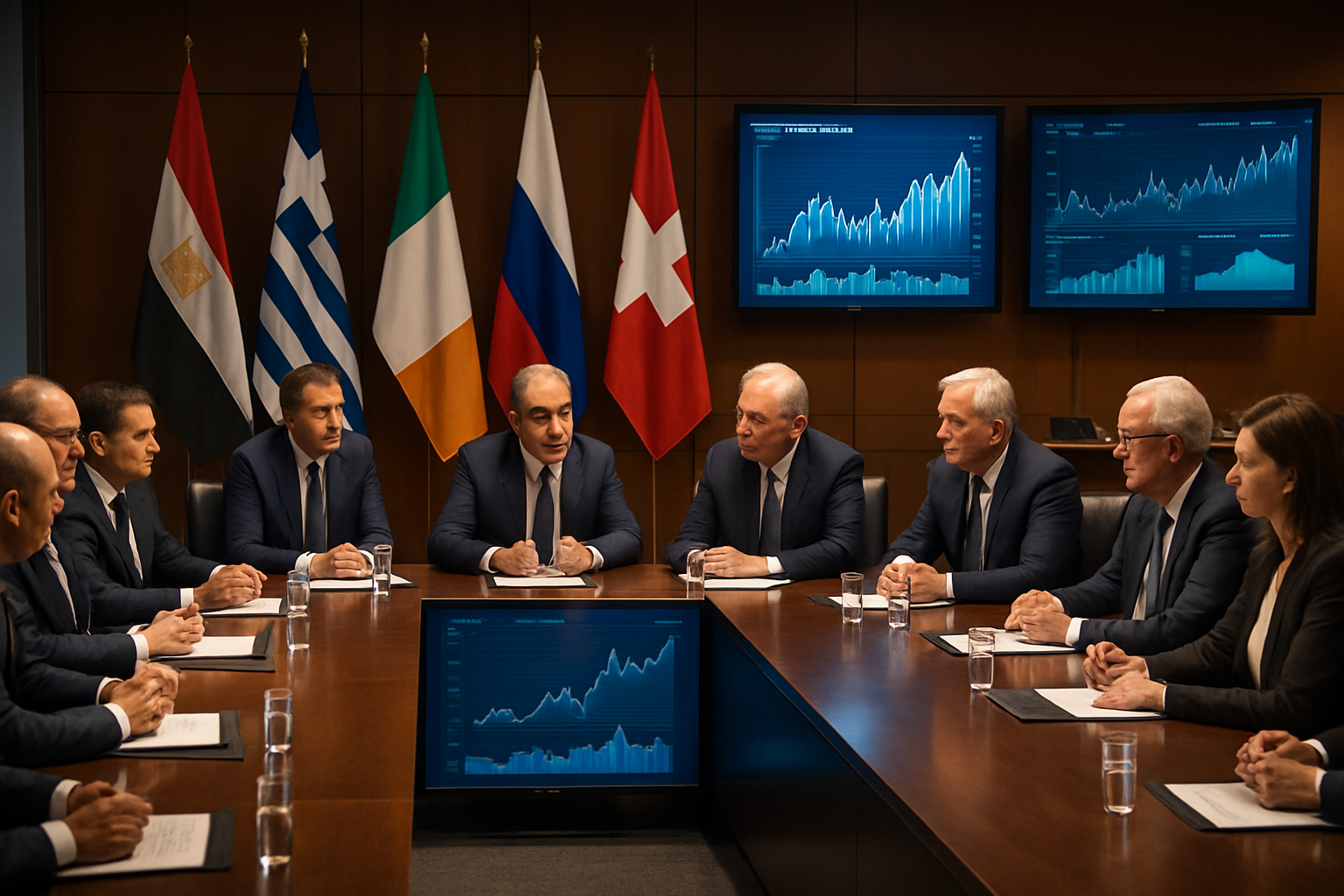
A sweeping analysis of economic developments across eight nations reveals a fundamental transformation in global monetary coordination, with central banks pursuing increasingly independent strategies while businesses adapt to rising energy costs and accelerating digital transformation.
From Australia's fiscal policy reforms to Saudi Arabia's digital payment milestones, the latest economic indicators demonstrate how nations are prioritizing domestic objectives over traditional international coordination, marking a potential watershed moment for 21st-century economic governance.
Australia Signals Major Budget Overhaul
Prime Minister Anthony Albanese announced significant structural changes to Australia's National Disability Insurance Scheme (NDIS) and the elimination of key investor tax breaks in the upcoming May Federal Budget. The NDIS, currently valued at approximately $55 billion, requires fundamental reforms to ensure sustainability amid surging costs that threaten long-term viability.
"The NDIS was there to assist people who have a permanent incapacity to fully participate in society – that's something we need to value and cherish," Albanese stated, while acknowledging the need for comprehensive restructuring to maintain the program's effectiveness.
Concurrently, Australia faces mounting fuel price pressures following the March 2026 energy crisis, with Transport Minister Catherine King warning of a "long tail" to recovery even after the Strait of Hormuz reopens. The government is considering enhanced economic relief measures as motorists are urged to minimize fuel consumption amid ongoing supply constraints.
Central Bank Policy Divergence Accelerates
The post-2008 era of synchronized monetary policy is definitively ending, with major central banks pursuing divergent strategies based on domestic economic conditions. The European Central Bank maintains its 2% deposit rate while other economies adopt markedly different approaches, creating complex currency dynamics across global markets.
This monetary fragmentation represents a significant departure from the coordinated international responses that characterized the previous decade, with central banks increasingly prioritizing national economic stability over global coordination.
"The era of synchronized central banking is evolving toward country-specific strategies that better serve domestic economic objectives while maintaining international cooperation where beneficial."
— Financial Policy Analysis, Planet News
Digital Payment Revolution Gains Momentum
Saudi Arabia's Central Bank (SAMA) achieved a landmark milestone with electronic payments accounting for 85% of total retail transactions in 2025, up from 79% in 2024. This remarkable progression reflects 14.6 billion electronic transactions compared to 12.6 billion the previous year, demonstrating the rapid adoption of digital financial services across the Kingdom.
The growth stems largely from increased transaction volumes through the Mada payment system, particularly in point-of-sale and e-commerce transactions. This digital transformation aligns with Saudi Vision 2030 objectives to reduce cash dependency and advance digital economic infrastructure.
Estonia continues to experience persistent food price inflation despite overall economic stabilization, with food prices running 5-6% higher as of February 2026 while general inflation has cooled to around 3%. This disconnect between headline inflation and grocery costs illustrates the complex challenges facing households across European markets.
Corporate Capital Management Strategies
The Latvian financial sector demonstrates ongoing consolidation with non-bank lender 4finance reducing its authorized capital by €24.1 million, reflecting broader adjustments in the European financial services landscape. This capital reduction indicates strategic repositioning amid changing market conditions and regulatory environments.
Meanwhile, Saudi Arabia's Finance Minister Mohammed Al-Jadaan leads a high-level delegation to the International Monetary Fund and World Bank Group Spring Meetings in Washington, D.C., signaling continued engagement with international financial institutions despite growing emphasis on domestic policy independence.
Energy Crisis Recovery and Export Diversification
Algeria's Fadirco Group exemplifies emerging market export diversification strategies, shipping 39 containers to international markets including 16 to the United Kingdom, 10 to Tunisia, and 9 to the Dominican Republic. This export acceleration represents efforts to diversify beyond hydrocarbon dependency through strategic non-oil sector development.
Egypt's budget allocations reflect similar strategic thinking, with energy subsidy allocations reduced from approximately EGP 150 billion to EGP 120 billion (approximately $2.28 billion) in the 2026/2027 fiscal year. Finance Minister Ahmed Kouchouk emphasized this 20% reduction supports stable energy supplies while encouraging sustainable energy transitions.
Regional Economic Integration Patterns
The developments across multiple continents suggest evolving patterns of regional economic integration that transcend traditional North-South cooperation models. Countries with strong institutional frameworks and clear regulatory environments consistently demonstrate superior economic performance regardless of geographic location or traditional economic classifications.
This shift toward institutional quality over geographic factors represents a fundamental change in global investment strategies, with portfolio managers increasingly focusing on country-specific fundamentals rather than broad regional themes.
Infrastructure Investment as Economic Strategy
The global infrastructure surge, estimated at over $570 billion, continues to reshape transportation and communication networks worldwide. Contemporary projects universally incorporate sophisticated technology integration from the design phase, including real-time monitoring, predictive maintenance, and environmental optimization systems.
Climate adaptation has evolved from optional to mandatory requirements, with enhanced drainage, weather-resistant materials, and backup power systems becoming standard components of major infrastructure projects. This transformation reflects the 18th consecutive month of global temperatures exceeding 1.5°C above pre-industrial levels.
Technology Constraints Drive Innovation
The global semiconductor shortage, which has driven memory chip prices up sixfold, paradoxically accelerates innovation in efficient and sustainable technology solutions. Companies are developing memory-efficient algorithms and distributed processing systems that create more resilient and adaptable networks despite supply constraints.
This technological evolution emphasizes practical utility over speculative innovation, with successful digital payment systems demonstrating superior stability compared to volatile cryptocurrency markets. Government-backed financial infrastructure consistently outperforms private speculative alternatives during periods of market stress.
Investment Strategy Evolution
Market participants are developing increasingly nuanced, country-specific investment approaches that replace broad regional or emerging market strategies. Success now requires deep understanding of local conditions, regulatory environments, and political dynamics rather than reliance on traditional geographic or sector-based categorizations.
This evolution rewards investors with sophisticated country analysis capabilities while challenging conventional investment frameworks. The premium on institutional quality, policy consistency, and economic fundamentals is likely to increase, creating opportunities for countries investing in these capabilities.
Future Economic Governance Models
The April 2026 economic developments establish potential templates for future international economic governance that balance innovation with institutional stability, international cooperation with national sovereignty, and technological advancement with regulatory clarity in an increasingly multipolar global environment.
Success factors for sustainable economic modernization include maintaining monetary sovereignty while participating in global systems, prioritizing economic development over speculative gains, and fostering technological innovation that serves community empowerment rather than creating dependency on external systems.
As nations continue adapting to the post-pandemic economic environment, the emphasis on domestic policy effectiveness over international coordination suggests a fundamental restructuring of global economic relationships. The long-term implications of these shifts will likely influence international economic architecture for decades to come, determining whether the global economy evolves toward enhanced regional integration or increased fragmentation.