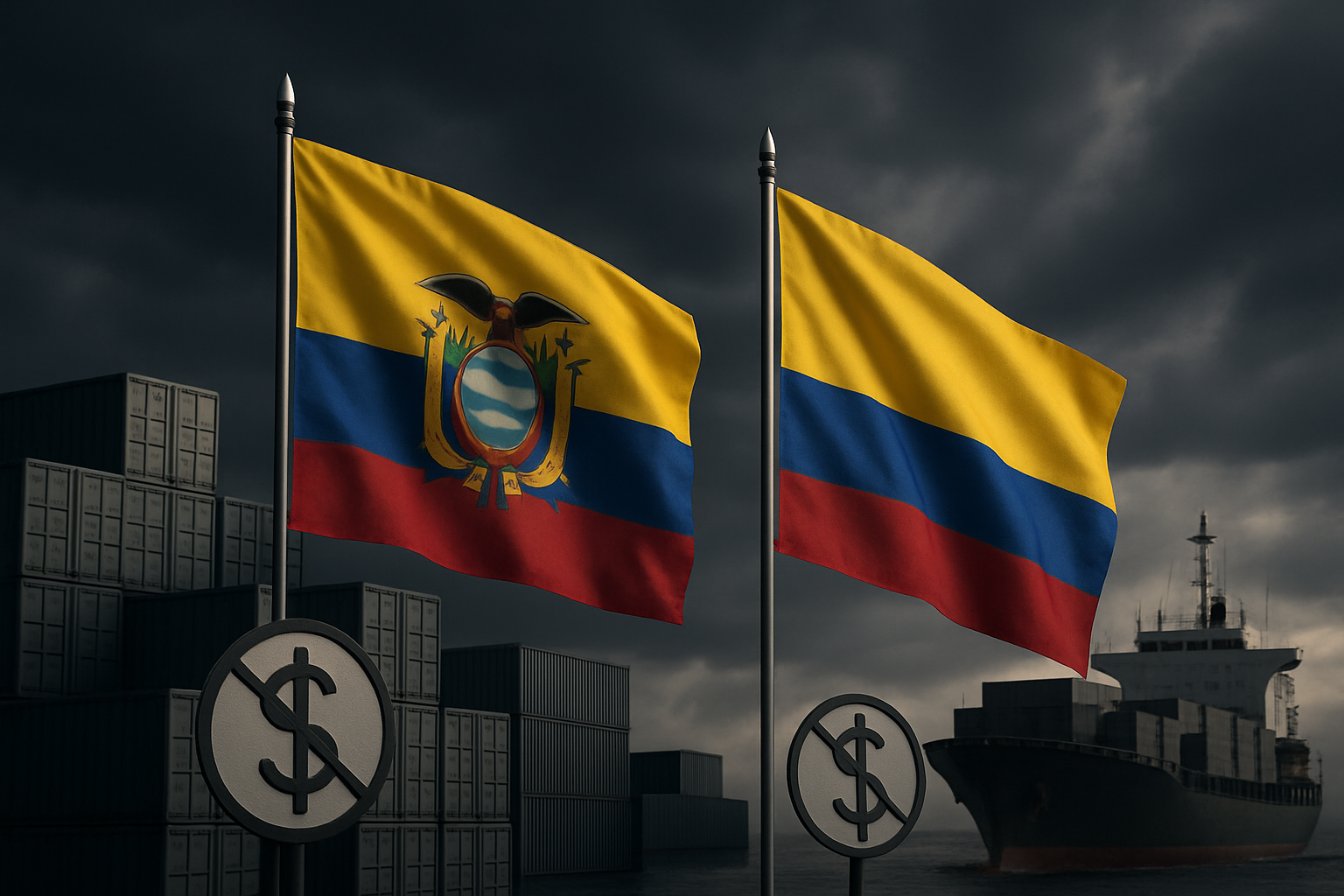
Ecuador has imposed unprecedented 100% tariffs on Colombian imports, doubling previous rates in what President Daniel Noboa described as essential security measures amid escalating tensions with Colombia over drug trafficking and border control issues.
The dramatic tariff increase, effective May 1, 2026, represents the most severe trade dispute between the South American neighbors and threatens to destabilize regional economic cooperation frameworks that have been decades in development.
Immediate Implementation and Scope
The new tariff regime affects virtually all Colombian goods entering Ecuador, from agricultural products to manufactured items. According to sources close to the Ecuadorian government, the measure targets what Quito perceives as Colombia's failure to implement "effective measures" against drug trafficking networks operating along their shared 586-kilometer border.
Trade officials confirmed that the tariffs represent a doubling from the previous 50% rate, making Colombian products prohibitively expensive for most Ecuadorian consumers and businesses. The timing coincides with increased security concerns as Ecuador faces unprecedented levels of violence linked to international drug cartels.
Colombia's Strong Response
Colombian President Gustavo Petro condemned the tariffs as a "monstrosity," announcing immediate plans for his administration to withdraw from the Andean Community trade bloc and pivot toward deeper integration with Mercosur. This would represent a fundamental realignment of Colombia's regional trade strategy.
"These tariffs are not just an economic attack on Colombian producers and workers, but a violation of the spirit of regional cooperation that has defined South American integration for generations."
— Senior Colombian Trade Official
The Colombian government has suspended bilateral dialogue mechanisms with Ecuador, signaling that diplomatic efforts to resolve the dispute have been exhausted. Foreign Ministry sources indicate that Bogotá views the tariff increase as economic warfare that undermines regional stability during a period of significant global uncertainty.
Security Concerns Drive Policy
Ecuador's decision stems from mounting frustration with what President Noboa's administration describes as Colombia's inadequate response to cross-border criminal activity. Drug trafficking organizations have increasingly used Ecuador as a transit route for cocaine destined for global markets, leading to a dramatic spike in violence within Ecuador.
The Noboa administration argues that Colombian authorities have failed to effectively control their side of the border, allowing criminal groups to operate with relative impunity. This has contributed to Ecuador's security crisis, with homicide rates reaching historic levels as rival cartels battle for territory and trafficking routes.
Intelligence sources suggest that the tariff policy is designed to pressure Colombia into implementing more aggressive counter-narcotics operations along the border, though Colombian officials maintain they have already deployed significant resources to combat transnational criminal organizations.
Regional Economic Implications
The trade dispute threatens to undermine broader South American integration efforts at a time when the region faces multiple challenges including climate pressures, democratic governance concerns, and competition from external powers seeking to expand their influence.
Colombia-Ecuador bilateral trade was valued at approximately $2.8 billion annually before the tariff implementation, making Ecuador one of Colombia's most important regional trading partners. Colombian exporters of coffee, textiles, and manufactured goods are expected to bear the brunt of the economic impact.
Regional trade experts warn that the dispute could trigger a broader breakdown in Andean Community cooperation, potentially affecting trade relationships with Peru and Bolivia as well. The timing is particularly problematic as South American countries have been working to strengthen regional supply chains and reduce dependence on external markets.
Historical Context and Precedents
The Ecuador-Colombia relationship has experienced periodic tensions over security issues, but the current tariff implementation represents an unprecedented escalation in economic measures. Previous disputes have typically been resolved through diplomatic channels and regional mediation mechanisms.
The decision to use trade policy as a tool for addressing security concerns reflects a broader trend in Latin American politics, where traditional diplomatic approaches are increasingly seen as insufficient to address complex transnational challenges like drug trafficking and organized crime.
Regional observers note similarities to other recent trade disputes in the Americas, including tensions between the United States and various partners over tariff policies. However, the Ecuador-Colombia case is particularly significant because it involves neighboring countries with deeply integrated economies and shared cultural ties.
International Mediation Efforts
Several regional organizations have offered to mediate the dispute, including the Organization of American States and the Union of South American Nations. Brazil, as the largest economy in the region, has indicated its willingness to facilitate dialogue between the two countries.
However, both Ecuador and Colombia have hardened their positions in recent weeks, making diplomatic resolution increasingly challenging. The suspension of bilateral dialogue mechanisms by Colombia suggests that normal diplomatic channels may be insufficient to address the underlying issues.
International trade law experts are closely monitoring the dispute for its potential implications for World Trade Organization rules and regional trade agreements. The use of security concerns to justify trade restrictions raises complex questions about the relationship between economic policy and national security in international law.
Domestic Political Considerations
For President Noboa, the tariff policy represents an attempt to demonstrate strong leadership on security issues ahead of future electoral considerations. Ecuador's public has grown increasingly frustrated with rising crime rates, and the administration faces pressure to show concrete action against the sources of violence.
In Colombia, President Petro faces his own political challenges related to peace negotiations and economic development. The trade dispute provides an external focus for domestic frustrations while potentially complicating his administration's broader regional integration agenda.
Both leaders face the challenge of managing nationalist sentiments while maintaining the regional cooperation that has historically benefited both countries economically and politically.
Economic Impact Assessment
Preliminary economic analysis suggests that the tariff implementation will significantly affect consumers in both countries. Ecuadorian consumers will face higher prices for Colombian products, while Colombian producers will lose access to an important regional market.
The timing coincides with broader global economic uncertainties, including fluctuating commodity prices and supply chain disruptions that have affected much of Latin America. The additional trade barriers could exacerbate existing economic pressures on both countries.
Small and medium enterprises in both countries are expected to bear disproportionate costs, as they typically have less capacity to adapt quickly to changing trade conditions or find alternative markets.
Looking Forward
The resolution of the Ecuador-Colombia trade dispute will likely require addressing the underlying security concerns that prompted the tariff implementation. This suggests that any lasting solution must involve enhanced cooperation on counter-narcotics efforts and border security.
Regional integration advocates worry that the dispute could set a precedent for using trade policy to address security concerns, potentially undermining the broader South American integration project. The success or failure of mediation efforts may determine whether similar disputes emerge elsewhere in the region.
As both countries navigate this challenging period, the international community watches to see whether regional mechanisms can effectively manage economic disputes rooted in complex security challenges, or whether bilateral tensions will continue to escalate with broader implications for South American cooperation.