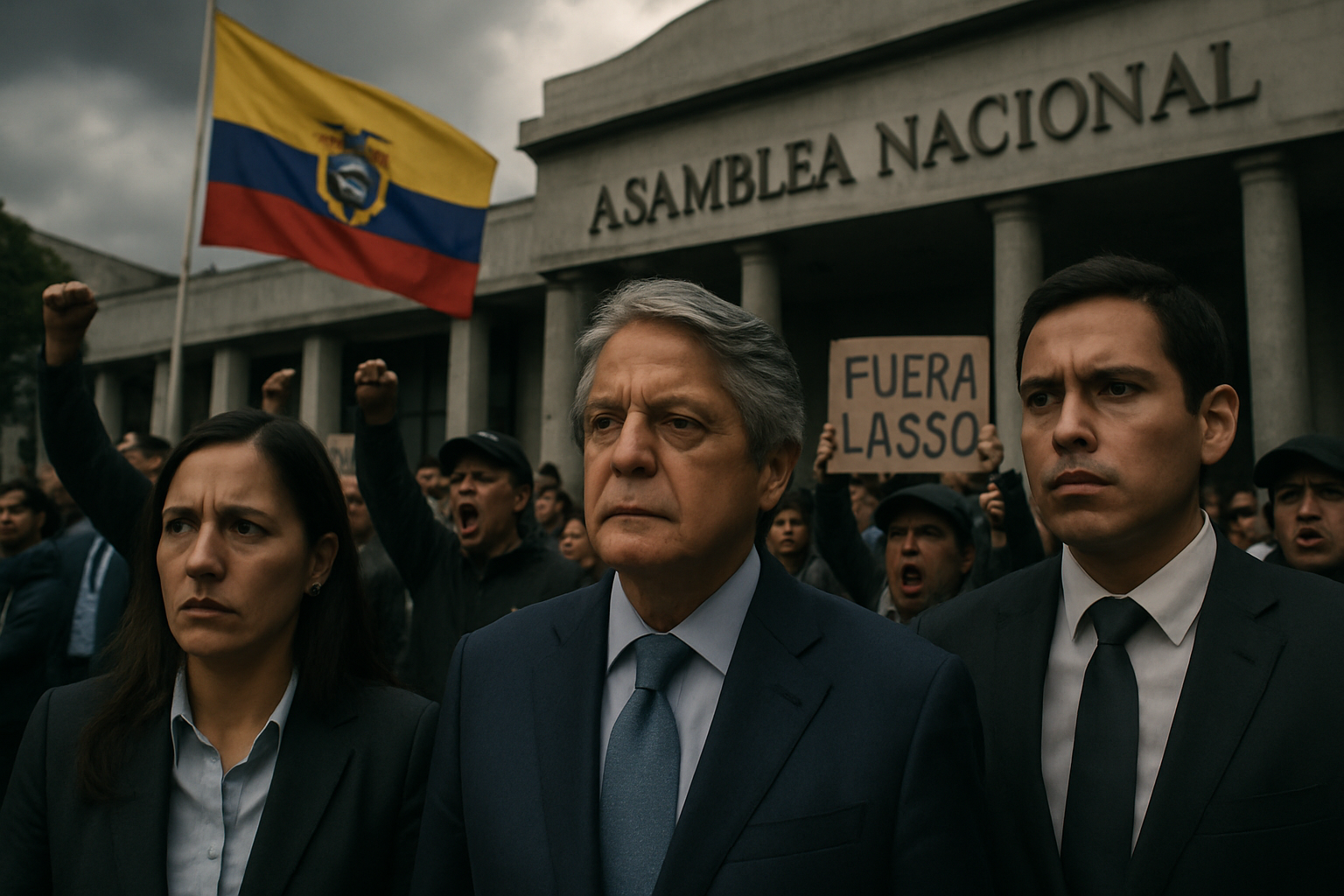
Ecuador is engulfed in its deepest political crisis in years as the opposition Revolución Ciudadana movement has issued an international alert denouncing what it calls a "brutal political persecution" against Guayaquil Mayor Aquiles Álvarez and declaring that the country now lives under a "narco-dictatorship."
The dramatic escalation comes following Álvarez's detention under a preventive prison order, sparking accusations of authoritarian governance and systematic targeting of opposition figures. The crisis has exposed deep fractures in Ecuador's democratic institutions and raised serious questions about judicial independence and the rule of law.
Controversial Detention Orders Spark Constitutional Crisis
The detention of Mayor Aquiles Álvarez has become the flashpoint for broader accusations of political persecution. Revolución Ciudadana, the political movement founded by former President Rafael Correa, has characterized the arrest as part of a systematic campaign to silence opposition voices and consolidate authoritarian control.
Adding to the controversy surrounding the case, Judge Jairo García, who issued the preventive prison order against Álvarez, is himself facing investigations for alleged criminal connections within the notorious "Caso Fachada" corruption scandal. This development has cast serious doubt on the legitimacy of the judicial proceedings and raised questions about whether the detention order was politically motivated.
"The judge who decided on Aquiles Álvarez's imprisonment is being questioned for being investigated in a corruption case himself,"
— Legal observers, as reported by El Diario
The fact that the judge overseeing such a high-profile political case is simultaneously under investigation for corruption has provided ammunition for Revolución Ciudadana's claims of a compromised judicial system being weaponized against political opponents.
International Alert and "Narco-Dictatorship" Accusations
Revolución Ciudadana's decision to issue an international alert represents an unprecedented escalation in Ecuador's political tensions. The movement has called on international human rights organizations and democratic governments to intervene in what they characterize as a systematic breakdown of democratic governance.
The use of the term "narco-dictatorship" is particularly significant, as it directly links current governance structures to Ecuador's ongoing struggles with drug trafficking and organized crime. The opposition's choice of terminology suggests they view the current government as fundamentally compromised by criminal interests rather than merely politically authoritarian.
This framing resonates with broader regional concerns about the intersection of organized crime and political power in Latin America. Ecuador has faced increasing pressure from drug trafficking organizations, with violence levels rising dramatically in recent years as criminal groups compete for control of cocaine trafficking routes.
Historical Context of Political Tensions
Ecuador's current crisis must be understood within the broader context of the country's volatile political history. The nation has experienced significant political instability over the past two decades, with frequent changes of government and ongoing tensions between different political factions.
The Revolución Ciudadana movement, which governed Ecuador from 2007 to 2017 under Rafael Correa, has maintained that subsequent administrations have systematically persecuted their members through what they characterize as "lawfare" – the use of legal proceedings to achieve political objectives.
Current tensions reflect deep ideological divisions about Ecuador's political and economic direction, with disputes over everything from mining policy to international relations creating an atmosphere of perpetual conflict between government and opposition forces.
Judicial Independence Under Scrutiny
The revelation that Judge García faces corruption investigations while presiding over politically sensitive cases has intensified scrutiny of Ecuador's judicial system. Legal experts have raised concerns about whether the country's courts can provide fair and impartial justice when judges themselves are embroiled in criminal investigations.
The situation recalls broader challenges facing judicial systems across Latin America, where courts often become battlegrounds for political conflicts rather than neutral arbiters of the law. International observers have consistently raised concerns about judicial independence in Ecuador, particularly regarding high-profile political cases.
The timing of these revelations is particularly damaging, as Ecuador continues to face international pressure to strengthen its democratic institutions and combat corruption. The apparent contradiction of having a potentially compromised judge oversee politically sensitive detention decisions undermines confidence in the entire judicial process.
Regional and International Implications
Ecuador's political crisis is unfolding against the backdrop of broader regional challenges to democratic governance throughout Latin America. The country's struggles with organized crime, political polarization, and institutional weakness reflect patterns seen across the region, from Colombia's ongoing security challenges to Peru's recent political instability.
The opposition's appeal for international intervention represents a recognition that Ecuador's domestic institutions may be insufficient to resolve the current crisis. This approach follows a pattern established by other regional opposition movements that have sought international pressure to constrain what they view as authoritarian governments.
International human rights organizations and democratic governments will likely monitor developments closely, particularly given Ecuador's strategic importance for regional stability and drug interdiction efforts. The country's position as a key transit point for cocaine trafficking makes political stability crucial for broader anti-narcotics efforts.
Economic Dimensions of the Crisis
Political instability in Ecuador carries significant economic implications, both domestically and internationally. The country's economy relies heavily on oil exports and has faced persistent challenges with debt sustainability and fiscal management.
Political uncertainty typically discourages foreign investment and can complicate Ecuador's relationships with international financial institutions. The opposition's characterization of the government as a "narco-dictatorship" could particularly damage the country's international reputation and complicate efforts to attract legitimate business investment.
Path Forward Uncertain
As Ecuador grapples with this constitutional crisis, the path forward remains deeply uncertain. The opposition's international alert represents a significant escalation that could attract unwanted international scrutiny, while the government faces mounting pressure to address questions about judicial independence and the rule of law.
The case of Judge García's dual role as both judicial decision-maker and corruption investigation subject illustrates the complex web of legal and political challenges facing Ecuador's institutions. Resolving these contradictions will require significant reforms to restore public confidence in democratic governance.
The broader question of whether Ecuador can overcome its current political polarization and institutional weaknesses remains open. Success will likely require meaningful dialogue between political factions, comprehensive judicial reforms, and sustained international support for democratic development.
"Ecuador currently lives under a dictatorship, experiencing brutal political persecution,"
— Revolución Ciudadana movement statement
The resolution of Ecuador's current crisis will have implications far beyond its borders, potentially serving as either a model for democratic recovery or a cautionary tale about institutional collapse in the face of organized crime and political polarization. As international observers watch closely, the stakes could not be higher for Ecuador's democratic future.