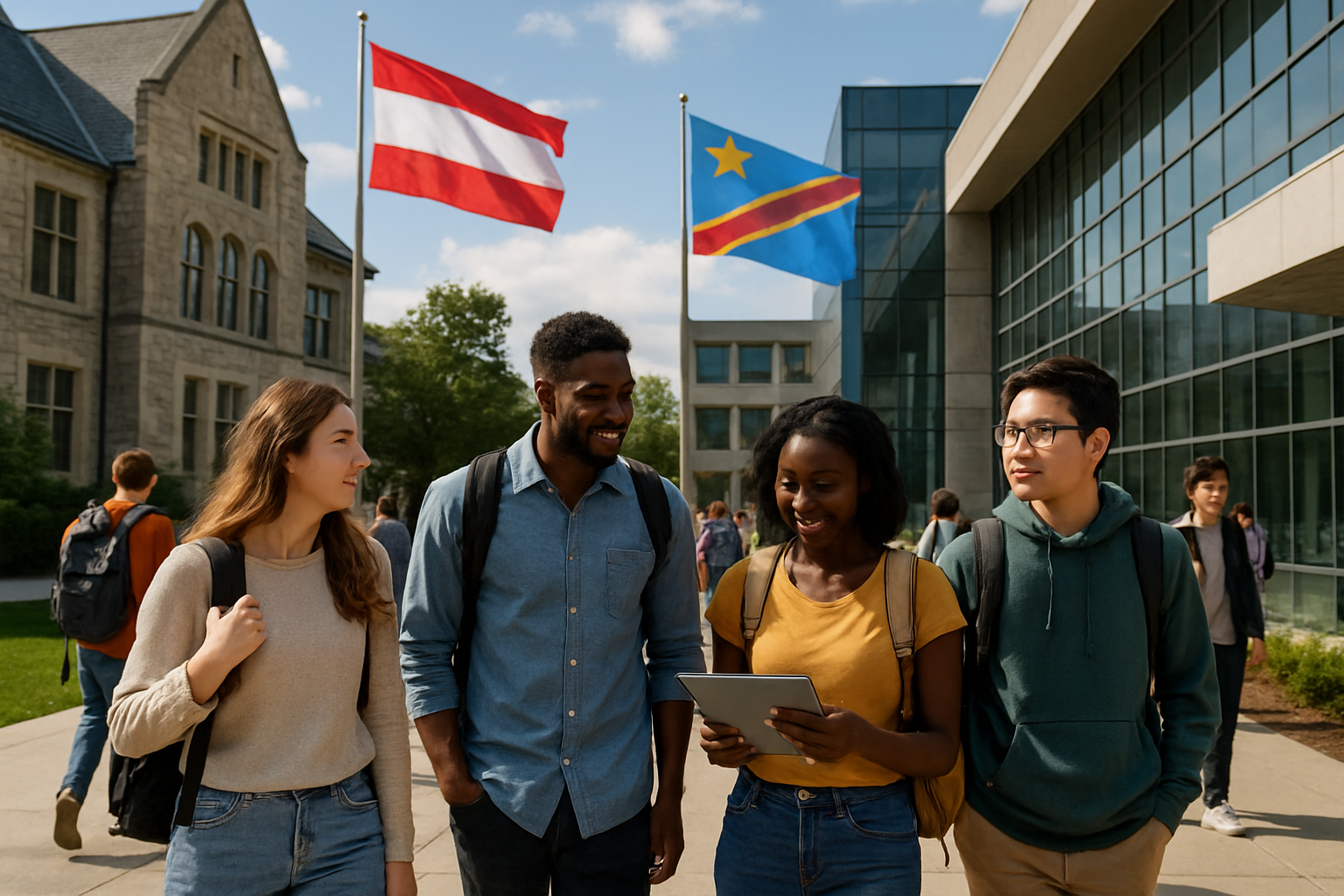
Educational systems across two continents face mounting pressure to reform amid growing student concerns and institutional challenges, as Austria debates enhanced university guidance measures while the Democratic Republic of Congo remains divided over its controversial LMD higher education framework five years after implementation.
The latest developments underscore the global educational crisis documented throughout 2026, revealing how both developed and developing nations struggle with fundamental questions about educational accessibility, quality, and purpose in an rapidly evolving global economy.
Austria's University Guidance Crisis
The Austrian Student Union (AG) has launched a comprehensive campaign calling for "More Orientation Instead of Planless Educational Choice," highlighting persistent problems with university entrance decisions that lead to high dropout rates and wasted resources. The initiative specifically targets the need for improved study and career guidance to prevent poor decisions at the start of university programs.
Austria's educational challenges occur within the broader context of the coalition government's first year of educational reforms, which have produced mixed results. The comprehensive policy package has included mobile device restrictions in classrooms, revival of classical language curricula, and enhanced summer school programs, though implementation effectiveness remains under political scrutiny.
"Better study and career orientation must prevent wrong decisions at the study start"
— Austrian Student Union Campaign Statement
The Austrian situation reflects broader European tensions between traditional educational foundations and technological literacy demands. Earlier this year, Education Minister Christoph Wiederkehr's proposal to reduce Latin instruction for AI courses triggered unprecedented opposition from teacher unions, exemplifying the continent-wide debate over curriculum modernization.
Democratic Republic of Congo's Persistent Higher Education Divide
Five years after implementing the Licence-Master-Doctorat (LMD) system - the European higher education framework adopted to align with international standards - the Democratic Republic of Congo's university community remains deeply divided over the reform's effectiveness and implementation.
The LMD system was introduced as part of the Bologna Process harmonization effort, designed to create comparable degree structures across participating countries. However, the Radio Okapi investigation reveals that the system continues to generate significant controversy among educators, students, and administrators at institutions like the University of Kinshasa (UNIKIN).

The ongoing division reflects deeper challenges facing African higher education systems attempting to modernize while maintaining cultural relevance and addressing local development needs. Critics argue that the European model may not adequately serve African educational priorities or employment markets, while supporters emphasize the importance of international recognition and student mobility opportunities.
Global Context: The 2026 Educational Technology Renaissance
These developments unfold within what educational analysts have termed the "2026 Educational Technology Renaissance" - a worldwide phenomenon characterized by thoughtful digital tool integration with traditional educational values. The movement emphasizes human-centered approaches that enhance rather than replace fundamental teacher-student relationships.
Malaysia leads this transformation with a remarkable 97.82% teacher placement rate and the world's first AI-integrated Islamic school combining artificial intelligence with traditional religious and academic learning. Singapore's WonderBot 2.0 heritage education program and Canadian AI teaching assistants demonstrate successful models that maintain critical thinking standards while leveraging technological advancement.
However, the global memory crisis, with semiconductor prices surging sixfold due to AI development demands, creates infrastructure bottlenecks affecting technology-dependent programs until new manufacturing facilities come online in 2027. This forces educational systems toward more efficient, sustainable technology integration approaches that emphasize enhancement over replacement of human learning relationships.
Prevention-First Educational Economics
Educational experts increasingly advocate for prevention-first approaches that demonstrate superior economic outcomes compared to crisis-response models. Countries implementing comprehensive prevention programs report improved community resilience, reduced long-term social service demands, and enhanced international competitiveness through strategic human capital development.
The Austrian guidance initiative and DRC's ongoing LMD evaluation both reflect this shift toward proactive educational planning. Research consistently shows that educational investments during critical decision-making periods yield the highest individual and societal returns, making early intervention systems crucial for long-term success.
"Educational systems must serve as strategic infrastructure for 21st-century prosperity, not merely cost centers"
— International Education Policy Research Consortium
International Cooperation and Knowledge Sharing
Despite challenges with traditional multilateral organization funding, innovative bilateral partnerships and peer-to-peer knowledge sharing networks continue driving educational innovation globally. The distributed cooperation model allows for flexible, culturally responsive approaches while maintaining evidence-based standards.
Both Austria and the Democratic Republic of Congo participate in various international educational frameworks, though with different focuses. Austria engages primarily with European Union educational coordination efforts, while the DRC participates in African Union educational initiatives and seeks partnerships with former colonial education systems.
The success of educational transformation increasingly requires adaptation to specific cultural, economic, and social contexts rather than standardized solutions. Effective modernization must preserve human creativity, critical thinking, and cultural knowledge while preparing students for an interconnected global economy requiring both technical competence and cultural authenticity.
Critical Juncture for Global Education
March 2026 represents a critical juncture in global educational policy development, where the success or failure of current reform initiatives will determine educational trajectories for the coming decade. The stakes include global capacity for addressing climate change, technological disruption, and social cohesion through quality educational systems serving as strategic infrastructure.
The window for effective coordinated action is narrowing as technological change accelerates and global challenges intensify. Educational institutions worldwide face similar pressures despite vastly different resources and cultural contexts, making international cooperation and knowledge sharing more critical than ever.
Looking Forward: Sustainable Educational Transformation
The contrasting challenges faced by Austria and the Democratic Republic of Congo illustrate the universal nature of educational transformation pressures while highlighting the need for locally adapted solutions. Austria's focus on university guidance systems addresses developed-world concerns about educational efficiency and career preparation, while the DRC's LMD system debate reflects developing-world tensions between international standards and local relevance.
Success in both contexts requires sustained political commitment beyond electoral cycles, comprehensive stakeholder engagement including educators and communities, and adequate resource allocation for long-term sustainability. Most importantly, educational transformation must maintain the human relationships that define authentic education while embracing necessary technological and structural advancement.
As the Educational Technology Renaissance continues to evolve, the experiences of countries like Austria and the Democratic Republic of Congo provide crucial insights for the global community working to create educational systems that serve human flourishing while preparing citizens for the challenges and opportunities of an interconnected world.