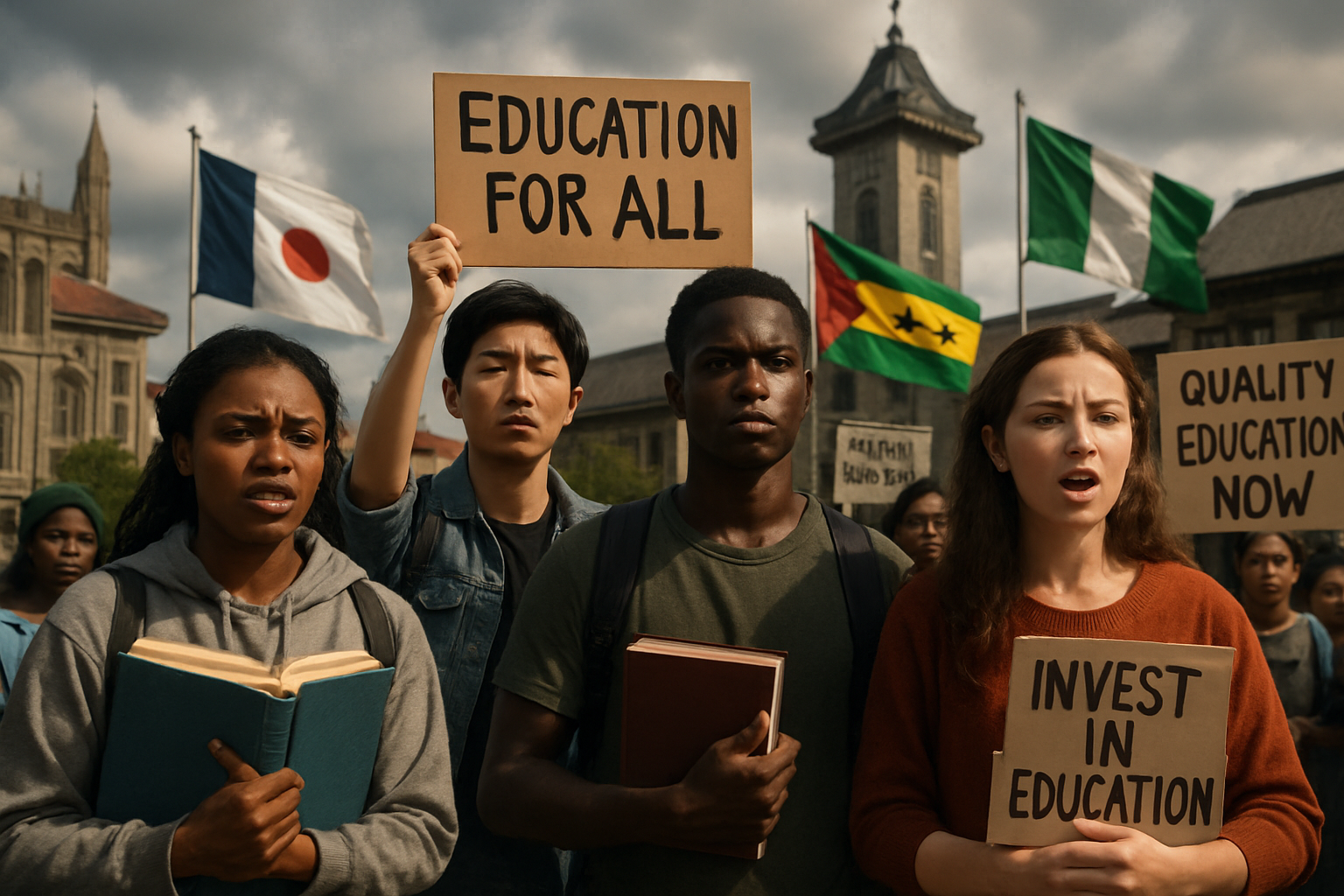
Educational systems across four continents are confronting fundamental structural challenges as France advances legislation to regulate private higher education, UK universities establish operations in India amid domestic immigration pressures, Nigeria grapples with enrollment disputes, and Senegal faces renewed student protests following government crisis management failures.
These developments represent the latest chapter in what education analysts have termed the "2026 Global Educational Crisis," a year-long series of institutional breakdowns, policy reforms, and student mobilization efforts that have exposed deep vulnerabilities in educational governance worldwide.
France Advances Private Education Regulation
The French Senate has adopted a landmark bill targeting the regulation of private higher education institutions, addressing what Education Minister Philippe Baptiste describes as urgent abuses within the lucrative private sector. The legislation serves as a precursor to broader governmental reforms promised to the National Assembly.
The debate has crystallized around a fundamental philosophical divide about the commercialization of education. As parliamentary discussions intensify, critics argue that current private education practices treat "students like commodities," prompting calls for comprehensive regulatory oversight.
This regulatory push reflects broader European concerns about educational equity and quality standards as private institutions proliferate across the continent. The French initiative could establish a template for other European Union nations grappling with similar commercialization pressures in higher education.
UK Universities Expand to India Amid Domestic Pressures
British universities are establishing satellite campuses in India as they face mounting government pressure to reduce international student recruitment domestically. The Conservative government's immigration reduction agenda has created unprecedented tensions between higher education institutions and policymakers.
The expansion to India represents a strategic pivot as UK universities seek to maintain international student revenue streams while navigating restrictive domestic policies. This trend highlights the global mobility of higher education institutions responding to nationalist political pressures.
Industry experts warn that sustained restrictions on international student recruitment could undermine the UK's position as a global education hub, potentially benefiting competitors like Australia, Canada, and European institutions that maintain more welcoming policies toward international students.
Nigeria Faces Enrollment Crisis at University of Benin
The University of Benin (UNIBEN) has created a crisis of confidence among students and parents after admitting 350 students to its Doctor of Optometry program despite having authorization for only 150. The institution now faces the difficult task of selecting which students will continue in the program.
According to concerned parents, the university has provided no transparent criteria for the selection process, leaving families uncertain about their children's educational future. The lack of clear communication has intensified anxiety among students who paid acceptance fees and began coursework in November 2025.
"They've not been transparent, there's no clear communication, and no explanation of how the 150 students will be chosen"
— Concerned Parent
This administrative failure exemplifies broader challenges facing Nigerian higher education, including inadequate capacity planning, poor communication systems, and insufficient regulatory oversight of university admission processes.
Senegal's Student Protests Reveal Government Failures
Student demonstrations in Senegal have intensified following violent confrontations at the University Cheikh Anta Diop (UCAD) that resulted in the death of medical student Abdoulaye Ba. The protests reflect growing youth frustration with a government they helped bring to power but which has failed to deliver on promises.
The immediate trigger for the protests was unpaid student stipends, but the demonstrations have evolved into broader criticism of President Bassirou Diomaye Faye's handling of educational crises. Students issued a powerful statement declaring: "We are starved, tortured, betrayed, deceived, disappointed, and one of our own has been killed."
The crisis has been compounded by university restaurant closures, creating food insecurity for thousands of students dependent on campus facilities. This combination of financial neglect and basic service failures has created a combustible situation that extends beyond educational policy to fundamental governance legitimacy.
Global Context of Educational System Breakdown
These four cases represent different facets of a global educational crisis that has been building throughout 2026. From Bangladesh's university leadership transitions to New Zealand's child safety failures in education oversight, from Malaysia's successful AI integration to Estonia's technology implementation disasters, educational systems worldwide are experiencing unprecedented stress.
The crisis transcends economic development levels, affecting both developed and developing nations. While countries like Singapore demonstrate successful integration of AI technologies in education through innovations like WonderBot 2.0, others struggle with basic infrastructure, funding, and governance challenges.
Economic Pressures and Political Responses
Economic constraints have emerged as a critical factor driving educational policy decisions across multiple nations. France's regulation of private education reflects concerns about accessibility and equity, while the UK's restrictions on international students stem from broader immigration and economic nationalism pressures.
In developing nations like Nigeria and Senegal, resource scarcity manifests in different ways - administrative failures in Nigeria and direct service cuts in Senegal. These economic pressures are forcing governments to make difficult choices between educational expansion, quality maintenance, and fiscal responsibility.
Student Agency and Mobilization
A common thread across all four cases is the increasing assertion of student agency in challenging institutional failures. From Nigerian parents demanding transparency in admission processes to Senegalese students organizing protests against government neglect, educational stakeholders are no longer passive recipients of institutional decisions.
This pattern of student mobilization reflects broader global trends toward educational accountability and democratic participation in institutional governance. Social media and international connectivity have enabled rapid communication and solidarity among student movements across national boundaries.
Technology Integration Amid Crisis
While these four nations grapple with fundamental governance and resource challenges, the broader global educational landscape is simultaneously experiencing what experts call the "2026 Educational Technology Renaissance." Countries like Malaysia have successfully integrated AI into Islamic education, while Finland advances wellness literacy programs.
However, the contrast between technological innovation and basic institutional failures highlights the uneven distribution of educational development globally. Advanced AI integration requires stable institutional foundations that many educational systems currently lack.
International Cooperation and Reform Models
The global nature of these educational challenges has prompted increased international cooperation and knowledge sharing. Successful reform models from countries like Taiwan, which implemented a comprehensive university tuition freeze benefiting 910,000 students, provide templates for addressing affordability concerns.
Similarly, innovative approaches to educational equity, such as Uganda's efforts to reverse gender gaps in primary school completion, offer insights for addressing demographic and access challenges across different cultural contexts.
Future Implications and Reform Requirements
The convergence of these educational crises in February 2026 represents a critical juncture for global educational policy. Success in addressing these challenges requires coordinated action across multiple dimensions: adequate funding, effective governance, transparent communication, and responsive institutional management.
Key reform requirements identified by international education experts include sustained political commitment, adequate resource allocation, comprehensive stakeholder engagement, realistic implementation timelines, and robust accountability mechanisms. Early warning systems for institutional instability and rapid response mechanisms for educational emergencies are also essential.
The pattern of educational system vulnerabilities transcending economic development levels suggests that technology alone cannot address deeper systemic problems of governance, safety, resource allocation, and democratic accountability in education.
Conclusion
The educational challenges facing France, the United Kingdom, Nigeria, and Senegal in February 2026 reflect broader global tensions between educational expansion, quality maintenance, and institutional governance. While some nations demonstrate successful innovation and reform, others struggle with fundamental operational and political challenges.
The international community's response to these crises will likely determine whether 2026 marks a turning point toward comprehensive educational reform or represents a deepening of institutional vulnerabilities that could undermine educational progress globally. The stakes extend far beyond national boundaries, affecting global knowledge production, democratic development, and economic competitiveness for the coming decade.
As these four nations navigate their respective challenges, their experiences provide critical lessons for educational systems worldwide about the complex interplay between political commitment, institutional capacity, and student welfare in maintaining effective educational governance under pressure.