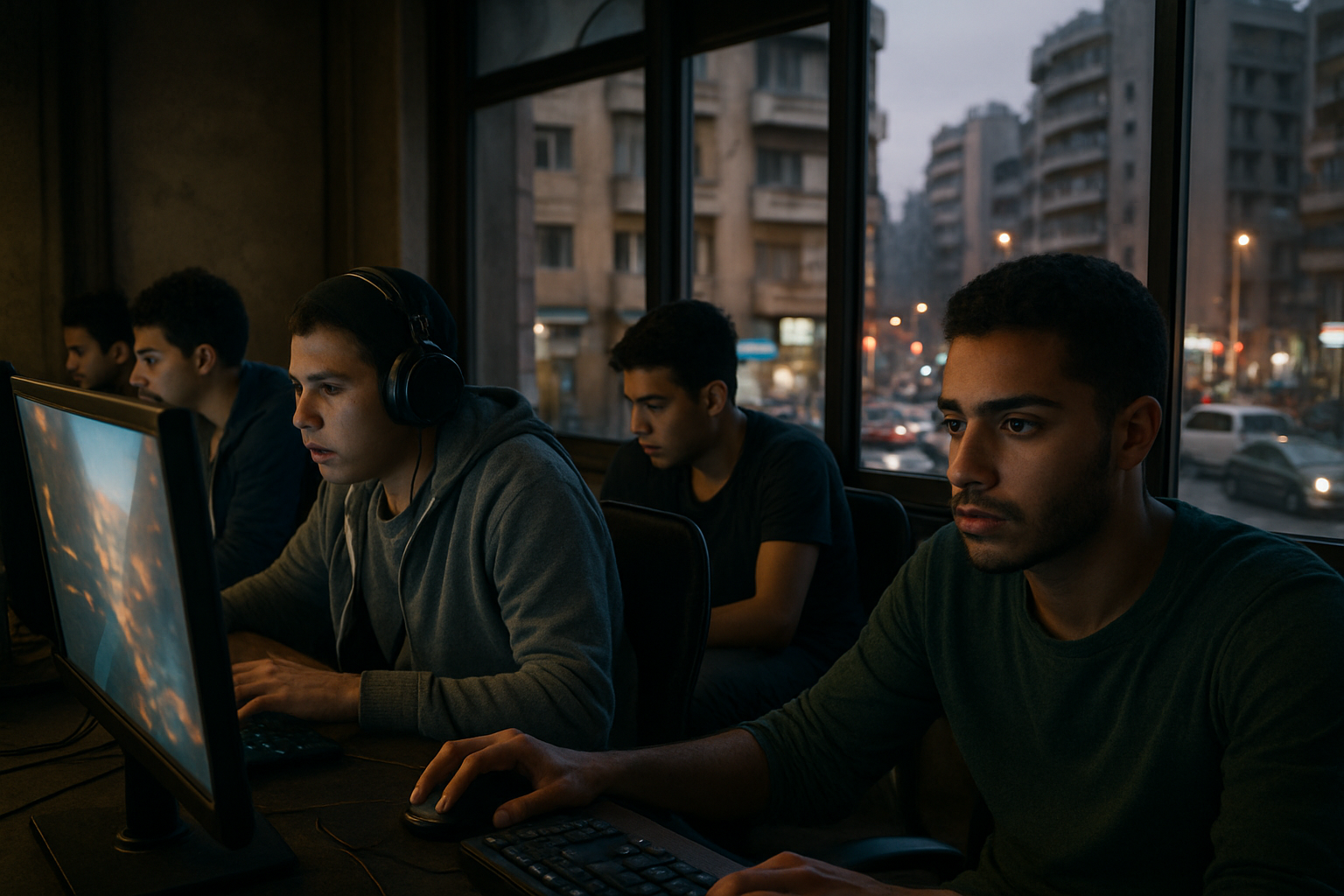
In the crowded apartments of Cairo and the bustling coffee shops of Giza, millions of Egyptians settle in front of their computers and smartphones each day, preparing for gaming sessions that stretch for hours—a pattern that has positioned Egypt at the epicenter of a global gaming addiction crisis while the broader digital entertainment industry undergoes unprecedented transformation.
According to a comprehensive 2023 report by Niko Partners, a leading video games research company, Egypt accounts for 40 million players, representing 58.5 percent of gamers across the three largest gaming markets in the Middle East and North Africa (MENA) region, including Saudi Arabia, Egypt, and the UAE. This massive gaming population has established Egypt as a dominant force in regional digital entertainment consumption.
Even more striking, Egyptians lead the world in daily gaming duration, averaging 1 hour and 43 minutes per day—significantly higher than global averages and indicating a level of engagement that gaming industry experts are now recognizing as potentially problematic.
The Transformation from Leisure to Compulsion
What began as recreational activity has evolved into something far more concerning for a growing segment of Egypt's gaming population. As of 2021, approximately 3 percent of the global gaming population—estimated at 2.96 billion players worldwide—meets clinical criteria for gaming addiction, a pattern that appears particularly pronounced in high-consumption markets like Egypt.
The shift from casual entertainment to compulsive behavior reflects broader changes in how digital entertainment platforms operate. Industry analysis reveals that gaming platforms have evolved from specialized services to comprehensive entertainment destinations, employing sophisticated engagement strategies that compete directly with traditional streaming platforms.
These platforms now utilize mobile-first optimization, AI-powered personalized recommendations, and advanced user experience enhancements designed to maximize engagement time. The same technological innovations that have driven the industry's remarkable growth—including live dealer technology, instant access capabilities, and seamless cross-device experiences—have also created conditions where some players find themselves unable to stop gaming.
Global Context of Digital Entertainment Revolution
Egypt's gaming situation unfolds within a broader "2026 Gaming Technology Renaissance" that has fundamentally transformed the entertainment landscape. Major gaming platforms now operate thousands of titles from hundreds of providers, representing unprecedented consolidation toward mega-platforms that serve as comprehensive entertainment ecosystems.
This transformation extends beyond simple game libraries. Modern gaming platforms integrate social features, community elements, streaming technology, and increasingly sophisticated approaches that blur traditional boundaries between gaming, social media, and entertainment consumption.
"The industry has evolved from simple gaming to complex entertainment ecosystems with social features that serve multiple functions simultaneously," explains a recent industry analysis.
— Gaming Industry Report, February 2026
The global gaming industry has demonstrated remarkable resilience during economic uncertainty, maintaining growth even as other entertainment sectors face challenges. This resilience has attracted massive investments and encouraged further innovation, but has also intensified concerns about the industry's impact on vulnerable populations, particularly young people.
The Youth Mental Health Crisis Connection
Egypt's gaming patterns coincide with growing international concern about digital entertainment's impact on youth mental health. Research demonstrates that 96 percent of children aged 10-15 use social media and digital entertainment platforms, with 70 percent experiencing harmful content exposure and over 50 percent encountering cyberbullying.
Studies conducted by Dr. Ran Barzilay at the University of Pennsylvania show that early smartphone exposure, particularly before age 5, causes persistent sleep disorders, cognitive decline, and weight problems that can extend into adulthood. Children who spend four or more hours daily on screens face a 61 percent increased risk of depression through sleep disruption and decreased physical activity.
These findings have particular relevance for Egypt, where high gaming engagement often begins at young ages and extends through adolescence into adulthood. The combination of extended gaming sessions, social media integration, and the addictive design features common to modern digital platforms creates a potentially dangerous environment for developing minds.
Global Regulatory Response and Industry Pushback
The scale of Egypt's gaming engagement occurs amid the most significant wave of digital platform regulation in internet history. Spain has implemented criminal executive liability frameworks that create imprisonment risks for technology executives, while Australia's under-16 social media ban has eliminated 4.7 million teen accounts, proving that technical restrictions on digital platform access are feasible.
European coordination across multiple countries—including Greece, France, Denmark, Austria, and the UK—represents sophisticated international cooperation designed to prevent platforms from simply relocating to avoid regulations. The European Commission has found major platforms in violation of digital services regulations for employing "addictive design features" including unlimited scrolling, autoplay, and personalized recommendations that maximize dependency over user wellbeing.
Industry resistance to these regulatory efforts has been intense, with technology leaders characterizing government interventions as authoritarian overreach. However, the scale of problems in markets like Egypt—where gaming consumption has reached levels that interfere with educational, social, and family functioning for significant populations—has strengthened arguments for meaningful regulatory intervention.
The Economics of Digital Entertainment Transformation
The gaming industry's evolution toward comprehensive entertainment platforms has created significant economic opportunities alongside social challenges. Welcome bonuses exceeding $4,000 with hundreds of free spins demonstrate the high customer acquisition investments that drive platform growth, while multilingual support across 11+ languages reflects the global reach of modern gaming operations.
However, this economic success has come with infrastructure challenges. A global semiconductor shortage has created sixfold price increases affecting gaming hardware production until 2027, forcing platforms to develop more efficient workflows while dealing with increased demand for sophisticated technology systems.
The economic model underlying modern gaming platforms depends heavily on engagement-based metrics, creating inherent tension between commercial success and user wellbeing. Platforms that successfully keep users engaged for longer periods generate more revenue, but this same engagement can become problematic when it interferes with other aspects of life.
Cultural and Social Implications for Egypt
Egypt's position as the MENA region's gaming leader carries significant cultural and social implications beyond individual addiction concerns. The concentration of gaming activity in urban areas like Cairo and Giza reflects broader social and economic patterns, including limited recreational alternatives, social media integration, and the appeal of digital communities for young people facing various social pressures.
Gaming platforms have transcended their original entertainment roles to become essential social infrastructure, providing community spaces and shared experiences that extend beyond individual games. For many young Egyptians, these platforms offer social connection, achievement recognition, and community participation that may be less available through traditional social institutions.
However, the dominance of gaming in daily life also raises questions about cultural preservation and the development of local entertainment alternatives. While Egypt has a rich cultural heritage in music, film, and traditional arts, the appeal of global gaming platforms may be displacing engagement with local cultural forms.
Technological Innovation and Human Impact
The technological sophistication underlying modern gaming platforms represents genuine innovation in user experience, community building, and entertainment delivery. AI-powered recommendations, real-time multiplayer capabilities, and sophisticated graphics have created genuinely engaging experiences that can provide meaningful entertainment and social connection.
Yet the same technologies that enable positive gaming experiences also facilitate potentially harmful engagement patterns. The ability to provide personalized content that keeps users engaged for extended periods can transition from helpful customization to manipulative design that exploits psychological vulnerabilities.
Successful technology integration models from other contexts—such as Canadian AI teaching assistants that maintain critical thinking standards and Malaysian AI-integrated educational programs—suggest that technology can enhance rather than replace human capabilities when implemented thoughtfully with clear human-centered objectives.
Alternative Approaches and Prevention Strategies
While Egypt faces significant challenges related to gaming addiction, other countries have developed alternative approaches that may offer relevant models. Malaysia emphasizes parental responsibility through comprehensive digital safety campaigns, while Oman implements "Smart tech, safe choices" education programs focused on conscious digital awareness rather than restrictive bans.
Prevention-first healthcare approaches have shown promise in addressing mental health challenges related to digital technology use. Montana achieved an 80 percent reduction in police mental health calls through mobile crisis teams, while Zimbabwe has implemented proactive family-school coordination for suicide prevention.
These models suggest that addressing gaming addiction requires comprehensive approaches that combine education, community support, mental health services, and thoughtful technology design rather than relying solely on individual willpower or technological restrictions.
The Future of Gaming and Digital Entertainment
Egypt's experience with gaming addiction occurs at a critical inflection point for the global entertainment industry. The success of gaming platforms in creating engaging experiences demonstrates the positive potential of technological innovation in entertainment, but the scale of addiction problems reveals the need for more responsible approaches to platform design and marketing.
The industry faces fundamental questions about whether platforms designed to maximize engagement can coexist with healthy user development, particularly for young people whose brains are still developing. The February 2026 period has been characterized as a watershed moment for determining whether democratic institutions can effectively regulate multinational technology platforms while preserving the beneficial aspects of digital innovation.
Future developments will likely require unprecedented coordination between governments, technology companies, educational institutions, and civil society organizations. Success will depend on finding approaches that harness the transformative potential of gaming and digital entertainment while preserving the human elements that provide genuine emotional resonance and cultural significance.
Implications for Egypt and Beyond
Egypt's position as the global leader in daily gaming consumption makes it a critical test case for how societies can address the challenges created by sophisticated digital entertainment platforms. The country's experience will likely influence approaches taken by other nations facing similar challenges with youth digital engagement and platform addiction.
The economic importance of the gaming industry—both globally and within Egypt—means that solutions must balance legitimate concerns about addiction and mental health impacts with recognition of the industry's positive contributions to employment, technological innovation, and entertainment.
Ultimately, Egypt's gaming situation reflects broader questions about how societies can maintain human agency and cultural authenticity in an era of increasingly sophisticated technological systems designed to capture and hold attention. The resolution of these challenges will have implications far beyond gaming, affecting how democratic societies navigate the relationship between technological innovation and human flourishing in the 21st century.
As Egypt continues to lead the world in gaming engagement, the approaches taken to address both the benefits and challenges of this digital entertainment revolution will serve as a template for other nations grappling with similar transformations in how their populations interact with technology, entertainment, and each other in an increasingly connected world.