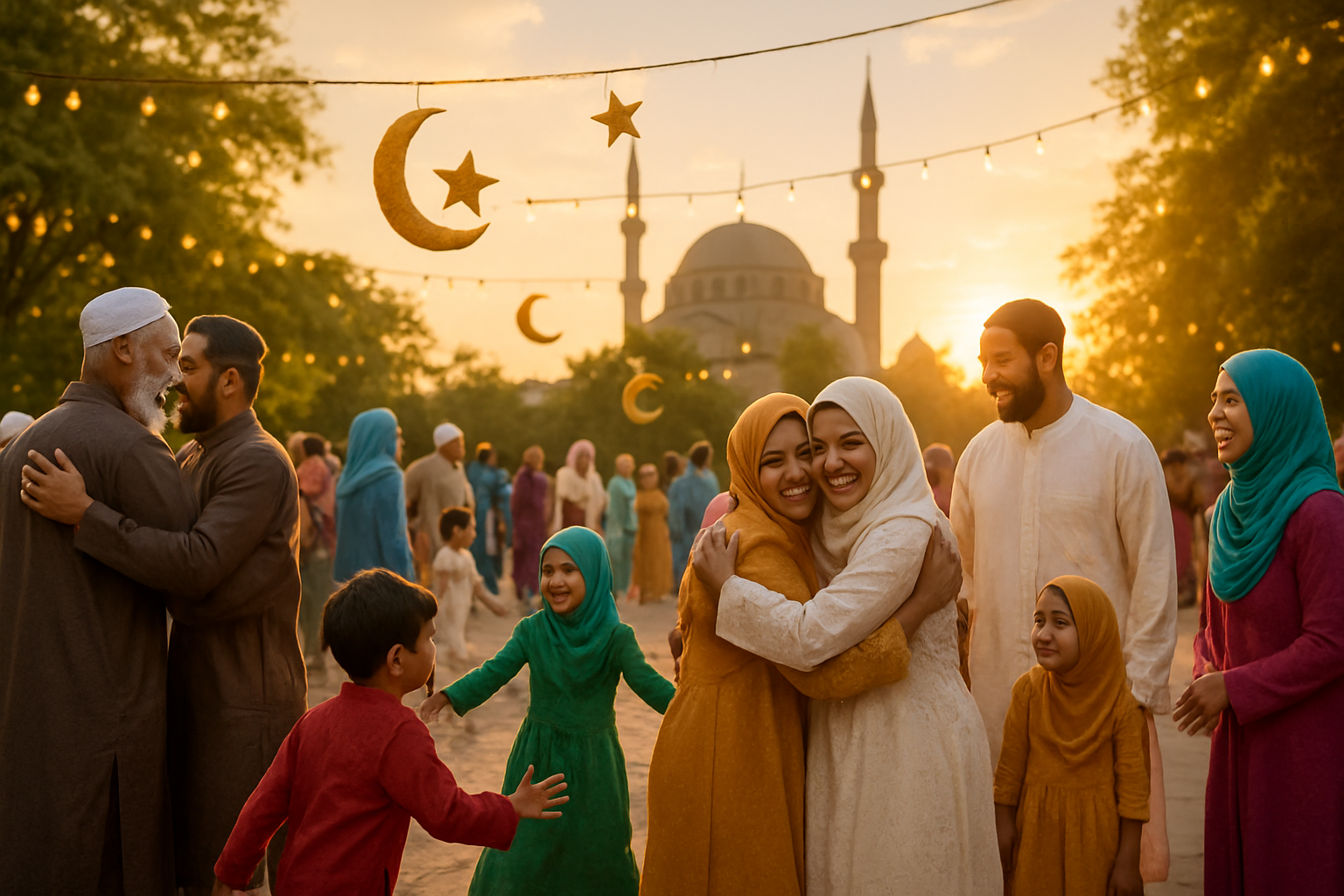
Nearly 2 billion Muslims worldwide commenced Eid al-Fitr celebrations on March 19-20, 2026, marking the joyous conclusion of what has been described as the most internationally coordinated Ramadan in modern Islamic history.
The festival began as countries across the globe confirmed the sighting of the Shawwal crescent moon on Thursday evening, March 19, 2026, signaling the end of the holy month of Ramadan 1447 AH. While most nations celebrated on Friday, March 20, some countries including Senegal announced Saturday, March 21, as their official celebration date.
Moon Sighting Confirmations Across Nations
Algeria's Committee for Crescents and Sharia Times confirmed the sighting of the Shawwal crescent on Thursday evening, declaring Friday, March 20, as the first day of Eid al-Fitr across all provinces. The announcement came through traditional religious procedures combining scientific observation with visual confirmation.
In Burkina Faso, the Federation of Islamic Associations (FAIB) announced that the lunar crescent had been observed in several localities across the country on March 19, with President El Hadj Moussa Koanda extending wishes for peace and divine mercy for the nation.
Bosnia and Herzegovina celebrated the festival as a symbol of joy, community solidarity, and spiritual reward. The Islamic Community emphasized the deeper meaning of Ramadan's conclusion, highlighting the spiritual purification achieved through a month of fasting, prayer, and charitable giving.
Mauritania's National Committee for Crescents confirmed Friday, March 20, as the first day of Eid al-Fitr based on crescent moon sightings from multiple regions. The announcement followed the traditional Islamic protocol of visual confirmation from credible witnesses.
Senegal presented a unique situation, with the National Commission for Moon Observation (CONACOC) declaring Saturday, March 21, as the official Eid al-Fitr date after failing to sight the crescent on Thursday evening. However, the holy city of Touba announced Friday celebrations, reflecting traditional variations in lunar calendar determination.
Government Preparations and Presidential Messages
Across the Muslim world, governments implemented comprehensive preparations for the festival. Burkina Faso declared Friday, March 20, as a paid public holiday throughout the national territory, with the Ministry of Public Service issuing official communications to ensure proper observance.
"May this blessed Eid bring peace, prosperity, and unity to our nation and the entire Muslim ummah worldwide."
— President Abdelmadjid Tebboune, Algeria
In Algeria, President Abdelmadjid Tebboune issued a presidential pardon affecting 6,500 prisoners in honor of Eid al-Fitr. The decree included 5,600 prisoners serving sentences of 24 months or less, plus an additional 900 prisoners convicted of crimes related to public order, cybercrime, and social media offenses.
Mauritania announced a presidential pardon benefiting 227 prisoners, with 126 receiving immediate release and 101 having their sentences reduced by one year. The pardons excluded serious crimes including murder, terrorism, and human trafficking.
Conclusion of Historic Ramadan 2026
The Eid al-Fitr celebrations marked the end of what Islamic scholars have called the most internationally coordinated Ramadan in modern history. The holy month, which began on February 18-19, 2026, was characterized by unprecedented global cooperation led by Saudi Arabia's religious diplomacy program.
During Ramadan 2026, Saudi Arabia distributed 2.2 million copies of the Quran and translations to 120 countries, provided 1,000 tons of dates, and deployed 91 imams to 49 nations. This massive international outreach program supported Muslim communities worldwide in their spiritual observance.
Educational institutions across Muslim-majority countries implemented modified schedules during Ramadan, with classes starting at 9-10 AM instead of earlier hours to accommodate fasting demands. Egypt extended business hours until 2:00 AM to recognize altered consumption patterns and evening social activities following iftar meals.
Regional Celebrations and Cultural Traditions
In Bosnia and Herzegovina, Eid al-Fitr was celebrated as a symbol of joy, community unity, and spiritual achievement. The festival emphasized universal values of charity, mutual respect, and care for others, particularly those in need of support.
Jordan saw comprehensive preparations with Prime Minister Dr. Jaafar Hassan extending congratulations to King Abdullah II, Crown Prince Hussein, and the Jordanian people. The celebrations emphasized the themes of blessing, prosperity, and national unity.
Kuwait witnessed extensive diplomatic activity, with the Emir receiving congratulations from regional leaders and the Crown Prince exchanging greetings with Arab and Islamic heads of state. The nation's central role in Gulf cooperation was highlighted through these diplomatic exchanges.
Palestinian communities, despite ongoing challenges, marked the festival with calls for increased solidarity and support. Hamas issued statements emphasizing the importance of strengthening brotherhood, unity, and support for Gaza, the West Bank, Jerusalem, and Al-Aqsa Mosque.
Technology Integration and Modern Observance
The 2026 celebrations demonstrated successful integration of traditional practices with modern technology. Mobile applications for prayer times, Quranic recitation, and charitable giving enabled global diaspora participation across different time zones.
Social media platforms played a crucial role in connecting Muslim communities worldwide, with leaders and ordinary citizens sharing Eid greetings, family celebrations, and community events. The digital dimension of modern Islamic observance allowed for unprecedented global participation in the festival.
Economic and Social Impact
Eid al-Fitr 2026 generated significant economic activity across Muslim-majority nations and communities worldwide. Traditional Eid shopping for new clothes, gifts, special foods, and family gatherings created a substantial boost to retail and hospitality sectors.
The festival's economic impact extended beyond Muslim-majority countries, with diaspora communities in Europe, North America, and other regions contributing billions to local economies through Eid-related consumption and travel.
Banking and government services in many countries adjusted their schedules, with Kuwait's banks closing on March 19 while maintaining electronic services, and government offices preparing for holiday schedules across multiple nations.
Humanitarian Dimensions
The 2026 Eid al-Fitr celebrations occurred against a backdrop of global challenges, including conflicts in various regions and economic difficulties in many countries. Despite these challenges, the festival maintained its essential role as a source of spiritual renewal and community solidarity.
Charitable giving, a cornerstone of Eid observance, reached unprecedented levels during 2026, with communities organizing extensive programs to support vulnerable populations, refugees, and those affected by natural disasters and conflicts.
The festival's emphasis on forgiveness, reconciliation, and community support provided hope and healing for many communities facing difficulties, demonstrating the enduring power of shared spiritual traditions to unite people across cultural and national boundaries.
International Recognition and Interfaith Relations
The 2026 celebrations received widespread international recognition, with non-Muslim leaders and organizations extending congratulations to Muslim communities worldwide. This interfaith engagement reflected growing global awareness and respect for Islamic traditions.
The successful coordination of Ramadan 2026 and its conclusion with Eid al-Fitr provided a template for international religious cooperation, demonstrating how ancient spiritual traditions can find meaningful contemporary expression through coordinated global efforts.
Educational institutions in non-Muslim majority countries increasingly recognized Eid al-Fitr, with many providing accommodation for Muslim students and staff, reflecting growing cultural awareness and inclusivity.
Looking Forward
As Muslim communities worldwide celebrated Eid al-Fitr 2026, the festival served as both a conclusion to a month of spiritual discipline and a beginning of renewed commitment to Islamic values of compassion, justice, and community service.
The success of the internationally coordinated Ramadan 2026 and its joyous conclusion with Eid al-Fitr established new standards for global religious cooperation and cultural understanding. The integration of traditional practices with modern communication technologies created opportunities for increased participation and community building.
Religious leaders across the Muslim world emphasized that the true spirit of Eid al-Fitr extends beyond the celebration itself, calling for sustained commitment to the values of charity, compassion, and social justice throughout the year.
The 2026 celebrations concluded with prayers for peace, prosperity, and unity among all peoples, reflecting Islam's universal message of brotherhood and compassion that transcends geographical and cultural boundaries. As nearly 2 billion Muslims worldwide shared in this joyous occasion, Eid al-Fitr 2026 demonstrated the enduring power of shared spiritual traditions to unite humanity in hope and celebration.