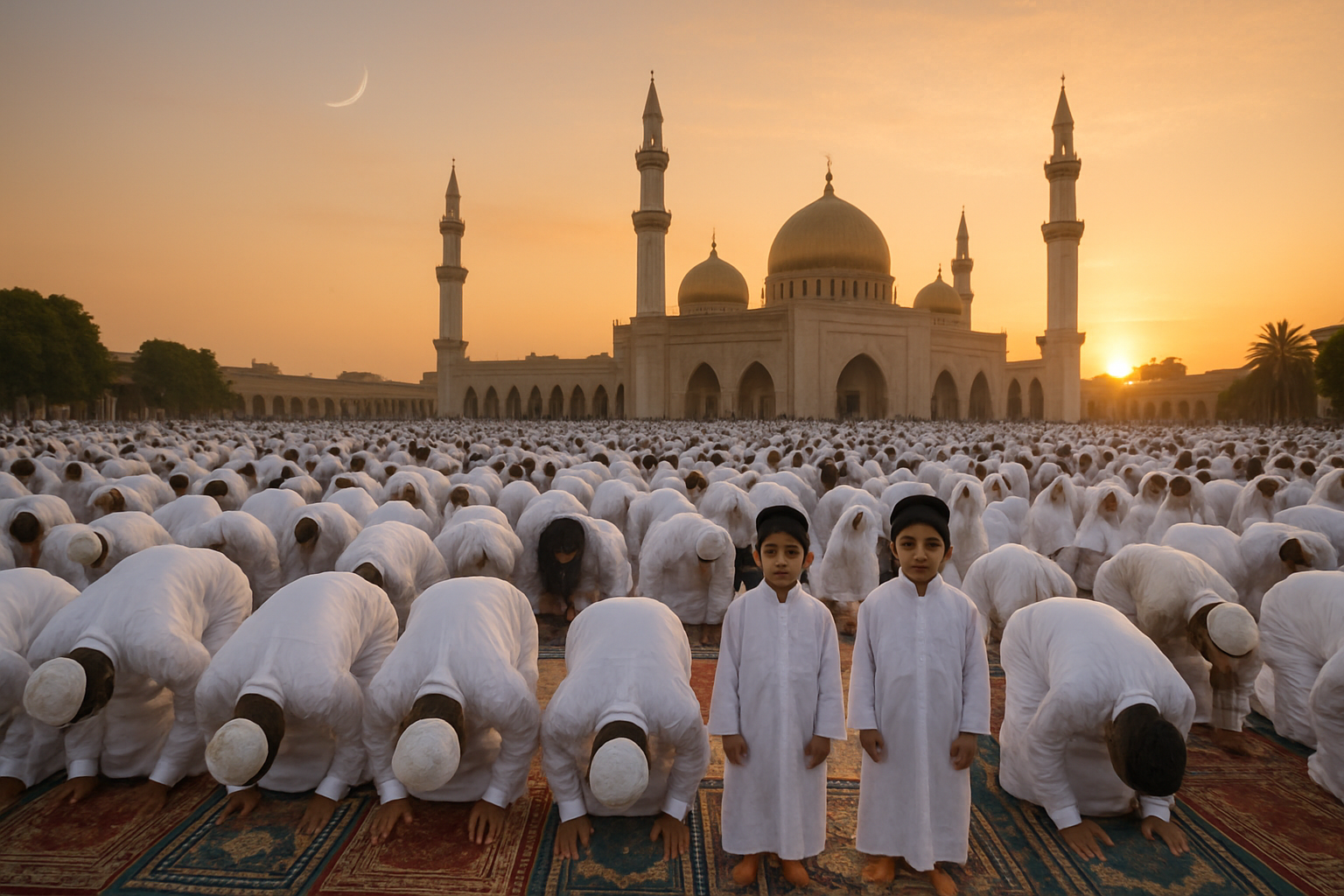
Muslims across the globe marked the conclusion of Ramadan 2026 with Eid al-Fitr celebrations on March 20, as nearly two billion believers gathered for prayers and festivities following the most internationally coordinated holy month in modern Islamic history.
From the mosques of Algeria to the Islamic centers of Finland, the festival of Eid al-Fitr brought together diverse Muslim communities in a celebration of spiritual renewal, charity, and unity. The occasion marked the end of Ramadan 1447 AH, a period that witnessed unprecedented global coordination and cultural bridge-building across six continents.
Moon Sighting Confirmations Unite the Ummah
The celebrations began following traditional crescent moon sighting ceremonies conducted across multiple countries on March 19. Algeria's National Committee for Crescents and Sharia Times confirmed the sighting, officially declaring March 20 as the first day of Eid al-Fitr. Similar confirmations came from religious authorities in Burkina Faso, Egypt, and other nations, demonstrating the continued importance of lunar calendar traditions in Islamic practice.
In Senegal, the sighting was confirmed in Kébémer by Serigne Mouhamed Wack Diop, witnessed by community members who gathered to observe this sacred tradition. The confirmation process, while maintaining its spiritual significance, has evolved to incorporate modern communication networks that enable rapid dissemination of moon sighting news across global Muslim communities.
International Sports Recognition
The global nature of Eid celebrations was highlighted by an unprecedented gesture from major European football clubs, who extended congratulations to Muslims worldwide. Olympic Marseille published special messages featuring their Algerian international players Amine Gouiri and Hicham Abdelli, demonstrating the growing recognition of Islamic holidays in international sports.
"The club wishes a blessed and happy Eid to the entire Islamic community"
— Olympique Marseille Official Statement
This initiative reflects a broader trend of cultural inclusivity in professional sports, where clubs increasingly acknowledge the religious diversity of their players and fan bases.
Military and Government Observances
High-ranking officials across Muslim-majority nations issued formal Eid greetings to their populations. In Algeria, Lieutenant General Said Chanegriha, Chief of Staff of the National People's Army, extended congratulations to all military personnel and their families, emphasizing themes of prosperity and spiritual fulfillment.
The formal recognition extended beyond military circles, with government ministries and diplomatic corps across the Islamic world participating in the collective celebration, reinforcing the festival's role as both a religious observance and a moment of national unity.
Charitable Initiatives During Ramadan's End
The conclusion of Ramadan 2026 was marked by extensive charitable activities, continuing the spirit of giving that characterized the holy month. In Burkina Faso, local businessman Abdoul Karim Baguian, known as "Lota," concluded his "Fête en famille" (Family Festival) initiative by distributing essential food supplies to vulnerable families, ensuring they could celebrate Eid with dignity.
These grassroots charitable efforts complemented the massive international coordination that defined Ramadan 2026, including Saudi Arabia's distribution of 2.2 million Quran copies to 120 countries and the deployment of 91 imams to 49 nations to support local communities.
Spiritual Guidance for Post-Ramadan Life
Religious leaders used the Eid occasion to provide guidance for maintaining spiritual momentum beyond Ramadan. In Burkina Faso, Imam Yacoub Tiemtoré of the Circle of Studies, Research and Islamic Training (CERFI) delivered a powerful message emphasizing that while Ramadan ends, devotion to Allah should continue year-round.
"If Ramadan is gone, Allah remains. He is the Living One, the Self-Sustaining, and deserves to be worshipped at all times"
— Imam Yacoub Tiemtoré, CERFI
Prayer Traditions and Religious Observance
Eid al-Fitr prayers took place in mosques worldwide, with religious authorities providing detailed guidance on proper observance. Egyptian religious scholars emphasized the importance of performing Eid prayers in congregation, noting that the prayer consists of two units and begins after sunrise.
The timing and manner of Eid prayers varied slightly by region, reflecting the rich diversity within Islamic tradition while maintaining core spiritual elements. In many locations, the prayers were followed by sermons focusing on gratitude, community solidarity, and continued spiritual development.
International Cultural Bridges
The Eid celebrations highlighted the increasingly global nature of Islamic observance, with Muslim communities in non-majority countries like Finland marking the occasion alongside their co-religionists worldwide. This international dimension reflects the success of cultural integration efforts while preserving religious authenticity.
The festival served as an opportunity for interfaith dialogue and cultural education, with non-Muslim communities in various countries gaining greater understanding of Islamic traditions and their contemporary relevance.
Looking Forward: The Legacy of Ramadan 2026
As Eid al-Fitr 2026 concluded, it marked not just the end of a holy month but the culmination of what observers have called the most successfully coordinated international religious observance in modern history. The month saw unprecedented cooperation between governments, religious institutions, and civil society organizations across more than 120 countries.
The celebrations demonstrated Islam's capacity to maintain authentic spiritual traditions while adapting to contemporary global realities. From technological innovations that helped coordinate moon sightings to social media campaigns that connected diaspora communities, Eid al-Fitr 2026 showcased the dynamic evolution of ancient practices in a modern context.
The festival's emphasis on charity, community solidarity, and spiritual reflection provided a template for religious observance that transcends cultural boundaries while honoring distinctive traditions. As Muslim communities worldwide return to their daily routines, the lessons and connections forged during Ramadan and Eid continue to strengthen the bonds of the global Islamic community.