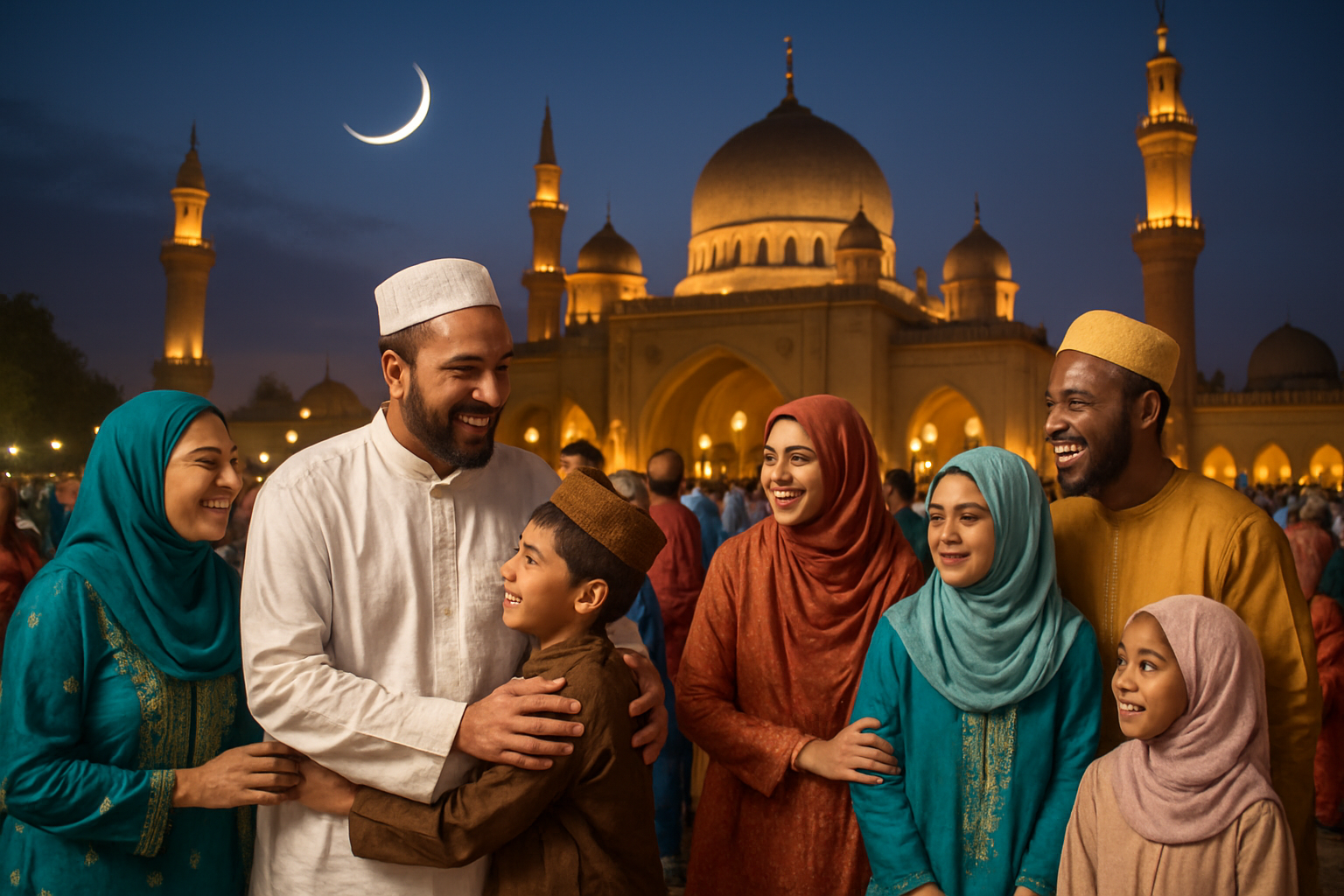
Muslim communities across the globe are preparing for Eid al-Fitr celebrations on Friday, March 20, 2026, following Saudi Arabia's official announcement that the Shawwal crescent moon was not sighted Wednesday evening, completing the holy month of Ramadan with its full 30 days.
The Saudi Supreme Court confirmed that after careful observation at multiple locations including observatories across the Kingdom, no credible sightings of the new moon were reported. This means Thursday, March 19, will complete the 30 days of Ramadan 1447 AH, with Friday marking the first day of Eid al-Fitr for nearly 2 billion Muslims worldwide who follow the Saudi lunar calendar determination.
Saudi Arabia's Moon Sighting Announcement
In an official statement, the Saudi Supreme Court announced that "the Crescent Committee held a session this evening (Wednesday), and reviewed what it received from courts and observatories regarding moon sighting. After examining and considering it, nothing was found to confirm its sighting." The decision follows the Kingdom's traditional method of combining astronomical calculations with visual confirmation by authorized religious committees.
Kuwait's Sharia Vision Authority similarly confirmed that Thursday will mark the completion of Ramadan, with Friday designated as Eid al-Fitr. The synchronized announcements reflect the coordinated approach many Gulf and Arab nations take in determining Islamic calendar dates, building on months of preparation and the unprecedented international religious coordination witnessed during Ramadan 2026.
Global Preparations and Unity
The announcement triggers massive preparations across the Muslim world, building on the sophisticated international coordination that characterized Ramadan 1447 AH. This year's holy month began February 18-19, 2026, and witnessed unprecedented global cooperation, including Saudi Arabia's distribution of 2.2 million Quran copies to 120 countries, 1,000 tons of dates, and the deployment of 91 imams to 49 nations.
Educational institutions across Muslim-majority countries had implemented modified schedules during Ramadan, with classes starting at 9-10 AM rather than earlier hours to accommodate fasting demands. These adaptations will now shift to Eid holiday schedules as communities prepare for the "Festival of Breaking the Fast."
"The successful coordination of Ramadan 2026 demonstrates how ancient spiritual traditions can find meaningful contemporary expression through international cooperation."
— Religious Affairs Official, Malaysia
Interfaith Considerations in Burkina Faso
An interesting dimension to this year's Eid celebrations emerges from Burkina Faso, where religious leaders are addressing questions about Christian participation during the intersection of Islamic and Christian observances. Abbé Jules Pascal Zabré, recteur of the Yagma sanctuary, provided guidance for Catholics facing the coincidence of Eid festivities with a Friday during Lent.
According to Abbé Zabré, Catholic faithful are encouraged to maintain their Lenten observances, including Friday abstinence from meat and alcohol, while participating respectfully in community celebrations. This represents the delicate balance many multi-religious societies navigate during overlapping sacred seasons, promoting both religious authenticity and community harmony.
French Muslim Communities and Integration
France's 6 million Muslims, representing Europe's largest Islamic community, are preparing for Eid celebrations that demonstrate successful integration models. French Islamic institutions have worked throughout Ramadan to define distinctly French Islamic identities that honor religious authenticity while embracing republican citizenship.
Strasbourg's Islamic Cultural Center has hosted weekly community iftar meals that attracted local French families, city officials, and interfaith groups, demonstrating Islam's hospitality values while fostering cross-cultural connections. These initiatives provide templates for European Muslim minorities balancing religious practice with civic engagement.
Economic and Social Impact
The transition from Ramadan to Eid carries significant economic implications globally. During the holy month, altered consumption patterns, increased charitable giving through zakat, and enhanced evening commercial activity affected economies worldwide. The Eid celebration period typically sees major spending on clothing, food, gifts, and travel as families unite for the festival.
Kuwait's banking sector announced that banks will close March 20 for Eid Al-Fitr following Central Bank consultations, while maintaining electronic services. This reflects institutional stability and confidence in maintaining traditional holiday schedules while ensuring continued access to essential financial services.
Regional Variations and Unity
While Saudi Arabia's announcement influences many countries, regional variations in moon sighting traditions continue. Turkey confirmed Eid Al-Fitr will fall on Friday based on astronomical calculations, citing expected visibility of the Shawwal crescent from its territory. Singapore announced Saturday, March 21, due to impossibility of sighting the crescent moon within the country on Thursday, reflecting different methodological approaches while maintaining spiritual unity.
These variations demonstrate Islam's capacity for cultural diversity while maintaining essential spiritual unity. The shared celebration, regardless of specific dates, reinforces the global Muslim ummah's connections across geographical and cultural boundaries.
Historical Context and Significance
Eid al-Fitr 2026 concludes a Ramadan marked by unprecedented international coordination and simultaneous observance with Christian Lent, affecting nearly 4.5 billion believers globally. The holy month witnessed sophisticated government accommodations, technological integration with traditional practices, and successful interfaith dialogue opportunities.
The festival represents more than the end of fasting; it symbolizes spiritual purification, community solidarity, and charitable giving that characterized the month. Traditional Eid celebrations include special prayers, family gatherings, gift exchanges, and enhanced charitable activities supporting vulnerable community members.
Continued Regional Challenges
The Eid celebrations occur against a backdrop of regional challenges, including the ongoing Pakistan-Afghanistan border crisis and Middle Eastern tensions. However, the festival provides opportunities for diplomatic engagement and ceasefire initiatives, with religious leaders calling for peace during the sacred period.
The International Union of Muslim Scholars has emphasized Eid's themes of unity, forgiveness, and compassion as particularly relevant during times of regional tension. These messages resonate across the global Muslim community as celebrations commence.
As Muslims worldwide prepare for Eid al-Fitr 2026, the festival serves as both a celebration of completed spiritual discipline and a reminder of the community bonds strengthened during Ramadan. The successful international coordination that characterized the holy month provides a template for continued cooperation, demonstrating how ancient religious traditions remain vital and unifying forces in the contemporary world.