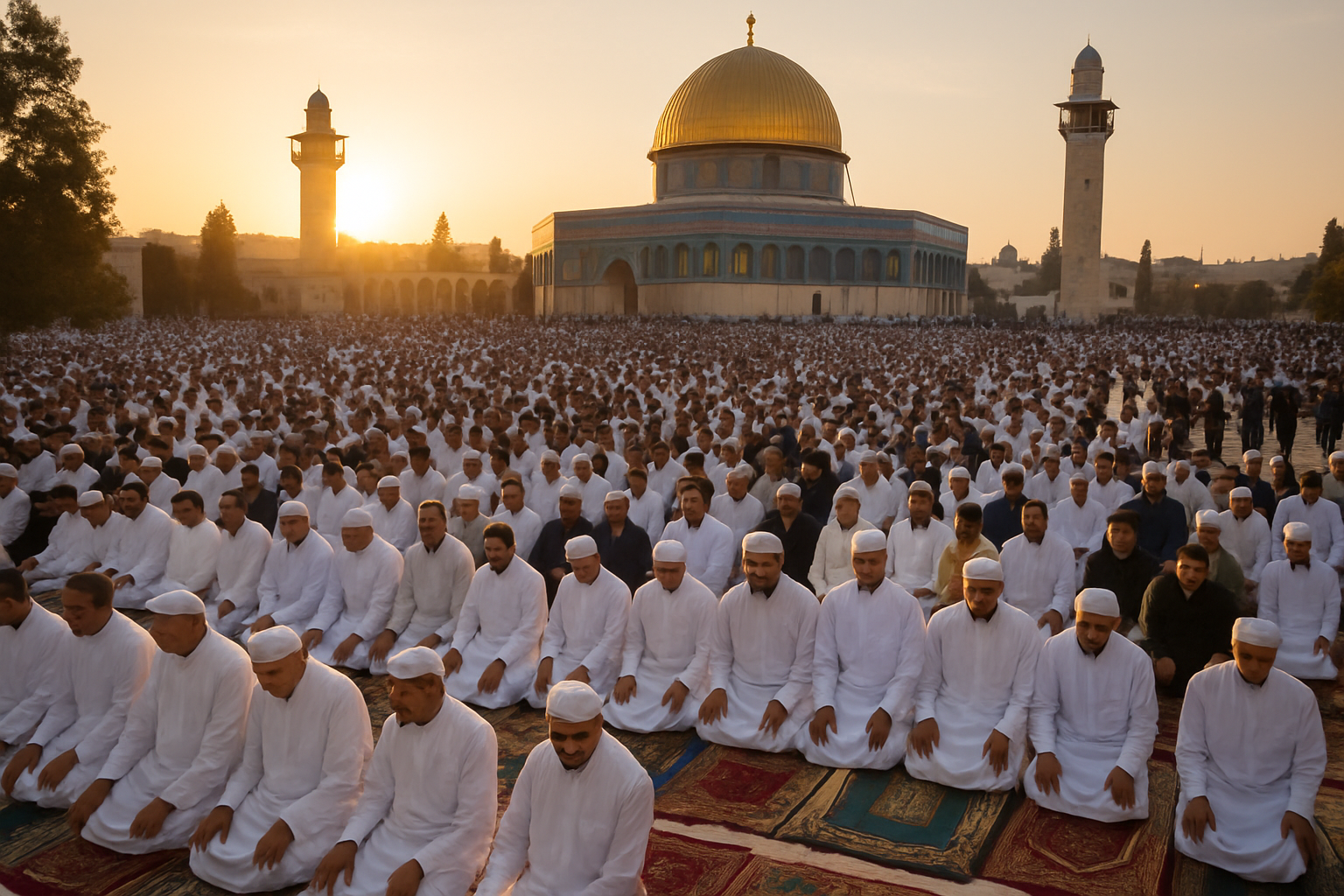
Nearly 2 billion Muslims across the globe celebrated Eid al-Fitr on Friday, March 20, 2026, marking the conclusion of what has been described as the most internationally coordinated Ramadan in modern Islamic history. Yet the joyous festival was profoundly shaped by the shadow of the ongoing Middle East war and unprecedented restrictions at some of Islam's holiest sites.
The celebration, which marks the end of the holy month of Ramadan, took place against the backdrop of the most serious international crisis since the Cold War. The conflict, which began with the death of Iran's Supreme Leader Ali Khamenei on March 1, has created a complex environment where spiritual jubilation meets geopolitical anxiety.
Global Celebrations Under Extraordinary Circumstances
From Algeria to Uganda, from Bosnia to Malaysia, Muslims gathered for dawn prayers and festive celebrations despite the turbulent regional context. In Algeria, President Abdelmadjid Tebboune extended congratulations to healthcare workers, while ministers visited children in hospitals to share in the festivities. The country's military leadership also participated, with Lieutenant General Said Chanegriha offering formal greetings to military personnel and their families.
In Bosnia and Herzegovina, the celebrations carried particular poignancy. The Grand Mufti Hussein Kavazović led prayers at the historic Gazi Husrev-beg Mosque in Sarajevo, calling on believers to remain steadfast during "times of turmoil, epic violence and suffering." The message resonated deeply with a community that has experienced conflict firsthand.
"In times of division and faint-heartedness, we must remain present and not allow others to draw us into their wars and conflicts."
— Hussein Kavazović, Grand Mufti of Bosnia and Herzegovina
Malaysia extended warm Eid greetings through Malaysiakini, emphasizing the festival's role in "fostering understanding and harmony among Malaysians." The sentiment reflected a broader theme of unity amid global divisions.
Unprecedented Restrictions at Al-Aqsa Mosque
Perhaps the most striking aspect of this year's Eid celebrations was the complete closure of Jerusalem's Al-Aqsa Mosque to Muslim worshippers for the 17th consecutive day – the first time since 1967 that Israeli authorities have prevented Muslim prayers at Islam's third holiest site during Eid al-Fitr.
Hundreds of Palestinian Muslims were forced to pray outside the gates of Jerusalem's Old City, with Israeli forces using tear gas to disperse some gatherings. The situation was described as "catastrophic" by local Palestinian leaders, who saw it as an unprecedented violation of religious rights during one of Islam's most sacred occasions.
"Today, Al-Aqsa has been taken from us. It's a sad and painful Ramadan and Eid."
— Wajdi Mohammed Shweiki, 60-year-old Palestinian worshipper
The closure, linked to the broader Middle East conflict that began following the March 1 death of Iran's Supreme Leader Ali Khamenei, has had profound psychological impact on Muslims worldwide, particularly those in Jerusalem who have never experienced such restrictions during major religious festivals.
Celebrations Amid Regional Conflict
The broader Middle East crisis has created a complex backdrop for this year's Eid celebrations. In Nigeria, Governor Babagana Zulum of Borno State issued warnings about potential suicide attacks in Maiduguri during Eid festivities, highlighting security concerns that have become commonplace in conflict-affected regions.
Despite these challenges, Eid prayers proceeded peacefully across Maiduguri with tight security measures in place. The resilience shown by communities celebrating under such circumstances has become emblematic of this year's global Eid experience.
In Pakistan, the festival took place amid ongoing border tensions with Afghanistan, though a temporary Eid ceasefire agreement brokered by Saudi Arabia, Qatar, and Turkey provided some respite from hostilities during the holy period.
Government and Community Support
Across the Muslim world, governments and communities demonstrated remarkable coordination in facilitating Eid celebrations despite challenging circumstances. In Egypt, local governors visited hospitals to congratulate patients and medical staff, while governors in multiple provinces conducted tours to ensure public services continued smoothly during the holiday.
Burkina Faso saw major celebrations at Ouagadougou's Place de la Révolution, where thousands gathered for prayers amid calls for peace and national unity. President Ibrahim Traoré used the occasion to call for cohesion and pay tribute to the country's military forces engaged in anti-terrorism operations.
The Netherlands showcased the growing accommodation of Muslim religious practices in European societies, with many labor agreements now allowing Muslims to switch their annual leave days to observe Eid al-Fitr, demonstrating increasing religious inclusivity.
Technology and Global Connection
Despite travel disruptions caused by the Middle East crisis – with over 18,000 flights cancelled worldwide – technology played a crucial role in connecting the global Muslim community. Mobile applications facilitated virtual participation in prayers and celebrations, while social media enabled families separated by conflict and distance to share in the festivities.
This technological dimension has been particularly important for diaspora communities and those unable to travel due to the ongoing regional tensions. From Ljubljana to Uganda, Muslim communities organized special programs that combined traditional celebrations with modern communication methods.
Humanitarian Dimensions
The humanitarian aspect of Eid was especially pronounced this year, with increased charitable giving (Zakat al-Fitr) directed toward conflict-affected populations. The tradition of helping those less fortunate took on added significance given the displacement and suffering caused by various regional conflicts.
In Algeria, ministers conducted special visits to hospitals and care facilities, sharing the joy of Eid with sick children and healthcare workers. Similar gestures were reported across the Muslim world, emphasizing the festival's core message of compassion and community solidarity.
A Festival of Resilience
What emerged most clearly from this year's Eid al-Fitr celebrations was the remarkable resilience of the global Muslim community. Despite unprecedented restrictions at holy sites, ongoing conflicts, and global travel disruptions, nearly 2 billion Muslims found ways to celebrate, pray, and come together in the spirit of Eid.
The festival demonstrated that while conflicts may restrict access to traditional religious sites, they cannot diminish the human capacity for faith, community, and hope. From grand mosques to makeshift prayer areas, from hospital wards to refugee camps, the essential message of Eid remained constant: faith endures, community perseveres, and hope survives even in the darkest of times.
As the Muslim world moves forward from this historic Ramadan and Eid period, the celebrations of March 20, 2026, will be remembered as a testament to the enduring power of religious tradition and community bonds in the face of unprecedented global challenges.