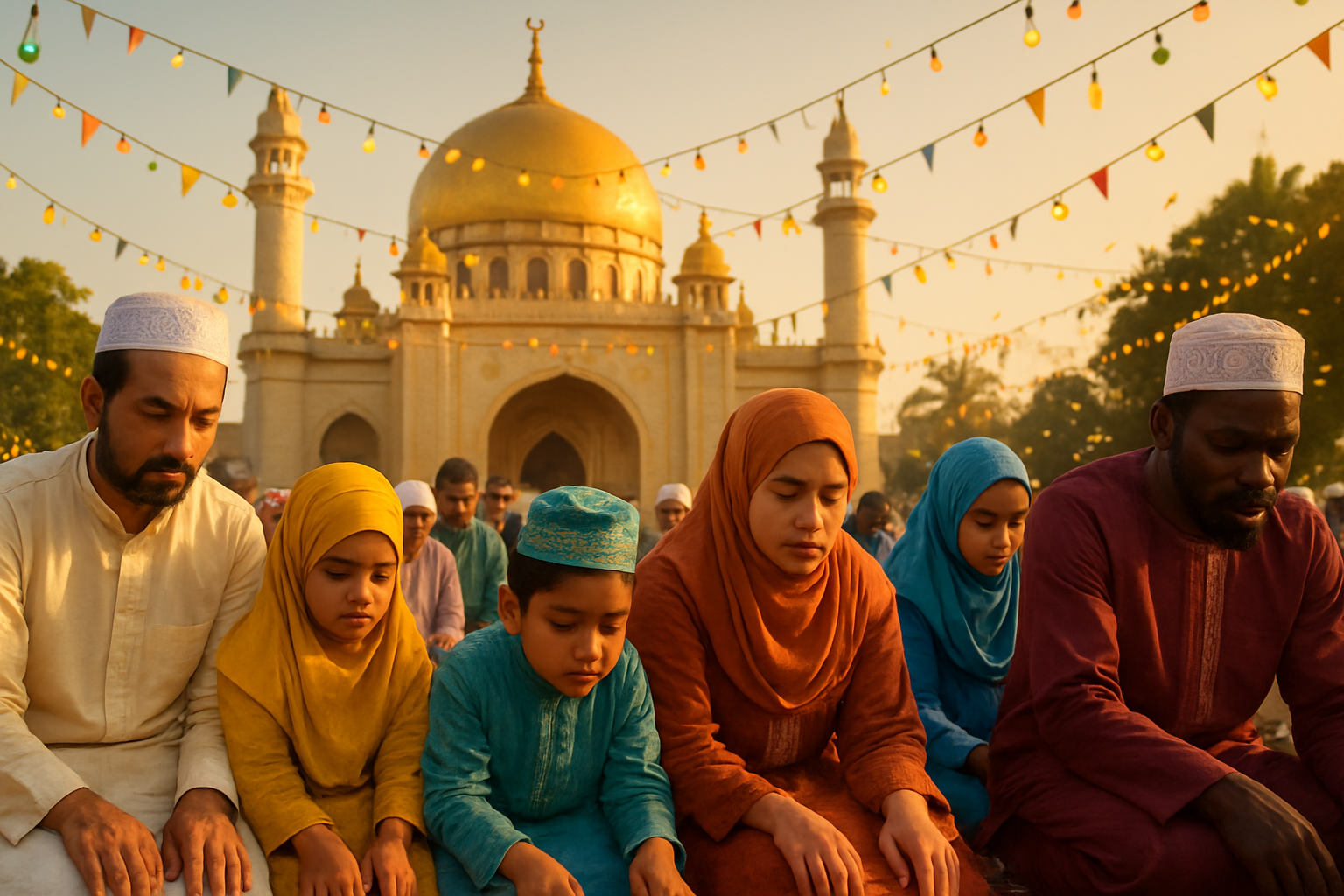
Nearly 2 billion Muslims worldwide celebrated Eid-ul-Fitr on March 20, 2026, marking the end of Ramadan with unprecedented messages of unity, religious tolerance, and interfaith solidarity that resonated across continents from Cameroon's border cities to Suriname's historic synagogue-mosque partnership.
The global celebration, concluding what has been described as the most internationally coordinated Ramadan in modern Islamic history, showcased remarkable scenes of community resilience and cross-cultural bridge-building despite ongoing regional conflicts and humanitarian challenges.
Cameroon: Uniting Against Sectarianism
In Cameroon, Eid celebrations transcended mere religious observance to become powerful statements against extremism and division. At Kousseri's Ngoumati prayer ground, hundreds of faithful gathered in the presence of Sultan Mahamat Abba 2 and Prefect Mathias Tayem Fombele, demonstrating the unity between traditional and modern leadership structures.
The most striking message came from Ngaoundéré, where Imam Yaya Djafarou at the Central Mosque delivered a solemn warning against ideological extremism and religious sectarianism. Speaking before Lamido Mohamadou Hayatou Issa and gathered worshippers, the imam's address represented what observers called "an appeal to resistance" against forces threatening community cohesion.
"This was not just a celebration—it was a call to resistance against the ideological drifts that threaten our unity."
— Imam Yaya Djafarou, Central Mosque of Ngaoundéré
In Bafoussam, the celebration at Tocket Stadium exemplified Cameroon's interfaith harmony, with Christians and Muslims standing side by side as Imam Abdoulaye Loumgam led prayers under radiant sunshine, demonstrating the country's commitment to religious coexistence.
Philippines: Presidential Call for Continued Compassion
President Ferdinand Marcos Jr. used the Eid occasion to issue a nationwide appeal for Filipinos to maintain the values of compassion, humility, patience, and charity beyond the religious observance. His message emphasized the universal nature of Islamic values that transcend religious boundaries, calling on all citizens to practice these virtues in their daily lives.
The presidential message reflected the Philippines' approach to religious diversity, where the government actively promotes interfaith understanding and national unity through shared moral values.
Trinidad and Tobago: Healing National Divisions
In Trinidad and Tobago, Eid-ul-Fitr served as a powerful blueprint for national healing. Imam Shaykh Munaf Mohammed, addressing congregants at the Islamic Missionaries Guild Islamic Centre in Kelly Village, Caroni, highlighted the mounting challenges facing Muslims worldwide while calling for unity and forgiveness.
The imam's message took on particular urgency as he addressed how "external forces have influenced Muslims to turn against one another," contributing to instability across the Islamic world. His call for reflection and unity resonated deeply in a nation seeking to overcome its own divisions through the timeless values of Eid—renewal, gratitude, compassion, and unity.
"Muslims worldwide are facing mounting hardship as divisions within the global Islamic community deepen, a crisis intensified by external forces."
— Imam Shaykh Munaf Mohammed, Islamic Missionaries Guild
A companion editorial in Trinidad and Tobago emphasized how Eid must "rise above ritual and festivity to become a moment of genuine national reflection," offering a roadmap for healing in an increasingly divided society.
Suriname: Historic Interfaith Partnership
Perhaps the most remarkable example of religious tolerance emerged from Paramaribo, Suriname, where the unique physical and spiritual relationship between the Keizerstraat Mosque and the neighboring Neve Shalom Synagogue took center stage during Eid celebrations.
In an extraordinary gesture of interfaith solidarity, Jules Donk, leader and chairman of the Neve Shalom Synagogue, was invited to address the Muslim congregation during Eid celebrations. The imam warmly introduced him as "our neighbor," referencing the unique positioning of the historic wooden synagogue, built in 1835, directly adjacent to the SIV mosque.
Donk emphasized the long history of connection between the two faith communities, highlighting how Suriname exemplifies religions standing "not against each other, but alongside each other—literally and figuratively." The Neve Shalom Synagogue, known for its distinctive sand floor and serving as the center of Surinamese Jewish community life for nearly two centuries, represents one of the world's most successful examples of interfaith coexistence.
Global Context: Historic Ramadan Coordination
These celebrations marked the conclusion of Ramadan 2026, which featured unprecedented international coordination. Saudi Arabia led a massive diplomatic and cultural outreach program, distributing 2.2 million Quran copies to 120 countries, providing 1,000 tons of dates, and deploying 91 imams to 49 nations—the largest such program in modern Islamic history.
The coordination extended beyond religious programming to include sophisticated governmental accommodations across Muslim-majority countries. Educational institutions modified schedules to accommodate fasting demands, businesses extended hours to support evening social activities, and technology integration through mobile applications enabled global diaspora participation across time zones.
Challenges Amid Celebration
The celebrations occurred against a backdrop of significant global challenges. Regional conflicts, humanitarian crises, and restrictions on religious practice in some areas tested the resilience of Muslim communities worldwide. Despite these obstacles, the essential message of Eid remained constant: spiritual traditions transcend physical limitations and political boundaries.
The month-long Pakistan-Afghanistan border crisis, which saw temporary ceasefire negotiations during Eid through Saudi-Qatar-Turkey religious diplomacy, demonstrated both the challenges facing Muslim nations and the continued relevance of faith-based diplomatic solutions.
Technology and Tradition
The 2026 celebrations showcased the successful integration of traditional spiritual practices with contemporary technological capabilities. Mobile applications for prayer times, Quranic recitation, and charitable giving enabled participation across diverse time zones and cultural contexts, while social media facilitated virtual family connections for diaspora communities.
This technology-tradition synthesis maintained the spiritual character of the observance while adapting to contemporary circumstances, providing a template for future global religious coordination.
Economic and Social Impact
The festival generated significant economic activity through traditional Eid shopping for clothing, food, gifts, and travel. Record-breaking charitable giving (Zakat al-Fitr) was directed toward conflict-affected populations and displaced communities, with organizations reporting unprecedented donations supporting refugees and internally displaced persons.
The economic multiplier effects extended across retail and hospitality sectors globally, while diaspora communities contributed billions to local economies, demonstrating the festival's role as both religious observance and economic stimulus.
Looking Forward: A Template for Unity
The 2026 Eid-ul-Fitr celebrations will be remembered as a testament to the enduring power of religious tradition and community bonds in facing unprecedented global challenges. From Cameroon's anti-sectarian messages to Suriname's interfaith partnership, from Trinidad's healing vision to the Philippines' compassion call, the festival provided a global template for religious accommodation, multicultural cooperation, and interfaith understanding.
The success of this coordination—spanning 120+ countries and nearly 2 billion Muslims—demonstrates that ancient spiritual traditions can maintain their essential character while adapting to contemporary global realities through international cooperation, technological integration, and inclusive governmental policies.
"If Ramadan is gone, Allah remains. He is the Living One, the Self-Sustaining, and deserves to be worshipped at all times."
— Religious guidance echoing across global celebrations
As the world faces mounting divisions and challenges, the 2026 Eid celebrations offered a powerful reminder that faith endures, communities persevere, and hope survives. The festival's emphasis on unity, forgiveness, and compassion provided not only spiritual guidance but a practical roadmap for healing divided societies and building bridges across cultural boundaries.