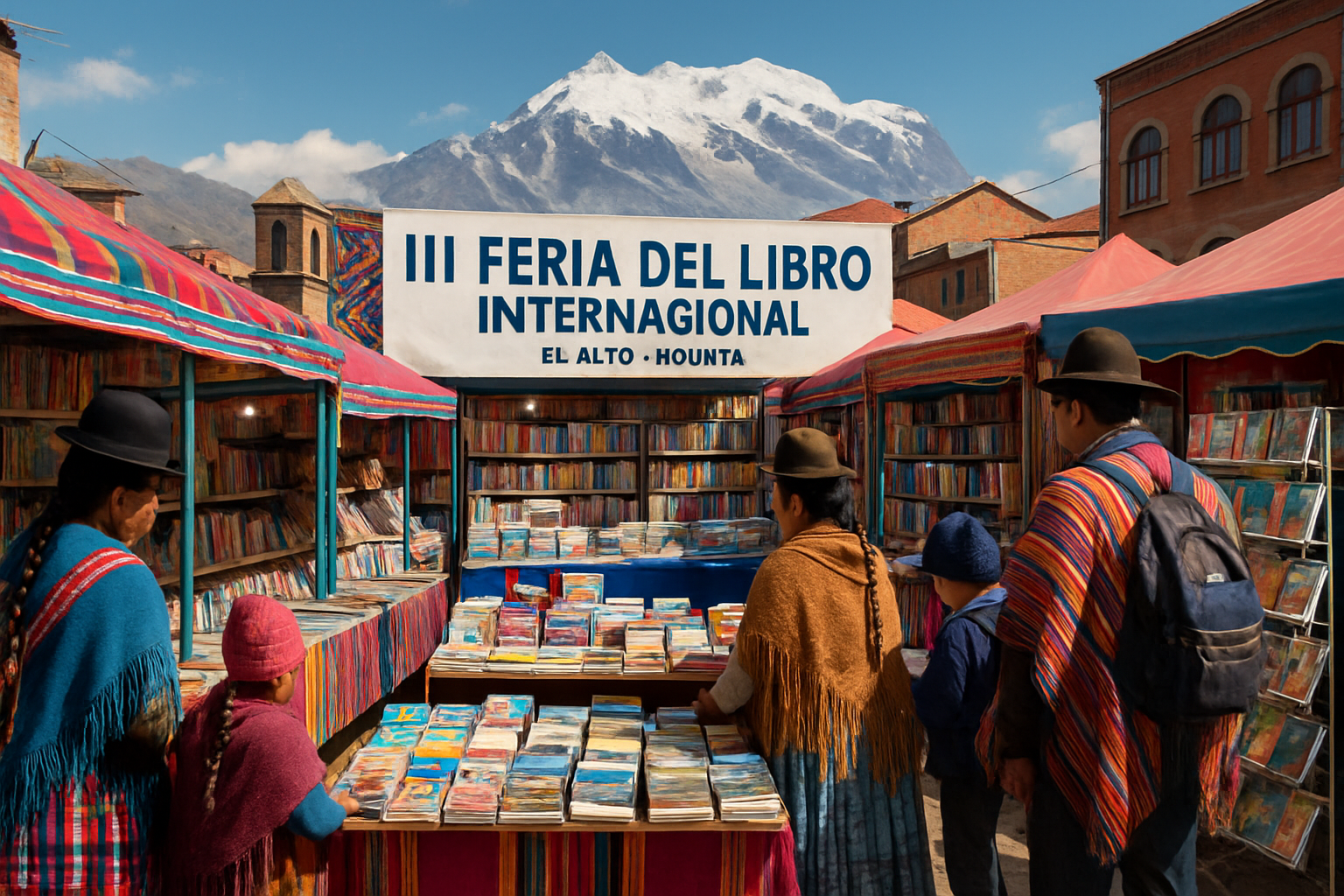
The Third International Book Fair in El Alto, Bolivia, running from April 1-12, 2026, has emerged as a powerful symbol of cultural resilience and a catalyst for urgent discussions about the state of Bolivia's literary and cultural infrastructure. Despite operating in a context of economic and political crisis, the fair has demonstrated remarkable success while exposing critical gaps in institutional support.
A Testament to Cultural Determination
Opening its doors on April 1st, the Third International Book Fair represents a bold statement from Bolivia's Departmental Book Chamber and participating municipal authorities. In an era where economic pressures have forced many cultural initiatives to the sidelines, the commitment to staging this international literary event speaks to a profound understanding of culture as essential infrastructure rather than expendable luxury.
The fair's timing coincides with what cultural observers have termed the "2026 Cultural Renaissance" - an unprecedented period of coordinated international cultural activity that has seen nations worldwide recognizing arts and literature as strategic tools for community development, international cooperation, and human flourishing.
Institutional Challenges and Missed Opportunities
However, the fair's success has been achieved despite, rather than because of, comprehensive government support. Critics have noted a troubling pattern of institutional neglect that threatens to undermine Bolivia's cultural potential. The transition period in El Alto's municipal administration has meant that outgoing authorities showed little interest in promoting the fair or generating meaningful cultural spaces for reading and learning.
"We are in the culmination and transition of El Alto's municipal administration. Therefore, the current authorities no longer care about promoting the fair, much less generating a cultural space for reading and learning."
— Source commentary on municipal priorities
Perhaps more concerning is the apparent absence of support from the Ministry of Education. Despite Bolivia's stated commitment to educational transformation and cultural integration under President Rodrigo Paz's "constructing opportunities" approach, the ministry's lack of visible engagement with the fair raises questions about priorities and resource allocation.
The Broader Context of Bolivia's Cultural Programming
This institutional gap becomes particularly significant when viewed against Bolivia's remarkable cultural achievements elsewhere. The nation has demonstrated sophisticated approaches to cultural preservation and innovation, from the totora reed knowledge demonstrations at previous cultural events to the comprehensive Easter celebrations that showcased community resilience and cultural continuity.

El Alto itself has been a focal point for significant cultural and political developments in 2026, from hosting Spain's King Felipe VI with unprecedented security coordination to managing the aftermath of the tragic C-130 Hercules crash that scattered newly printed banknotes across the city. These events demonstrate the city's capacity for complex coordination - making the limited support for cultural programming all the more puzzling.
International Best Practices in Literary Programming
The challenges facing Bolivia's cultural sector stand in stark contrast to the innovative approaches being adopted globally. The Jamaica Book Festival's Africa-Caribbean Literary Exchange, featuring authors like Namina Forna and Troy Onyango, has demonstrated how strategic international collaboration can elevate local literary scenes while maintaining authentic representation.
Similarly, Cyprus has positioned itself as a cultural bridge between Eastern and Western traditions through sophisticated arts programming that serves education, community engagement, and cultural diplomacy simultaneously. These examples provide templates for Bolivia to consider as it seeks to maximize the potential of initiatives like the El Alto book fair.
The Technology-Tradition Synthesis Challenge
One of the most promising aspects of the 2026 cultural renaissance has been the successful integration of digital tools with traditional cultural expression. Nations achieving the greatest success have demonstrated that technology can amplify rather than replace authentic cultural experiences while extending global reach and maintaining community ownership.
Bolivia has shown capacity for this synthesis in other contexts, such as the "Líderes Digitales para el Cambio Social" project that reached El Alto schools with First Lady María Elena Urquidi de Paz and Education Minister Beatriz García. The challenge now is applying this integrated approach to literary and cultural programming.
Economic and Social Impact Potential
The economic multiplier effects of successful cultural programming extend far beyond immediate ticket sales or tourism revenue. International examples demonstrate that cultural events create lasting infrastructure through enhanced international attention, educational partnerships, creative industry development, and employment across performance, production, hospitality, and marketing sectors.
For El Alto, a city that has weathered significant challenges including aviation disasters and economic pressures, cultural programming could provide crucial economic diversification opportunities. The city's strategic position and cultural significance make it ideally placed to become a regional hub for literary and cultural exchange.
Indigenous Knowledge and Cultural Preservation
Bolivia's unique position in Latin American cultural development stems from its sophisticated approach to integrating indigenous knowledge with contemporary cultural expression. Previous events have successfully showcased traditions like totora reed knowledge, demonstrating how traditional practices can remain vibrant community elements rather than static museum displays.
"Many communities live near or within protected areas, maintaining deep relationships with nature. Caring for territories means caring for cultures, knowledge, and ways of life that have been protected by nature for generations."
— WWF Bolivia on cultural-environmental connections
The book fair represents an opportunity to extend this approach to literary culture, creating programming that honors Bolivia's diverse linguistic and cultural heritage while fostering contemporary literary expression.
A Call for Strategic Cultural Investment
The success of the Third International Book Fair of El Alto, achieved despite limited institutional support, demonstrates both the remarkable potential and the urgent need for coordinated cultural policy. The event has proven that Bolivia possesses the community engagement, organizational capacity, and cultural richness necessary for world-class literary programming.
What remains needed is the institutional recognition that culture represents strategic infrastructure equivalent to transportation, communication, or healthcare systems. Countries worldwide are discovering that authentic cultural programming creates competitive advantages, community resilience, and sustainable development opportunities that extend far beyond the cultural sector itself.
Looking Forward: Lessons from the 2026 Renaissance
The global cultural renaissance of 2026 has established precedents for 21st-century cultural stewardship that balance innovation with tradition, local authenticity with international cooperation, and economic viability with cultural integrity. Bolivia has the opportunity to apply these lessons, building on the foundation provided by grassroots initiatives like the El Alto book fair.
Success will require sustained political commitment beyond electoral cycles, comprehensive stakeholder engagement that includes educators, students, families, and communities, and adequate resource allocation for long-term sustainability. Most importantly, it will require recognizing that cultural programming serves multiple societal functions simultaneously: heritage preservation, community bonding, economic development, international understanding, and the creation of meaning during challenging times.
The Third International Book Fair of El Alto has provided a powerful demonstration of what Bolivia can achieve when cultural vision meets community commitment. The question now is whether institutional support will rise to match the ambition and potential that the fair has so clearly demonstrated. In an era when culture increasingly serves as a bridge between communities and a foundation for sustainable development, Bolivia cannot afford to let such opportunities remain underutilized.