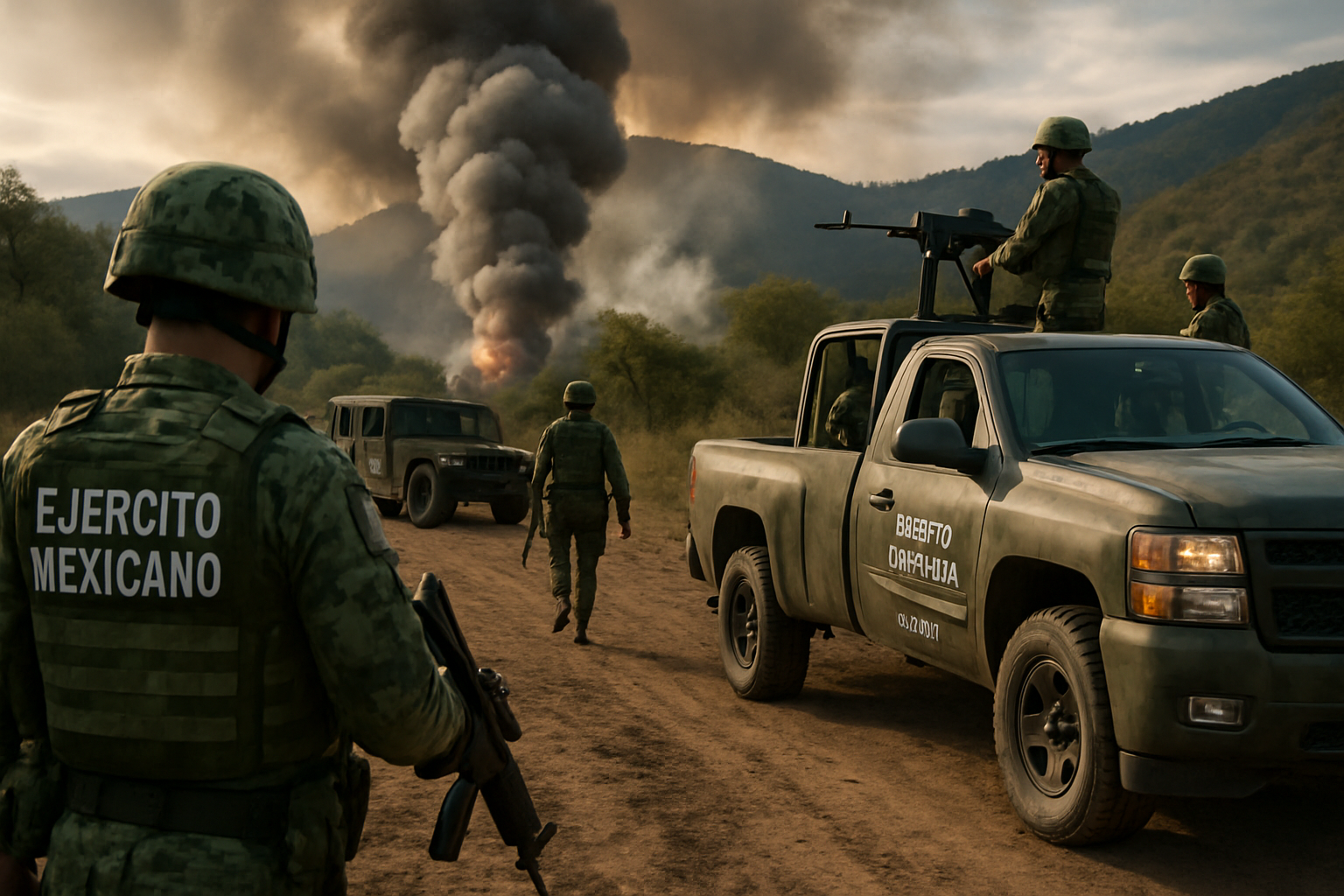
The death of Mexico's most wanted drug lord has plunged multiple states into chaos, with cartel members launching coordinated attacks across the country in retaliation for their leader's killing by military forces.
Nemesio Oseguera Cervantes, known as "El Mencho," the 59-year-old leader of the Jalisco New Generation Cartel (CJNG), was killed on Sunday, February 22, 2026, during a military operation in the town of Tapalpa, Jalisco state. The operation, conducted with U.S. intelligence cooperation, has triggered the most severe wave of cartel violence Mexico has witnessed in years.
The Operation and Its Immediate Aftermath
Mexican Defense Secretary confirmed that Oseguera was wounded during a firefight with federal forces and died while being transported to Mexico City for medical treatment. Three soldiers were injured in the operation, which also resulted in the seizure of armored vehicles, rocket launchers, and other military-grade weapons.
The U.S. government had placed a $15 million bounty on El Mencho's head, making him one of the world's most wanted criminals. His cartel had become Mexico's most powerful criminal organization through extreme violence and sophisticated operations that included downing military helicopters with rocket-propelled grenades.
"This represents the most significant blow against organized crime since the capture of El Chapo Guzman and Mayo Zambada."
— Security Analyst, La Nación
Nationwide Retaliation Campaign
Within hours of the announcement, CJNG members launched coordinated attacks across seven Mexican states. The violence has been particularly severe in Jalisco, Michoacán, Tamaulipas, Colima, Guanajuato, Nayarit, and Zacatecas.
In Jalisco alone, authorities confirmed that 18 branches of Banco del Bienestar were set on fire. Guadalajara, a major city set to host FIFA World Cup 2026 matches, saw buses and cars set ablaze while cartel members blocked major highways. Puerto Vallarta, a popular tourist destination, experienced particular violence with a Costco store among the targets burned.
The death toll continues to rise, with Italian media reporting at least 26 deaths in the clashes, including 17 security personnel and a pregnant woman. Mexican sources confirm at least 14 people killed, including seven members of the National Guard, with 45 arrests made across multiple states.
International Response and Travel Warnings
The violence has prompted urgent travel warnings from governments worldwide. The United States State Department issued an immediate "shelter in place" advisory for American citizens in Mexico, particularly in the affected states.
"Due to ongoing, widespread security operations and related road blockages and criminal activity in many areas of Mexico, US citizens should shelter in place until further notice."
— U.S. State Department
Canada has issued similar warnings for its citizens, while the Government of Belize advised its nationals to avoid non-essential travel to the affected Mexican states and exercise "high degree of caution" in areas like Mérida and northern Quintana Roo.
Australia's Department of Foreign Affairs updated its travel advice for Mexico, warning citizens to "take extra care" visiting the country. Ecuador, Finland, Sweden, and other European nations have also issued alerts to their citizens in Mexico.
Aviation and Tourism Impact
The crisis has severely disrupted air travel, with both domestic and international flights canceled at Guadalajara and Puerto Vallarta airports due to security concerns and road blockages preventing access to the facilities. Canadian tourists in Puerto Vallarta have reported being stranded at resorts with smoke visible in the background.
Major sporting events have been canceled or postponed, with Mexican League soccer matches called off and concerts rescheduled. Schools in Jalisco have suspended classes as Governor Pablo Lemus Navarro declared a "red code" emergency across the state.
Government Response and Political Implications
President Claudia Sheinbaum has called for calm while praising the security operation. Speaking at a press conference, she emphasized the government's "full coordination with all state governments" and urged citizens to stay informed through official channels.
The operation represents a major victory for the Sheinbaum administration's security strategy, but it has also exposed the continuing power of Mexico's criminal organizations to paralyze entire regions when their leadership is threatened.
The CJNG Legacy and Succession Concerns
Under El Mencho's leadership since 2011, the CJNG became Mexico's most violent and technologically sophisticated criminal organization. The cartel controlled significant portions of Mexico's fentanyl trafficking to the United States and had expanded operations across multiple states through extreme violence.
Security analysts warn that El Mencho's death may not weaken the organization but could instead lead to fragmentation and increased violence as various factions compete for control. Potential successors include his son Rubén "El Menchito" Oseguera, who is currently imprisoned in the United States, and various regional commanders within the organization.
Economic and Social Consequences
The violence has immediate economic implications for Mexico, particularly affecting tourism in the run-up to the FIFA World Cup 2026, where Guadalajara is scheduled to host matches. The country's mining sector, already vulnerable after recent attacks on Canadian workers in Sinaloa, faces additional security concerns.
The crisis also highlights the interconnected nature of Mexico's security challenges, where the elimination of high-value targets often leads to power vacuums that generate even more violence as criminal organizations restructure themselves.
International Security Cooperation
The operation against El Mencho demonstrates the increasing cooperation between Mexican and U.S. security agencies. However, it also underscores the limitations of such targeted operations when criminal organizations have the capacity to launch nationwide retaliation campaigns.
The situation tests Mexico's relationship with neighboring countries, as the violence spills over into economic disruptions affecting tourism, trade, and regional stability. The international travel advisories reflect global concern about Mexico's ability to maintain security for foreign visitors and businesses.
Looking Forward
As Mexico enters what may be a prolonged period of cartel violence following El Mencho's death, the government faces the challenge of maintaining public order while pursuing its broader security strategy. The coming weeks will be crucial in determining whether security forces can contain the violence or if the country faces an extended period of instability.
The international community watches closely, with the success or failure of Mexico's response likely to influence future counternarcotics cooperation and regional security initiatives. For now, millions of Mexicans and thousands of foreign visitors remain under the shadow of a security crisis that shows no immediate signs of resolution.
The death of El Mencho marks the end of an era in Mexico's drug war, but it may have opened a new and potentially more chaotic chapter in the country's ongoing struggle against organized crime.