The assassination of Nemesio Oseguera Cervantes, known as "El Mencho," has plunged Mexico into its most severe security crisis in years, with violent reprisals spreading across 20 states and prompting unprecedented international security responses just months before the 2026 World Cup.
Texas Governor Greg Abbott announced Tuesday the deployment of additional law enforcement agents to the Mexican border following an escalation of violence that has claimed the lives of 25 Mexican National Guard members and sparked concerns about cross-border security threats. The deployment includes agents from the Texas Department of Public Safety, Texas Rangers, and specialized units focused on securing the nearly 2,000-mile border that comprises almost half of the U.S.-Mexico international boundary.
Trump Claims Credit for Cartel Leader's Elimination
During his State of the Union address Tuesday, President Donald Trump claimed credit for the operation that killed El Mencho, asserting that Mexican cartels "control parts of Mexico" and positioning the elimination as a major victory for bilateral cooperation. The claim represents Trump's effort to highlight U.S.-Mexico intelligence coordination in the most significant cartel leadership elimination since El Chapo's 2016 capture.
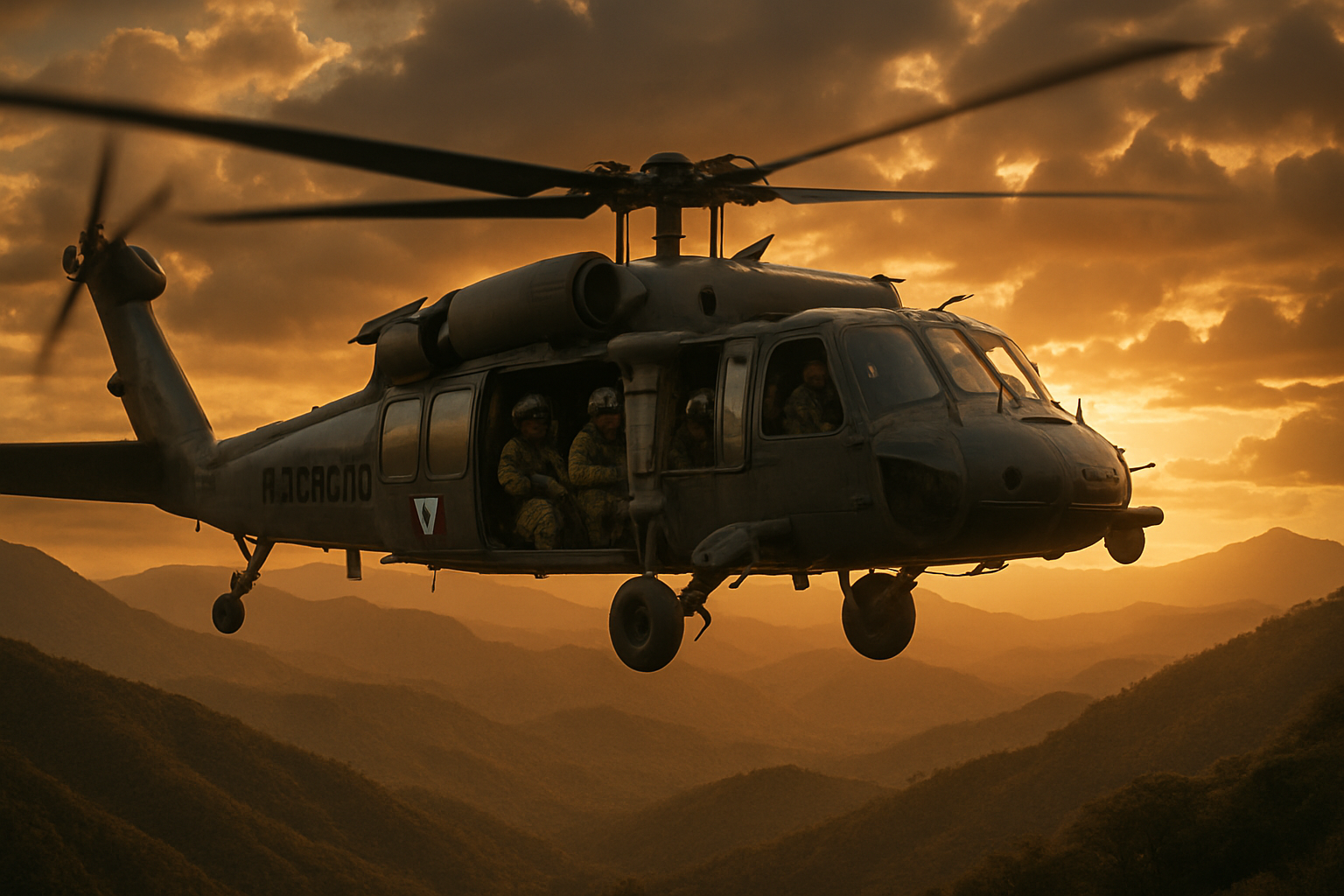
The operation on February 22 at a luxury mountain hideout in Tapalpa, Jalisco, was the result of sophisticated intelligence work that tracked El Mencho through surveillance of a romantic partner visiting the secluded country club location. The 59-year-old cartel leader died from gunshot wounds during helicopter transport to Mexico City after a fierce firefight that killed six bodyguards and injured three Mexican military personnel.
El Mencho's Hidden Health Struggles Revealed
Authorities have revealed new details about the final months of the CJNG leader's life, including his battle with kidney disease. Mexican security officials had warned as early as February 2025 that Oseguera suffered from renal deficiency, though they did not specify the exact nature of his condition at the time.
Among the items discovered at his final hideout was Tationil Plus, a medication containing taurine and other compounds used to treat various health conditions. The presence of kidney medications alongside religious artifacts—including a Catholic altar with Virgin Mary images and a handwritten Psalm 91 "soldier's prayer"—provided insight into the personal life of one of Mexico's most wanted criminals, who carried a $15 million DEA bounty.
"The sophisticated intelligence breakthrough allowed us to locate him through romantic partner surveillance at this luxury mountain compound."
— Defense Secretary Ricardo Trevilla
Massive Coordinated Retaliation Campaign
The CJNG's response to their leader's death has been unprecedented in its scope and violence. The organization launched systematic attacks across 20 Mexican states, featuring vehicle burnings, highway blockades, and targeted assaults on government infrastructure and businesses. Puerto Vallarta's Costco was burned, multiple Banco del Bienestar branches were attacked, and the violence reached Guadalajara, a designated host city for the 2026 FIFA World Cup.
The retaliation was coordinated by Hugo César Macías Ureña, known as "El Tuli" or "El Tulipán," identified as one of the CJNG's most trusted financial and operational commanders. Before being eliminated alongside El Mencho, Tuli had offered bounties of over $1,000 per soldier killed in revenge attacks, demonstrating the organization's willingness to directly target Mexican security forces.
Mexican authorities responded with the deployment of 10,000 troops across western regions—the largest security operation in years. Jalisco Governor Pablo Lemus declared a "red code" emergency, suspending schools in eight states and authorizing court closures for public safety.
International Ramifications and World Cup Concerns
The violence has prompted international travel advisories from multiple countries, with Canada, Australia, Belize, Malaysia, and the Dominican Republic all issuing warnings to their citizens regarding travel to Mexico. The timing is particularly concerning given that the 2026 World Cup begins in just four months, with Guadalajara serving as one of the host cities.
FIFA has requested detailed security reports from the Mexican government, while tourism industry officials report widespread disruption to what was expected to be a major post-pandemic economic recovery driven by World Cup preparations. Major hotel chains have closed facilities, and transportation systems faced temporary suspensions during the height of the violence.
Cross-Border Security Implications
The crisis extends beyond Mexico's borders, with Texas authorities implementing enhanced security measures in response to the "increased violence following the death of El Mencho," as Governor Abbott stated. The deployment reflects growing concerns about spillover effects from Mexico's organized crime violence affecting U.S. border communities.
This security response follows a pattern of cross-border cartel incidents, including the February 11 drone incursion that temporarily closed El Paso International Airport airspace, demonstrating the sophisticated technological capabilities of Mexican criminal organizations.
The CJNG's Evolution Under El Mencho
Under Nemesio Oseguera's leadership since 2011, the CJNG evolved from remnants of the Milenio Cartel into Mexico's most sophisticated criminal organization. The group became notorious for military-style tactics, including the 2015 downing of a Mexican military helicopter with rocket-propelled grenades—a first in the country's drug war history.
The organization's international reach extended across Latin America and into Asia, with particular strength in fentanyl trafficking to the United States. Intelligence officials credit the CJNG with revolutionizing cartel operations through advanced weaponry, encrypted communications networks, and surveillance capabilities that rival state operations.
"The territorial magnitude, financial resources, and lack of clear succession could create internal disputes and focused violence episodes as factions compete for control."
— Victor Manuel Sánchez Valdés, Security Analyst
Succession Crisis and Future Violence
Security analysts warn that El Mencho's death may paradoxically increase violence rather than reduce it, as historical patterns show that eliminating cartel leaders typically causes organizational splintering rather than dismantlement. The CJNG faces a succession crisis with no clear leader, as Oseguera's son Rubén "El Menchito" remains imprisoned in the United States.
Multiple potential successors among regional commanders are expected to compete for control of the organization's vast territorial holdings and lucrative trafficking routes. This internal competition could spawn new violence as different factions seek to establish dominance over the criminal network's operations.
Testing Mexico's Institutional Capacity
The current crisis represents a critical test of Mexico's ability to manage sophisticated transnational criminal organizations while minimizing civilian impact and maintaining international confidence. President Claudia Sheinbaum has maintained real-time security cabinet communications throughout the emergency, emphasizing that there are "no timeline restrictions" for operations to restore order.
The success or failure of Mexico's response will influence how other countries approach similar organized crime challenges globally. With the World Cup approaching and billions of dollars in tourism revenue at stake, the government faces the dual challenge of dismantling criminal networks while rebuilding international confidence in Mexico's security capabilities.
The elimination of El Mencho represents both a tactical victory for law enforcement and a strategic watershed moment that will determine Mexico's approach to 21st-century organized crime challenges. As criminal organizations continue to demonstrate state-like capabilities, traditional law enforcement frameworks may prove insufficient to address threats that extend far beyond Mexico's borders.