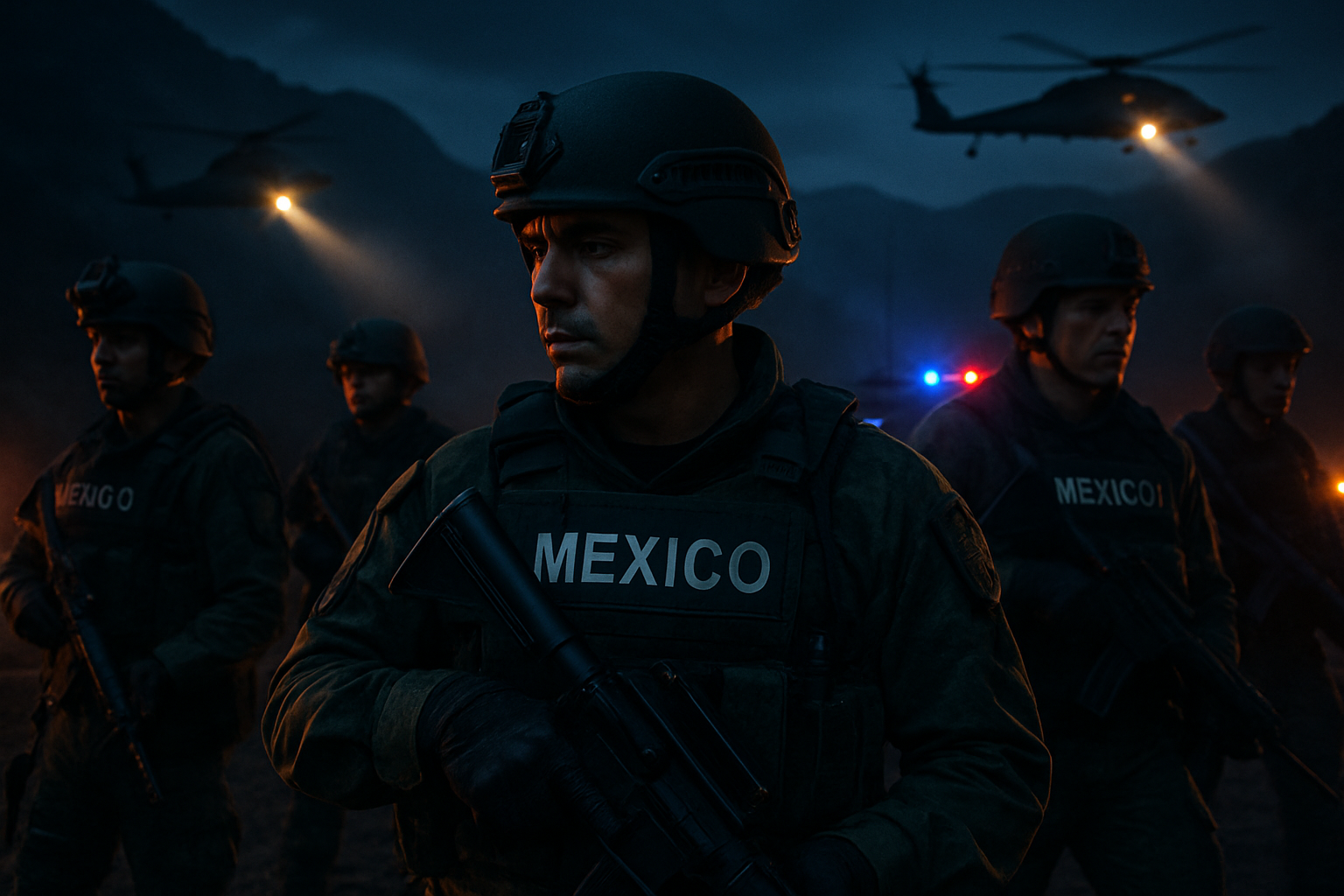
Mexico's most powerful drug lord Nemesio Oseguera Cervantes, known as "El Mencho," died Sunday during a military operation in Jalisco state, sparking the most significant wave of cartel violence in decades and plunging the nation into chaos.
The 59-year-old leader of the Jalisco New Generation Cartel (CJNG) was fatally wounded during a firefight with Mexican special forces in the mountain town of Tapalpa and died while being airlifted to Mexico City. His death marks the highest-profile takedown of a Mexican cartel leader since the capture of Joaquín "El Chapo" Guzmán in 2016.
Immediate Nationwide Retaliation
Within hours of the operation's completion, suspected CJNG members launched coordinated revenge attacks across at least seven Mexican states. The violence has forced school closures in multiple states, prompted international travel warnings, and left at least 24 people dead, including 17 security personnel and one civilian.
In Jalisco alone, cartel members burned 18 branches of Banco del Bienestar, torched vehicles throughout Guadalajara, and attacked businesses in Puerto Vallarta, including setting fire to a Costco store. The resort city, normally bustling with tourists, became a ghost town as residents and visitors sheltered indoors.
"The situation turned into a war zone within hours. We could see smoke rising from multiple locations across the city,"
— American Tourist in Puerto Vallarta
Highway blockades with burning vehicles stretched across Michoacán, Tamaulipas, Colima, Guanajuato, Nayarit, and Zacatecas states. The coordinated nature of the attacks demonstrated the cartel's sophisticated organizational structure and communication networks that survived their leader's death.
U.S. Intelligence Cooperation Confirmed
The White House confirmed that American intelligence agencies provided crucial support for the operation that led to El Mencho's death. White House Press Secretary Karoline Leavitt stated that the cartel leader "was a priority target for both the governments of Mexico and the United States," particularly due to his central role in fentanyl trafficking.
President Donald Trump praised Mexican military personnel involved in the operation, with his administration describing the takedown as a victory against "narcoterrorism." The operation represents a significant success for bilateral security cooperation amid ongoing pressure from Washington on President Claudia Sheinbaum's administration to intensify the fight against cartels.
International Travel Crisis Unfolds
The violence has created an unprecedented travel crisis, with multiple countries issuing emergency advisories. The U.S. State Department issued immediate "shelter in place" warnings for American citizens in affected areas, while Canada, Australia, Ecuador, and several European nations advised their citizens to exercise extreme caution or avoid the region entirely.
Aviation operations suffered severe disruption, with Air Canada, United Airlines, and Aeromexico canceling flights to Puerto Vallarta and Guadalajara. The Guadalajara airport, which is scheduled to host several FIFA World Cup matches in 2026, experienced significant access problems due to highway blockades.
Tourism officials expressed particular concern given Jalisco's importance as a destination and its upcoming role in hosting World Cup events. The violence has raised questions about security preparations for the international tournament.
The Rise and Fall of 'El Mencho'
Born Nemesio Rubén Oseguera Cervantes, the man known as "El Mencho" transformed from a former police officer and migrant worker in the United States into Mexico's most feared drug lord. He founded the CJNG in 2011 from the remnants of the Milenio Cartel, quickly establishing dominance through unprecedented violence and military-grade tactics.
Under his leadership, the CJNG became notorious for its extreme brutality, including the 2015 downing of a Mexican military helicopter using rocket-propelled grenades—the first time a cartel had successfully shot down a military aircraft. The organization controlled vast territories across western Mexico and dominated fentanyl trafficking routes to the United States.
El Mencho had a $15 million bounty on his head from U.S. authorities, making him one of the world's most wanted criminals. His cartel was responsible for thousands of deaths and played a central role in Mexico's ongoing security crisis.
Government Response and Security Measures
President Claudia Sheinbaum praised the security forces' success while calling for calm across the nation. Her administration emphasized "full coordination" with state governments to manage the crisis. Jalisco Governor Pablo Lemus declared a "red code" emergency, the state's highest security alert level.
Schools remained closed Monday in at least eight of Mexico's 32 states, while the judicial system authorized judges to keep courts closed when deemed necessary for safety. The government deployed additional National Guard troops to affected areas to contain the violence.
"This operation demonstrates that the good forces are stronger than the evil ones. We will maintain security throughout our territory,"
— President Claudia Sheinbaum
Economic and Social Impact
The violence has had immediate economic consequences, with businesses forced to close, transportation networks disrupted, and consumer confidence shaken. Mining companies, already on edge following the recent killing of Canadian workers in Sinaloa state, are reassessing their security protocols.
The tourism sector, vital to Mexico's economy, faces particular challenges. Jalisco attracts millions of international visitors annually, and the violent scenes broadcast globally could have lasting effects on the industry's recovery.
Succession Battle and Future Implications
Security analysts warn that El Mencho's death may lead to internal power struggles within the CJNG, potentially causing the organization to fragment into smaller, more violent factions. Several potential successors have been identified, including his son Rubén "El Menchito" Oseguera, currently imprisoned in the United States.
The historical pattern of cartel leadership elimination suggests that rather than dismantling the organization, the death may lead to increased violence as subordinates battle for control. This fragmentation often results in more unpredictable and brutal criminal activity as smaller groups compete for territory and influence.
Regional Destabilization Concerns
The violent response to El Mencho's death has demonstrated the cartel's capacity to paralyze entire regions simultaneously, affecting millions of civilians. The sophisticated coordination across multiple states reveals an organizational structure that extends far beyond traditional criminal enterprises.
International security experts view the crisis as a test case for Mexico's ability to manage major criminal organizations while minimizing civilian impact. The success or failure of the government's response could influence future counter-narcotics strategies throughout Latin America.
As Mexico continues to grapple with the aftermath of this landmark operation, the full implications of El Mencho's death remain to be seen. While his elimination represents a significant victory in the fight against organized crime, the immediate violent response underscores the complex challenges facing Mexico's security forces and the resilience of the criminal organizations they confront.