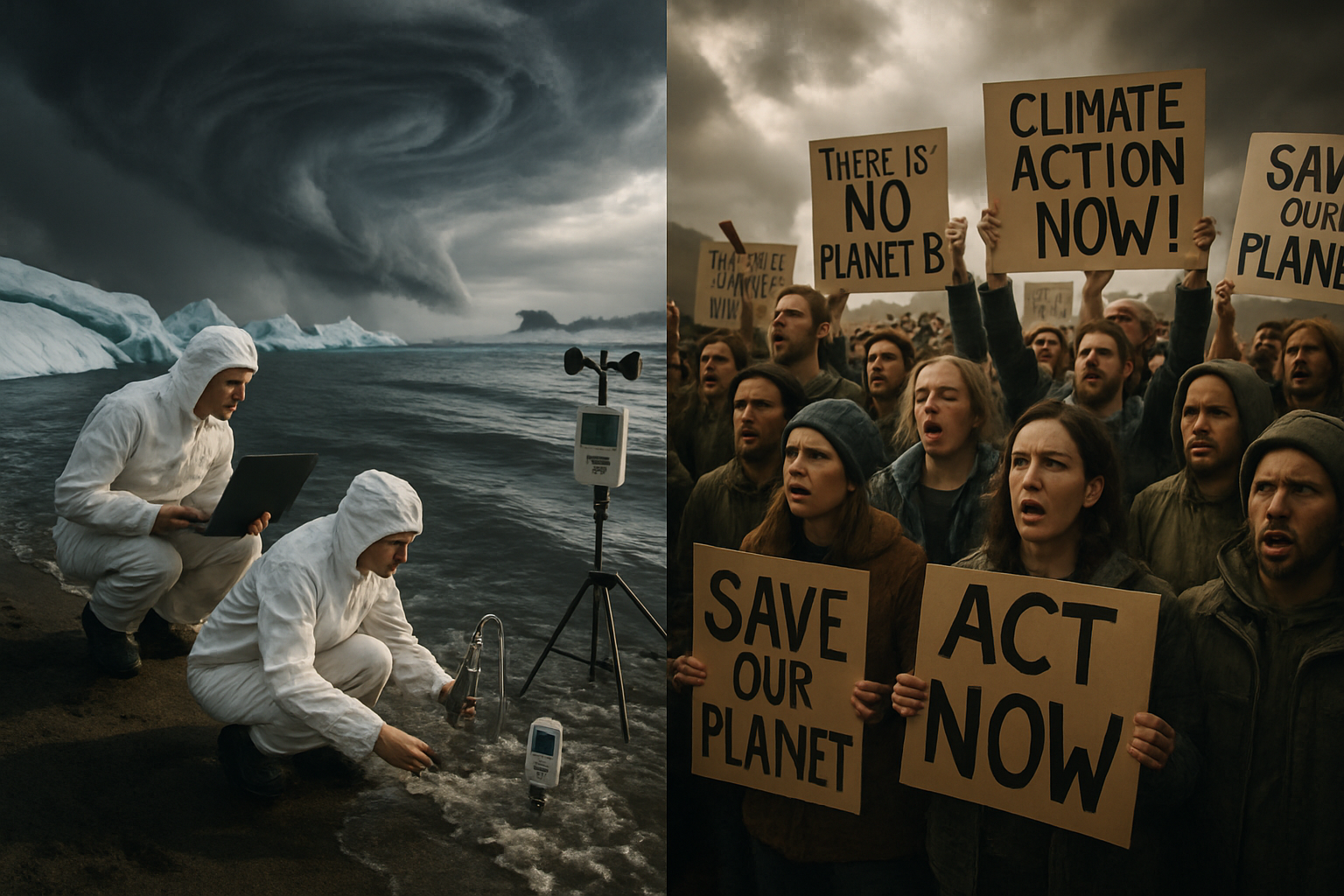
Global climate systems are entering a critical phase as the World Meteorological Organization predicts the return of El Niño phenomenon by mid-2026, coinciding with new research showing significant weakening of Atlantic ocean circulation and increased criminalization of climate protesters in the United Kingdom.
The convergence of these developments marks what scientists describe as a watershed moment for global environmental policy, occurring during the 24th consecutive month of temperatures exceeding 1.5°C above pre-industrial levels—the longest sustained extreme warming streak in recorded human history.
El Niño's Imminent Return
According to the World Meteorological Organization's latest bulletin, there is a 50-60% probability of El Niño development during the July-September 2026 period. This natural climate pattern, characterized by warming sea surface temperatures in the tropical Pacific Ocean, could drive unprecedented global temperatures by combining baseline climate warming with natural cycle amplification.
The organization's meteorologists note observable changes in the tropical Pacific Ocean, with sea surface temperatures rising rapidly. These conditions signal a potential shift from the current neutral state to El Niño conditions between May and June 2026.
Dr. Sarah Chen from the European Centre for Medium-Range Weather Forecasts describes this as a "paradigm shift" in European climate patterns. "We're seeing sustained warming that enables both temperature records and devastating regional extremes through disrupted atmospheric circulation," she explains.
Atlantic Circulation Under Threat
Simultaneously, new research reveals alarming developments in the Atlantic Meridional Overturning Circulation (AMOC), the massive oceanic conveyor belt that includes the Gulf Stream. This system transports 15 times more water than all the world's rivers combined, delivering warm tropical waters northward to Europe and North America while carrying cold, dense water southward along the ocean floor.
Scientists have confirmed that AMOC is "closer to collapse than anticipated," with Norwegian research indicating concerning early warning signs throughout 2026. The circulation system has remained stable for millennia but now faces unprecedented disruption from human-induced climate change.
"The AMOC helps nourish aquatic ecosystems and is part of the reason Europe has milder temperatures than places in Canada at the same latitude. But lately scientists are concerned that it is slowing down and could even potentially collapse."
— Canadian Broadcasting Corporation Climate Report
A complete collapse would have catastrophic implications for weather patterns, potentially affecting billions of people through dramatic temperature changes, altered precipitation patterns, and disrupted seasonal predictability across the Atlantic basin.
UK Climate Protest Crackdown
Against this backdrop of mounting climate concerns, new research reveals that the criminalization of climate protesters in the United Kingdom is proving counterproductive. A comprehensive study of 1,300 campaigners found that arrests, fines, and lengthy prison sentences given to nonviolent climate activists who have blocked roads or damaged buildings may actually radicalize them.
The research suggests that the repression of protest could be driving recent covert actions, including the cutting of internet cables by climate activists. Rather than deterring environmental activism, legal penalties appear to increase the determination of protesters to undertake more disruptive demonstrations.
This finding comes at a time when climate activism is intensifying globally, driven by mounting scientific evidence of accelerating environmental breakdown. The study indicates that traditional law enforcement approaches may be inadequate for addressing the growing urgency that many activists feel about the climate crisis.
International Climate Conference Responses
Meanwhile, international efforts to address fossil fuel dependence continue with a climate conference in Colombia focusing on pathways for nations to transition away from coal, oil, and gas. Approximately 50 countries, including Germany, are participating in discussions about implementing concrete steps toward renewable energy systems.
The conference represents ongoing diplomatic efforts to accelerate the global energy transition, though many scientists argue that current international commitments remain insufficient to prevent catastrophic climate breakdown.
Compound Environmental Challenges
The convergence of El Niño's return, Atlantic circulation weakening, and social responses to climate policy creates what experts term "compound environmental challenges." Traditional emergency response systems, designed for sequential rather than simultaneous crises, are struggling to cope with multiple overlapping environmental threats.
Recent months have seen emergency services operating at or beyond capacity limits globally. The EU Civil Protection mechanism has been repeatedly activated, with €246 million in assistance to Sweden and Denmark representing the largest coordinated European climate response on record—yet still proving insufficient for the scale and simultaneity of current challenges.

Economic and Social Implications
The economic implications of these converging climate factors are substantial. Agricultural sectors face mounting losses from extreme weather destroying crops and disrupting supply chains during critical growing seasons. Tourism industries experience extended cancellations and infrastructure damage during peak revenue periods.
Mental health services report increased demand related to climate anxiety and repeated environmental trauma. Families face the prospect of losing generational properties multiple times per decade, while small businesses confront extinction threats from recurring climate disruptions.
The traditional "building back better" approach to climate-resilient infrastructure has evolved from an optional enhancement to an essential survival strategy for communities facing permanent climate volatility.
Technology and Traditional Knowledge Integration
Successful environmental responses increasingly require sophisticated integration of cutting-edge technology with traditional ecological knowledge and community-based management. Advanced monitoring through satellite imagery, environmental DNA sampling, and AI-enhanced analysis provides rapid threat response capabilities, but maximum effectiveness requires community engagement and local expertise.
Estonia exemplifies this approach by combining traditional agricultural wisdom with modern climate monitoring systems. Similarly, Australia integrates Indigenous fire management practices with advanced meteorological forecasting, creating hybrid approaches that build resilience through multiple pathways for addressing complex, interconnected challenges.
International Cooperation at Breaking Point
Environmental challenges transcend political boundaries, as atmospheric systems, ocean currents, and species migrations operate regardless of borders. The simultaneity of current climate disasters is testing international cooperation mechanisms that were developed assuming stable regions could assist others during isolated emergencies.
Traditional mutual aid frameworks prove inadequate when multiple continents face simultaneous environmental emergencies. Success requires unprecedented international cooperation, enhanced multi-sector coordination, and sustained financial commitments that recognize environmental protection as essential infrastructure rather than a regulatory burden.
Critical Action Window
Environmental scientists warn that the window for effective climate action is narrowing rapidly. Ecological systems are approaching critical thresholds that could trigger irreversible changes affecting global food security, climate stability, and human settlements.
The choice facing the international community is increasingly stark: reactive crisis management versus proactive ecosystem service management. Current conditions provide a preview of routine circumstances expected in the 2030s without comprehensive climate adaptation investment.
"The question is no longer whether transformative action is needed, but whether humanity can organize and implement solutions rapidly enough to maintain planetary habitability during Earth's most environmentally challenging period in recorded history."
— Climate Scientist, European Environmental Assessment
Strategic Implications for Policy
The convergence of El Niño's return, Atlantic circulation threats, and social responses to climate policy creates a decisive moment for global environmental governance. Additional weather systems developing in Atlantic and Pacific regions suggest that current crisis conditions may persist for weeks or months, potentially establishing a "new normal" of extreme weather frequency and intensity that permanently challenges traditional frameworks.
Tools, knowledge, and cooperation frameworks exist for comprehensive environmental protection, but implementation requires unprecedented speed, coordination, and sustained international cooperation. The success of environmental protection efforts increasingly depends on political commitment to treating environmental protection as essential infrastructure for human prosperity and planetary sustainability.
Looking Forward
As 2026 progresses, the interaction between natural climate variability and human-induced warming creates unprecedented challenges for global environmental governance. The potential return of El Niño during an already record-breaking warming period, combined with evidence of Atlantic circulation instability and evolving social responses to climate policy, demands transformative rather than incremental responses.
The coming months will test humanity's capacity for coordinated action in addressing planetary-scale environmental challenges. The outcomes will be decisive for global climate resilience strategies affecting generations to come, determining whether current environmental protection efforts can keep pace with accelerating environmental change during this critical climate action decade.