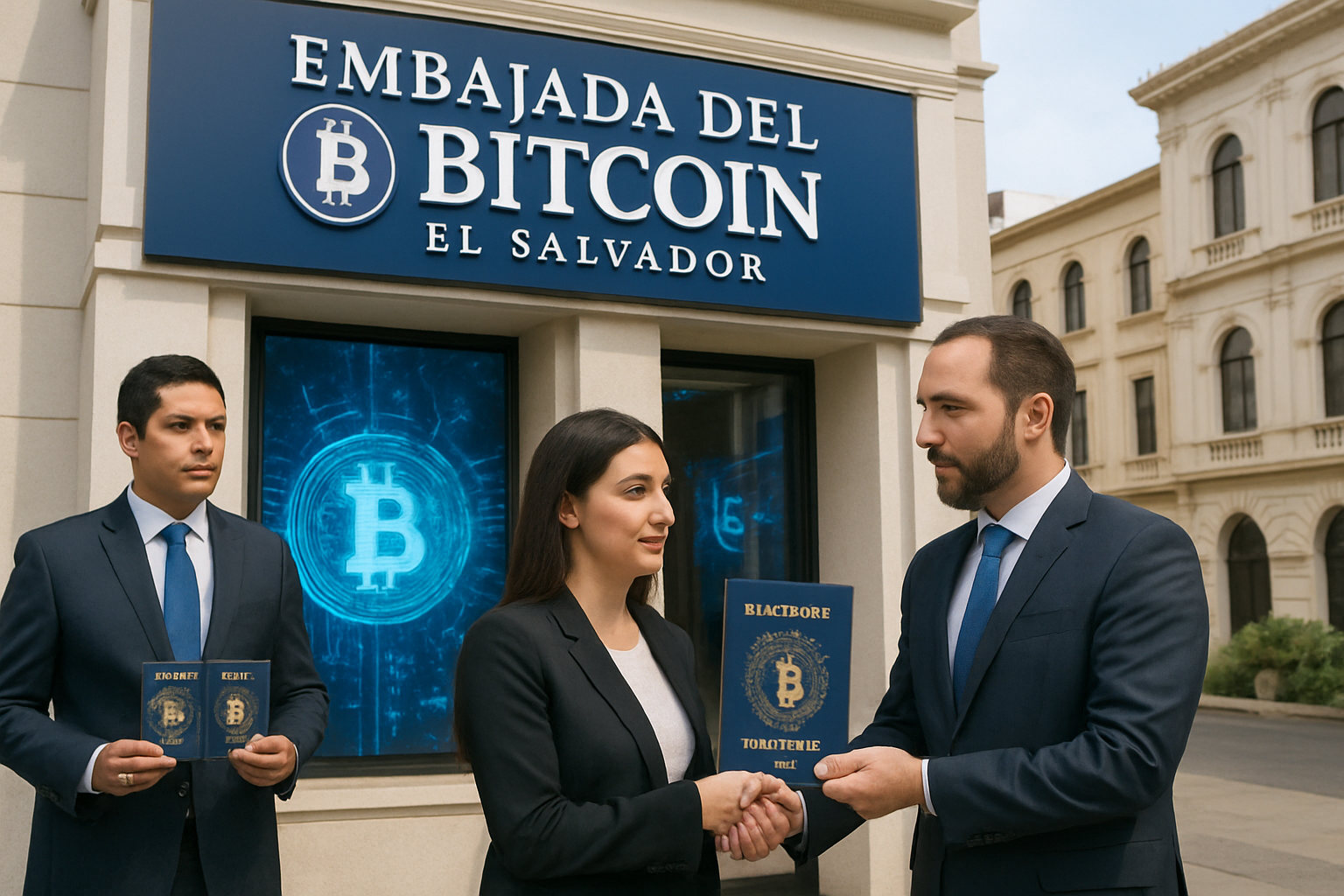
El Salvador is advancing its pioneering Bitcoin strategy with the launch of dual-tier residency and citizenship programs, even as global cryptocurrency markets endure their most severe crisis since 2021, with Bitcoin losing over 50% of its value and the broader digital asset ecosystem shedding approximately $2 trillion in market capitalization.
President Nayib Bukele's administration officially announced the Freedom Visa and Bitcoin Country programs on February 26, 2026, positioning El Salvador as the world's first nation to offer Bitcoin-based passports to attract global crypto elite. The initiative builds on the country's historic 2021 milestone as the first nation to adopt Bitcoin as legal tender.
The Bitcoin Passport Programs
The dual-tier system represents El Salvador's most ambitious digital asset strategy to date. The Freedom Visa program offers expedited residency status for cryptocurrency investors, while the Bitcoin Country initiative provides a pathway to citizenship for significant Bitcoin holders willing to make long-term commitments to the Central American nation.
According to AzerNEWS reporting, the programs are designed to "lure global crypto elite" during a period when traditional cryptocurrency havens face increasing regulatory scrutiny. The timing appears strategic, as wealthy cryptocurrency holders worldwide seek jurisdictions with clear, favorable digital asset policies.
Global Cryptocurrency Market Devastation
El Salvador's Bitcoin passport launch occurs against the backdrop of catastrophic market conditions that have fundamentally altered the cryptocurrency landscape. Bitcoin has crashed from its October 2025 peak of $126,199 to below $60,000, representing a devastating 50% decline that has completely erased all gains achieved following Donald Trump's election victory.
The broader cryptocurrency ecosystem tells an even more troubling story. Altcoins have experienced systematic declines of 60-70% from their peaks, indicating a crisis that extends far beyond Bitcoin-specific issues. The total cryptocurrency market has lost approximately $2 trillion in value since correction began, marking the most significant decline since mainstream institutional adoption began in 2020-2021.
"This represents the strongest fall since the post-Trump triumph rise, approaching a 40% decline."
— Diego Montalbetti, Capitaria analyst
The Root Cause: Regulatory Vacuum
Despite Trump administration pro-crypto rhetoric and campaign promises to transform the United States into a "global crypto hub," Congressional legislation supporting digital assets remains completely stalled. This regulatory gridlock has created what market analysts describe as a "regulatory vacuum" that is undermining institutional confidence and driving unprecedented selling pressure.
The stalled legislation represents a fundamental betrayal of Trump's campaign promises to cryptocurrency supporters. International media coverage has been particularly critical, with French Mediapart describing it as the "collapse of the crypto era wanted by Trump," while Finnish YLE reported that Trump's election gains have been "wiped away" entirely.
Austrian analysts have warned of potential "death spiral" scenarios if Bitcoin fails to hold critical psychological support levels around $60,000, with technical analysis suggesting the next major target could be $50,000 – representing an additional 25% decline from current levels.
Global Context: Alternative Digital Payment Success
While speculative cryptocurrency markets face systematic collapse, government-backed digital payment systems continue demonstrating remarkable success worldwide. Nigeria now processes 43% of fuel sales through digital payments, providing same-day settlements that solve critical liquidity issues for businesses.
Slovakia has pioneered a €1.3 billion digital euro pilot project, positioning the nation as a leader in European monetary digitalization. Zimbabwe's innovative Ndarama platform bridges tokenized real-world assets to fiat currency without cryptocurrency complexity, offering $1 minimum investments and USD-denominated loans through mobile money integration.
These successful implementations share common characteristics: government backing, regulatory clarity, practical utility, and integration with existing financial systems – qualities that volatile, unregulated cryptocurrency markets have struggled to provide.
El Salvador's Strategic Positioning
El Salvador's Bitcoin passport initiative represents a calculated bet on long-term cryptocurrency adoption despite short-term market volatility. The country has maintained its Bitcoin reserves throughout the crisis, with President Bukele continuing to advocate for digital asset accumulation even as traditional economists warn of potential $100 million losses to the national treasury.
The passport programs could provide El Salvador with several strategic advantages. They offer diversification of revenue sources beyond traditional remittances and tourism, attract high-net-worth individuals with technological expertise, and position the country as a continuing leader in digital asset innovation.
However, the timing raises questions about the sustainability of Bitcoin-based policy initiatives during periods of extreme market stress. Critics argue that tying national identity documents to volatile digital assets creates unnecessary risks for both the government and program participants.
Technical and Operational Challenges
The global cryptocurrency crisis has been exacerbated by significant operational failures within the digital asset infrastructure. South Korea's Bithumb exchange recently experienced the largest operational error in cryptocurrency history, mistakenly transferring 620,000 bitcoins worth $44 billion to users before successfully recovering 99.7% of the funds within 35 minutes.
Additionally, a global memory chip crisis has created sixfold price increases for semiconductor components from Samsung, SK Hynix, and Micron, constraining the technological infrastructure necessary for digital asset operations. These constraints are expected to persist until 2027, when new manufacturing facilities come online.
International Regulatory Responses
As El Salvador moves toward greater Bitcoin integration, other nations are implementing increasingly strict cryptocurrency regulations. Ghana's Bank of Ghana and Securities Exchange Commission issued a joint directive prohibiting all public advertising for virtual assets and stablecoins, representing the most aggressive regulatory action against crypto marketing in Africa.
Slovakia has announced comprehensive cryptocurrency oversight changes, including potential 51% combined taxes and social contributions, enhanced state supervision, and stricter compliance requirements for digital asset service providers. These measures reflect growing governmental concern about unregulated financial speculation affecting national monetary stability.
Economic Implications and Market Recovery
The cryptocurrency market's systematic collapse has significant implications for El Salvador's economy, given its status as the first nation with Bitcoin as legal tender. While the country has not disclosed the full extent of its Bitcoin holdings or valuation impacts, economic analysts suggest that recovery requires three critical components: comprehensive regulatory frameworks, improved macroeconomic conditions, and renewed institutional confidence.
The timeline for such recovery remains highly uncertain, particularly given the Congressional legislative stalemate in the United States and increasing regulatory hostility from other major economies. Traditional financial markets, by contrast, have demonstrated remarkable resilience, with the Dow Jones achieving historic milestones above 50,000 points during the same period that cryptocurrency markets have collapsed.
Looking Ahead
El Salvador's Bitcoin passport initiative represents either visionary leadership in digital asset adoption or a risky gamble during unprecedented market turbulence. The program's success will likely depend on several factors: the ability of global cryptocurrency markets to stabilize and recover, the resolution of regulatory uncertainty in major economies, and El Salvador's capacity to attract sufficient high-quality applicants to justify the program's operational costs.
The initiative also serves as a crucial test case for other nations considering similar digital asset integration strategies. If successful, El Salvador's model could inspire broader international adoption of cryptocurrency-based governance initiatives. If unsuccessful, it may serve as a cautionary tale about the risks of linking national policy to volatile speculative markets.
As global cryptocurrency markets attempt to find stability amid the worst crisis in their modern history, El Salvador's determination to advance Bitcoin-based initiatives demonstrates either remarkable confidence in long-term digital asset adoption or concerning disregard for the systemic risks facing the entire cryptocurrency ecosystem. The coming months will reveal whether this bold strategy represents pioneering leadership or a costly miscalculation during one of the most challenging periods in cryptocurrency history.