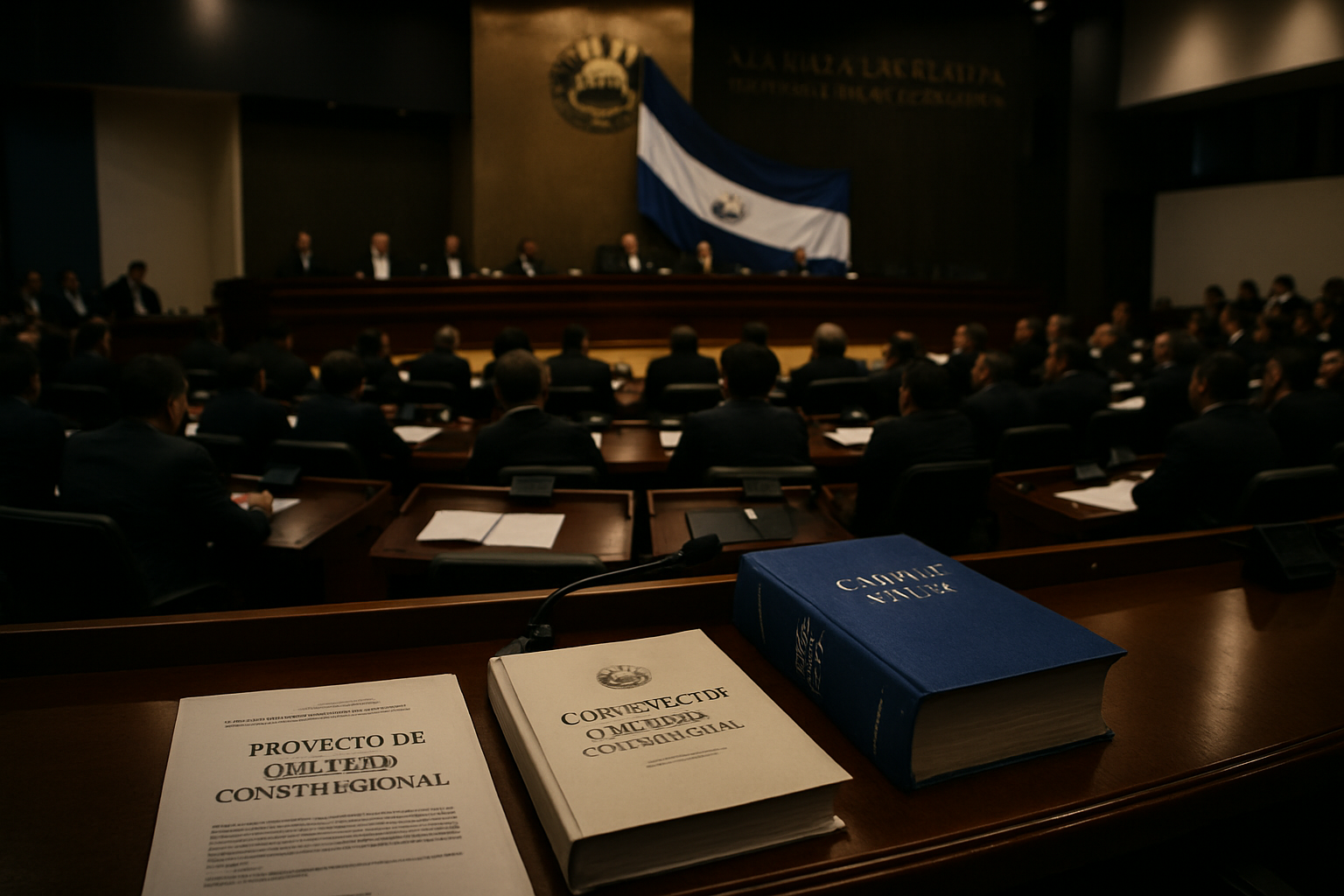
El Salvador's National Assembly is advancing groundbreaking constitutional reforms that would eliminate the prohibition on life imprisonment and enable its application for serious crimes including homicide, marking a significant shift in the country's criminal justice approach under President Nayib Bukele's administration.
Assembly President Ernesto Castro announced Tuesday that the constitutional reform initiative has been formally presented with the backing of 57 deputies, representing broad legislative support for the proposal. The reform would modify Article 27 of the Constitution, which currently prohibits life sentences, opening the door for what officials describe as necessary tools to ensure justice for the most serious criminal offenses.
Government Presents Comprehensive Security Package
The constitutional reform proposal emerged from El Salvador's Security Cabinet as part of a broader package of measures aimed at strengthening criminal penalties. Interior Minister Gustavo Villatoro explained that the initiative responds to the need to "guarantee justice and peace for the population," emphasizing that current legal frameworks require updating to address serious crimes effectively.
"We have been questioned about the legitimate use of tools to bring peace to Salvadorans. Security together with justice leads us to review the behavior of homicides," Villatoro stated during the announcement of the reform package.
According to Villatoro, the government is simultaneously pursuing modifications to other legal codes to "standardize penalties and enable life sentences for crimes such as homicide and other serious offenses." This comprehensive approach demonstrates the administration's commitment to overhauling the country's criminal justice framework systematically.
Presidential Support and Philosophical Justification
President Nayib Bukele has consistently supported harsh penalties for serious criminals, recently reaffirming his stance on punishment for high-risk offenders. In previous statements that have gained renewed relevance, Bukele articulated his philosophy on criminal justice, balancing religious beliefs with earthly accountability.
"I am a believing person, I believe that God can forgive everyone. I know that if he repents and asks for forgiveness, he will go to heaven like any other sinner. But that is God's business. Here on earth he has to be in prison."
— Nayib Bukele, President of El Salvador
The president's position reflects a pragmatic approach that distinguishes between divine mercy and temporal justice, arguing that while spiritual forgiveness remains possible, earthly consequences for serious crimes are necessary for social protection and order.
Legislative Process and Timeline
Assembly President Castro confirmed that proper legal procedures have been followed in presenting the reform initiative. The formal presentation with 57 deputies' support demonstrates significant legislative momentum, though the constitutional amendment process requires careful consideration and multiple readings before final approval.
The reform specifically targets the second clause of Article 27 of the Constitution, which currently prohibits life imprisonment. Eliminating this restriction would provide courts with expanded sentencing options for the most serious criminal cases, particularly homicides and other grave offenses that have historically challenged the justice system's capacity for appropriate punishment.
Context of El Salvador's Security Transformation
This constitutional reform initiative comes as El Salvador continues its remarkable security transformation under the Bukele administration. The country, which was once among the world's most violent, has achieved unprecedented reductions in crime rates through comprehensive security policies that have gained international attention and recognition.
The proposed life imprisonment option represents the latest evolution in El Salvador's security strategy, building on previous successes while addressing concerns about ensuring appropriate punishment for the most serious crimes. The reform aims to provide the justice system with tools proportionate to the gravity of certain offenses, particularly those involving multiple victims or exceptional brutality.
Broader Criminal Justice Implications
Deputy Edgardo Mulato of the ruling Nuevas Ideas party has highlighted the importance of prioritizing justice for victims in national criminal policy debates. Mulato questioned approaches that he views as disproportionately focusing on criminals' rights while potentially neglecting victims' needs for justice and closure.
"Justice for criminals... or forgetting the victims? Human rights... for whom?" Mulato asked, referencing violent cases that have affected communities throughout the country, including incidents involving children, elderly adults, and entire families.
This perspective reflects broader discussions within El Salvador about balancing criminal defendants' rights with victims' rights and community safety concerns, particularly in cases involving organized crime or repeat serious offenders.
International Context and Precedents
El Salvador's consideration of life imprisonment aligns with broader international trends in addressing serious crime, particularly organized crime and terrorism. Many countries employ life sentences as part of their criminal justice frameworks, and El Salvador's reform would bring its legal system in line with international practices for the most serious offenses.
The reform also occurs within the context of El Salvador's successful partnership with international allies in combating transnational crime. The country has become a model for effective security cooperation, particularly with the United States through initiatives led by officials like Sara Carter, Director of the White House Office of National Drug Control Policy, who has praised El Salvador's strategic approach to dismantling criminal networks.
Implementation Challenges and Considerations
If approved, the constitutional reform would require careful implementation to ensure proper application of life sentences. This would likely involve training for judicial personnel, establishment of clear criteria for when life imprisonment might be appropriate, and development of appeals processes that maintain due process rights while enabling effective prosecution of serious crimes.
The government has emphasized that life imprisonment would be reserved for the most serious cases, suggesting that implementation would involve careful judicial discretion rather than automatic application. This approach aims to balance the need for appropriate punishment with constitutional protections and international human rights standards.
Public Safety and Deterrence Goals
Proponents of the reform argue that life imprisonment would serve both punishment and deterrence functions, potentially discouraging serious crimes while ensuring that the most dangerous offenders cannot threaten public safety through early release. The measure is viewed as particularly relevant for cases involving organized crime, where traditional sentence structures may be insufficient to address the systematic nature of criminal enterprises.
The reform also responds to public demands for justice in cases where crimes have caused extraordinary harm to communities and families. By providing courts with the option of life imprisonment, the justice system would have tools more proportionate to the gravity of the most serious offenses.
Looking Forward
As the constitutional reform moves through the legislative process, El Salvador continues to refine its approach to criminal justice within the broader context of its successful security transformation. The life imprisonment initiative represents both a culmination of previous security successes and an evolution toward more comprehensive tools for addressing the most serious crimes.
The reform's progress will be closely watched both domestically and internationally as a test of democratic institutions' capacity to adapt criminal justice frameworks while maintaining constitutional protections and due process rights. Success in implementing such reforms could provide a model for other countries facing similar challenges with serious crime and public safety.
With strong legislative support and clear governmental backing, the constitutional reform appears positioned to advance through the National Assembly, potentially marking another significant milestone in El Salvador's ongoing transformation from one of the world's most dangerous countries to a regional security success story with modern, effective criminal justice tools.