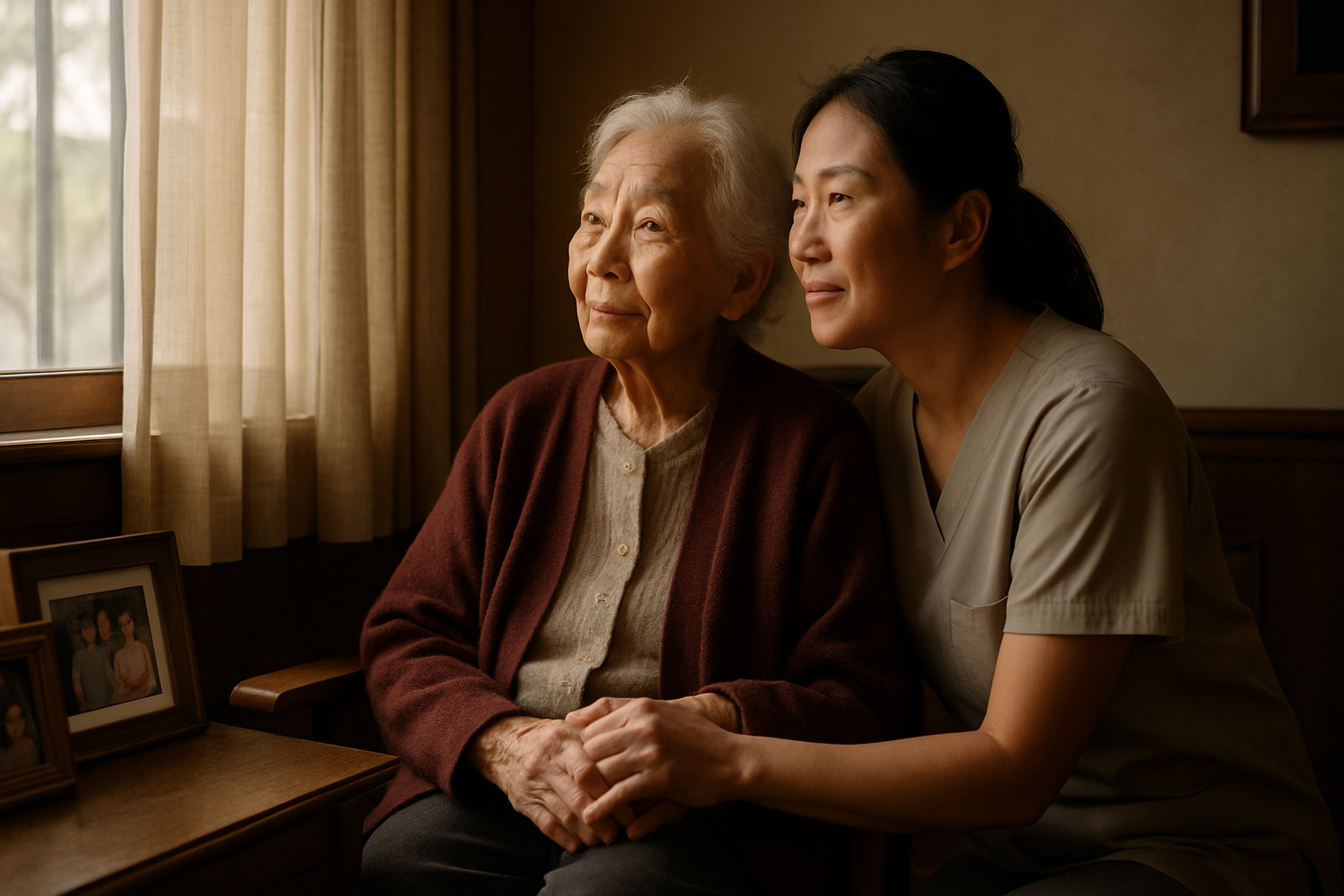
In a cramped Beijing apartment, a programmer makes a five-hour journey home not for work or leisure, but to fulfill a profound cultural obligation that defines modern Asian families: caring for aging relatives. Meanwhile, across the East China Sea, Japan's revolutionary "Silver Jinzai" employment centers are redefining what it means to grow old, keeping seniors economically active well beyond traditional retirement age.
These contrasting approaches to aging populations reveal the depth of demographic challenges facing Asia's most populous nations, where rapid economic development has collided with traditional family structures to create what experts are calling the "Silver Crisis" — a convergence of declining birth rates, increasing lifespans, and evolving social expectations that threatens to reshape entire civilizations.
China's Family-Centered Approach Under Strain
The Chinese saying "Having an elder in the family is like having a treasure" continues to guide family relationships across the nation, but demographic realities are testing this ancient wisdom. With China's population aging at an unprecedented pace — approximately 30% over 65 by some projections — the traditional model of multi-generational households is encountering new pressures.
The story of one Beijing programmer illustrates these challenges. Despite living five hours away from his grandmother in her 90s, he maintains the cultural expectation of regular visits that bind extended families across geographic distances. His aunt, father, and two uncles all live near their matriarch in the same northern Chinese city, while his generation has scattered to pursue economic opportunities in major metropolitan centers.
"No matter where we have settled, no trip home is complete without a visit to Grandma," the programmer explains, reflecting a sentiment shared by millions of young Chinese professionals who balance career aspirations with filial responsibilities.
— Beijing-based programmer, identity protected
This pattern represents both the resilience and vulnerability of China's eldercare system. While family bonds remain strong, the physical and emotional toll on caregivers is mounting. The government's previous one-child policy has created a generation of adults responsible for potentially four aging parents and grandparents — a burden that economists call the "4-2-1 problem."
Japan's Silver Workforce Revolution
Japan, already the world's most aged society with approximately 30% of its population over retirement age, has taken a radically different approach. Rather than relying solely on family care networks, the nation has embraced what it calls "Silver Jinzai" — specialized community agencies that keep seniors employed in meaningful part-time work.
These centers represent a fundamental shift in thinking about aging, viewing older adults not as dependents but as valuable human resources with decades of experience and institutional knowledge. With about three in ten adults currently over retirement age, Japan faces an existential choice: find ways to keep older people productive and engaged, or watch entire communities become economically unsustainable.
The Silver Jinzai model brings both personal and economic benefits. Seniors maintain social connections, financial independence, and a sense of purpose, while communities retain access to experienced workers during severe labor shortages. The approach has proven so successful that similar programs are being studied across Asia and beyond.
The Demographic Time Bomb
The numbers driving this crisis are stark. Japan recorded just 705,809 births in 2025, marking the tenth consecutive year of decline and the lowest birth rate since records began in 1899. China faces similar trends, with birth rates plummeting despite the end of the one-child policy. Both nations confront the mathematical reality of inverted population pyramids — more people retiring than entering the workforce.

This demographic transition brings cascading effects: healthcare systems strained by chronic disease management, pension programs facing insolvency, and entire regions becoming "ghost towns" as young people migrate to urban centers. Rural areas in both countries are already experiencing these transformations, with some villages having median ages above 60.
Cultural Values Versus Economic Realities
The tension between traditional values and modern economic pressures creates complex emotional landscapes for families across Asia. Chinese culture's emphasis on filial piety conflicts with the economic necessity of geographic mobility for career advancement. Young professionals find themselves caught between cultural obligations and practical limitations.
In Japan, the challenge manifests differently. While respect for elders remains paramount, the nation's post-war social contract assumed stable employment and family structures that no longer exist. The Silver Jinzai model represents an innovative adaptation, allowing older people to contribute economically while maintaining dignity and social connection.
"We're not just keeping people busy. We're recognizing that experience and wisdom have economic value that shouldn't be wasted," explains one Silver Jinzai coordinator.
— Community Agency Director, identity protected
Innovation Through Necessity
Both nations are pioneering different solutions to similar challenges. China is investing heavily in eldercare infrastructure, developing specialized housing communities, and exploring technology-assisted care models. The government has launched ambitious plans to build comprehensive senior care networks that can supplement family-based care systems.
Japan's approach emphasizes maintaining productivity and social engagement. Beyond Silver Jinzai centers, the country is implementing age-friendly workplace modifications, flexible retirement policies, and intergenerational housing projects that bring young families and seniors together in mutually beneficial arrangements.
Technology plays an increasingly important role in both nations' strategies. From AI-powered health monitoring systems to robotic caregiving assistants, innovative tools are being deployed to address workforce shortages while maintaining quality care.
Global Implications
The solutions emerging from China and Japan's demographic challenges have implications far beyond Asia. South Korea faces even more severe aging trends, while European nations and eventually developing countries worldwide will confront similar demographic transitions.
The contrasting approaches — China's family-centered model versus Japan's community-based employment programs — offer different templates for societies grappling with aging populations. Neither approach alone provides a complete solution, but together they suggest that successful adaptation requires both strong social support networks and innovative economic models that value older adults as contributors rather than dependents.
Looking Ahead: Sustainability and Adaptation
As these demographic pressures intensify, both nations face critical decisions about resource allocation, social priorities, and cultural evolution. The sustainability of family-based care systems in China depends on finding ways to support caregivers while maintaining cultural values. Japan's success with Silver Jinzai programs demonstrates that economic and social benefits can align when society reconceptualizes aging.
The broader lesson from Asia's aging crisis may be that successful societies of the future will be those that can adapt traditional values to contemporary realities while creating innovative institutions that support human dignity across all life stages. The "Silver Crisis" is not just a demographic challenge — it's a call for fundamental rethinking of how societies organize around the full spectrum of human experience.
As one Beijing programmer noted during his five-hour journey home: "The distance hasn't changed, but what it means to be a good grandson certainly has." This sentiment, multiplied across millions of families and communities, captures the profound social transformation underway as Asia's nations navigate the complex intersection of tradition, economics, and human dignity in an aging world.