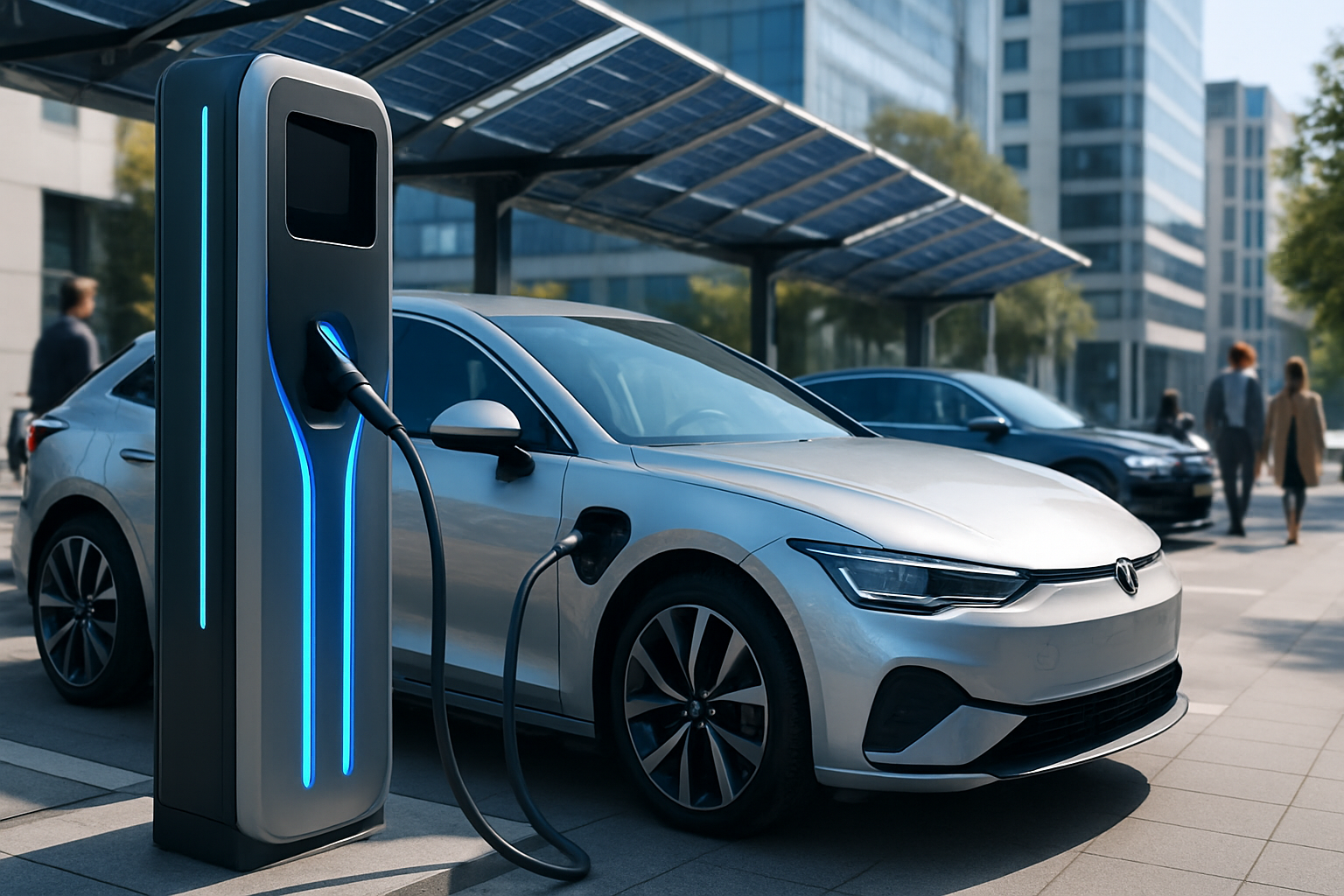
As global fuel prices surge past critical thresholds and supply chains face unprecedented disruption, electric vehicle adoption is accelerating at record pace across multiple continents, with consumers and governments alike embracing clean transportation alternatives during what experts describe as the most severe energy crisis since the 1970s oil shocks.
The convergence of soaring petrol prices—reaching over $3 per liter in some regions—and breakthrough EV technologies is fundamentally reshaping transportation markets worldwide. In Australia, where fuel costs have breached $2.50 per liter nationally, consumers are increasingly considering electric alternatives as traditional fuel supplies face critical shortages.
Global Energy Crisis Drives EV Adoption
The current energy emergency, triggered by Iran's closure of the Strait of Hormuz affecting 40% of global oil transit, has created an unprecedented catalyst for electric vehicle adoption. Oil prices have surged past $100 per barrel for the first time since 2022, with Brent crude peaking at $119.50 and WTI reaching $108.15 in record single-day jumps.
Australia faces particular vulnerability due to its heavy reliance on fuel imports and limited domestic refining capacity. Regional Queensland stations have completely run dry, with small townships like Texas experiencing total fuel depletion over recent weekends. The Australian Competition and Consumer Commission (ACCC) is monitoring fuel companies as prices continue climbing toward the $3 per liter threshold in some areas.
"Soaring petrol prices are prompting some Australians to consider buying an electric vehicle for the first time,"
— Industry Analysis, SBS Australia
The crisis extends far beyond Australia's borders. Bangladesh has implemented fuel rationing affecting 170 million people, while Pakistan faces its highest fuel prices in South Asian history at Rs321.17 per liter, forcing the government to implement wartime austerity measures including four-day work weeks.
Technological Breakthroughs Eliminate Adoption Barriers
Concurrent with the fuel crisis, major technological advances are addressing traditional electric vehicle concerns. Chinese manufacturer BYD has unveiled its revolutionary Megawatt Flash Charging system, capable of delivering 400km of range in just 5 minutes—potentially eliminating the primary consumer barrier of charging time.
The company's Blade Battery 2.0 technology now functions effectively in temperatures as low as -30°C, addressing cold climate concerns that previously limited EV adoption in northern regions. These developments complement infrastructure expansion programs, with Austria doubling its charging network through 1,000 additional stations and Estonia leading Europe with 88% renewable electricity supporting 90,000 household battery storage systems.
Battery Longevity Exceeds Early Predictions
Recent comprehensive studies of first-generation electric vehicles reveal battery lifespans significantly exceeding initial industry predictions. Tesla Model S vehicles from 2012-2014 with over 200,000 miles maintain 85-92% of their original battery capacity, while Nissan Leaf vehicles from 2011-2013 show 75-85% retention after a decade of operation.
These findings suggest practical EV battery lifespans may extend 15-20 years or 300,000+ miles, far beyond original manufacturer warranties of 8 years/100,000 miles. The data supports the emergence of robust used EV markets and makes total cost of ownership calculations increasingly favorable compared to traditional vehicles.
Regional Adoption Patterns and Challenges
EV adoption patterns reveal significant regional and demographic variations. Homeowners and rural residents enjoy advantages through home charging access, while urban apartment dwellers face infrastructure barriers despite typically higher environmental awareness. This urban-rural paradox is driving policy innovations including workplace charging programs and enhanced public charging networks.
In the Caribbean, automotive retailers report that EV owners save $75 per $100 compared to gasoline costs, even accounting for anticipated electricity rate increases. Barbadian fire officials have confirmed that electric vehicles are statistically less likely to catch fire than gasoline vehicles, directly addressing public safety concerns.
Supply Chain Vulnerabilities and Strategic Responses
Despite promising adoption trends, the EV industry faces significant supply chain challenges. China maintains control over 60% of critical materials production and 90% of refining capacity for lithium, cobalt, and rare earth elements essential for battery manufacturing. Concurrent memory chip shortages are driving sixfold price increases affecting vehicle control systems, with normalization not expected until 2027.
The US-EU-Japan Critical Minerals Partnership, encompassing 55 countries and seven African suppliers, represents a coordinated effort to diversify supply chains away from Chinese dominance. Regional manufacturing strategies are emerging as companies seek to reduce vulnerabilities through local sourcing and enhanced supply chain flexibility.
Government Policy Responses Intensify
Governments worldwide are accelerating EV transition policies as the fuel crisis demonstrates the strategic vulnerability of petroleum dependence. Canada has reintroduced EV incentives under Mark Carney's $9.7 billion automotive strategy, shifting from mandates toward consumer-friendly rebate programs.
China's implementation of a hidden door handle ban effective January 2027—affecting manufacturers including Tesla, BYD, NIO, and XPeng—demonstrates regulatory evolution prioritizing safety over design aesthetics. European automakers are intensifying calls for Brussels subsidies to support domestic EV manufacturing amid increasing Chinese competition.
Commercial Vehicle Electrification Advances
The commercial sector is experiencing parallel transformation. Tesla has announced the start of large-scale Semi truck production, marking a significant milestone for electric commercial vehicles after years of development since its 2017 unveiling. The timing proves particularly strategic as freight companies face unsustainable diesel cost increases.
In emerging markets, innovative approaches are gaining traction. Balochistan has launched a groundbreaking E-Bike Scheme offering 30% government subsidies, reducing initial payments to 17,500 rupees for vehicles targeting youth and women in sustainable transportation adoption.
Climate Urgency Accelerates Transition
The transportation electrification urgency is underscored by climate data showing January 2026 marked the 18th consecutive month with temperatures exceeding 1.5°C above pre-industrial levels. This sustained warming demonstrates that human-induced climate change is overriding natural variability, including La Niña cooling effects.
Vehicle-to-grid technology advancement enables EVs to function as distributed energy storage, charging during off-peak renewable generation and discharging during high demand periods. This capability provides additional economic benefits while supporting grid stability as renewable energy sources expand.
Infrastructure Investment Momentum Builds
Global infrastructure investment continues accelerating, with over $570 billion committed to transportation and energy projects worldwide. Indonesia has committed to 5,000 EV charging stations, while New Zealand has announced a $50 million investment to double its public charging network through zero-interest loans to ChargeNet and Meridian Energy.
The deployment of 2,574 new charging points represents the most significant EV infrastructure expansion in New Zealand's history, demonstrating government confidence in commercial viability while addressing urban-rural adoption disparities.
Economic Transformation and Market Dynamics
The automotive industry transformation extends beyond vehicle manufacturing to encompass comprehensive economic restructuring. BMW has announced production of an electric version of its iconic 3 Series sedan beginning August 2026, representing the electrification of one of the industry's most symbolic vehicles.
Regional success stories continue emerging. Denmark has reported another record-breaking EV sales milestone, defying traditional seasonal patterns and demonstrating fundamental market maturation. In Asia-Pacific markets, one unspecified country achieved 11 million electric vehicle sales in a single year—nearly double the rest of the world combined.
Future Outlook and Strategic Implications
The convergence of fuel crisis pressures, technological breakthroughs, and policy acceleration suggests 2026 may represent a watershed moment for global transportation electrification. Success factors include coordinated infrastructure development, supply chain diversification, appropriate electricity pricing structures, and comprehensive technical service capabilities.
Industry experts emphasize that the current energy crisis, rather than slowing innovation, is driving more thoughtful and sustainable technological advancement. The constraint-driven innovation environment may ultimately benefit long-term development by encouraging efficiency over resource-intensive implementations.
"The choice is now between reactive crisis management versus proactive sustainable transportation planning. The tools and knowledge exist, but success depends on rapid scaling through international cooperation and sustained financial commitments,"
— Industry Analysis Summary
As the global energy crisis continues highlighting the strategic vulnerability of petroleum dependence, electric vehicle adoption represents not just an environmental imperative but an economic necessity. The transportation transformation currently underway may prove as significant as any industrial shift in modern history, with implications extending decades beyond current events.
The window for effective action continues narrowing as climate impacts accelerate, but the combination of technological innovation, economic incentives, and policy coordination offers genuine hope for maintaining planetary habitability during Earth's most environmentally challenging period in recorded history.