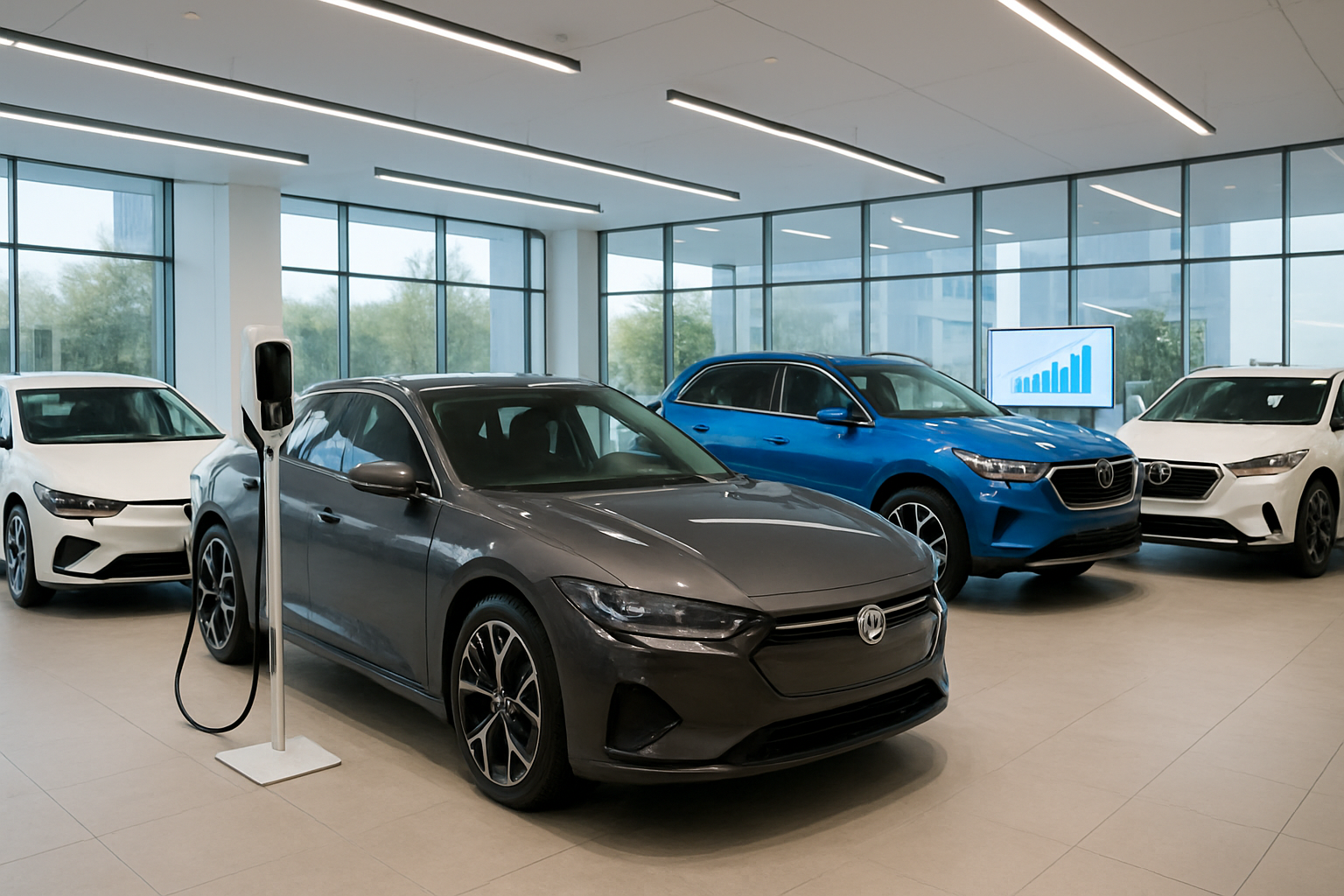
Electric vehicle sales have reached unprecedented levels across global markets, with Denmark reporting another sales record while the industry continues to navigate complex supply chain challenges and evolving consumer preferences.
The latest data from Denmark confirms that electric vehicle purchases have once again broken previous records, marking a continuation of the extraordinary growth trajectory that has defined the EV market throughout 2026. This milestone comes despite traditional seasonal factors that historically dampened automotive sales during winter months.
Breaking Traditional Seasonal Patterns
The Danish market's record performance represents a significant departure from conventional automotive sales cycles. Historically, winter months have presented challenges for vehicle sales due to reduced consumer activity and harsh weather conditions that make test driving and dealership visits less appealing. However, the electric vehicle segment appears to have transcended these traditional limitations.
This resilience reflects the fundamental shift in consumer attitudes toward electric mobility, driven by a combination of environmental consciousness, technological improvements, and evolving government policies. The sustained growth during typically slower periods demonstrates the market's underlying strength and consumer commitment to electric transportation.
Global Context and Supply Chain Challenges
The record sales achievements come against a backdrop of significant supply chain constraints that continue to affect the automotive industry. Memory chip shortages have driven prices up sixfold, affecting vehicle control systems and smart features that modern EVs depend on. These shortages, primarily affecting major suppliers including Samsung, SK Hynix, and Micron, are expected to persist until 2027 when new fabrication facilities come online.
Despite these constraints, EV manufacturers have demonstrated remarkable adaptability. Companies have employed strategic inventory management, alternative sourcing arrangements, and innovative design approaches to maintain production levels and meet growing demand. This resilience has been particularly notable among Asian manufacturers who have leveraged their supply chain expertise and regional partnerships.
Technological Breakthroughs Driving Adoption
The continued sales surge coincides with significant technological advances that address longstanding consumer concerns about electric vehicles. BYD's recent unveiling of Megawatt Flash Charging technology, capable of delivering 1,360 kW maximum power, represents a revolutionary breakthrough in addressing range anxiety—historically the primary barrier to EV adoption.
This ultra-fast charging system can provide 400 kilometers of range in just five minutes of charging time, fundamentally changing the value proposition for consumers who previously hesitated due to charging concerns. Such innovations demonstrate the industry's capacity to solve practical challenges that have limited mainstream adoption.
"The convergence of breakthrough charging technology, improved battery chemistry, and expanding infrastructure creates an unprecedented opportunity for mass EV adoption."
— Industry Technology Analyst
Policy Environment and Market Dynamics
Government policies continue to play a crucial role in shaping EV market dynamics. Canada's announcement of returning electric vehicle consumer incentives under Prime Minister Mark Carney, as part of a $9.7 billion national auto industry strategy, exemplifies the coordinated policy responses emerging globally to maintain automotive sector competitiveness while accelerating electric mobility adoption.
Similarly, European automakers including Volkswagen and Stellantis have intensified calls for Brussels to provide financial incentives and subsidies for electric vehicles manufactured in Europe, highlighting the competitive pressures and policy coordination required to support domestic production capabilities.
Regional Manufacturing and Supply Chain Evolution
The industry is witnessing a strategic shift toward regional manufacturing strategies as automakers establish EV production closer to primary markets. This approach reduces transportation costs, minimizes supply chain vulnerabilities, and improves responsiveness to local market requirements—factors that become increasingly important during periods of global supply chain disruption.
Toyota's recent announcement of the fully electric 2027 Highlander, to be built at their Princeton facility, exemplifies this trend. The decision positions the vehicle against competitors like the Kia EV9 and Hyundai Ioniq 9 in the crucial three-row electric SUV segment, while leveraging North American production capabilities.
Consumer Adoption Patterns and Urban-Rural Divide
Market analysis reveals continuing disparities in EV adoption patterns, with clear advantages for homeowners and rural residents who have access to home charging infrastructure. Urban apartment dwellers face ongoing barriers despite generally higher interest levels in electric vehicles. This urban-rural divide represents both a challenge and an opportunity for the industry and policymakers.
Workplace charging solutions are emerging as a crucial bridge for urban consumers who lack home charging access. Austria's doubling of EV infrastructure with 1,000 additional public charging stations demonstrates how coordinated infrastructure investment can address adoption barriers and support broader market penetration.
Economic Impact and Industry Transformation
The sustained EV sales growth creates significant economic multiplier effects across multiple sectors. Battery manufacturing, charging infrastructure development, and renewable energy integration generate employment opportunities while positioning regions for competitive advantage in the clean technology economy.
Estonia's leadership position with 88% renewable electricity and continental Europe's largest battery storage facility serving 90,000 households illustrates how countries can leverage the EV transition to achieve broader energy independence and sustainability goals. This integrated approach creates synergies between transportation electrification and grid modernization initiatives.
Challenges and Future Outlook
Despite record sales achievements, the EV industry continues to face significant challenges. China's dominance in critical materials production (60% of global production and 90% of refining capacity for lithium, cobalt, and rare earth elements) creates supply chain vulnerabilities that require strategic responses from other regions.
The US-EU-Japan Critical Minerals Partnership, involving 55 countries and seven African alternative suppliers including Angola, DRC, Guinea, Kenya, Morocco, Sierra Leone, and Zambia, represents a coordinated effort to address these dependencies and build more resilient supply chains for the electric vehicle industry.
Safety Standards and Regulatory Evolution
Regulatory frameworks continue evolving to address both safety concerns and market development needs. China's announcement of a comprehensive ban on hidden door handles in vehicles, effective January 2027, reflects the prioritization of safety over aesthetic design considerations. This regulation affects major EV manufacturers including Tesla, BYD, NIO, and XPeng, who must redesign vehicles to comply with mechanical door release requirements.
Such regulatory developments highlight the ongoing balance between innovation, design preferences, and safety requirements as the industry matures and governments establish comprehensive frameworks for electric vehicle standards.
Climate Context and Urgency
The record EV sales occur against the backdrop of accelerating climate urgency, with January 2026 marking the 18th consecutive month of global temperatures exceeding 1.5°C above pre-industrial levels. This sustained warming trend underscores the critical importance of transportation electrification in meeting climate goals and reducing greenhouse gas emissions from the mobility sector.
The automotive industry's transformation represents one of the most significant industrial shifts in modern history, requiring coordination across energy systems, infrastructure development, materials supply chains, and regulatory frameworks. The sustained sales growth demonstrates consumer readiness for this transformation when supported by appropriate policies and infrastructure investment.
Looking Forward
The continuation of record-breaking EV sales, even during traditionally challenging periods, signals fundamental market maturation and consumer acceptance. As technological breakthroughs address remaining barriers, infrastructure deployment accelerates, and supply chain resilience improves, the electric vehicle industry appears positioned for sustained growth that could reshape global transportation systems.
Success in maintaining this momentum will depend on continued innovation, coordinated policy support, strategic supply chain diversification, and infrastructure investment that addresses the diverse needs of consumers across urban and rural markets. The industry's ability to navigate current challenges while delivering on the promise of sustainable, accessible electric mobility will determine whether 2026 marks a turning point toward comprehensive transportation electrification.