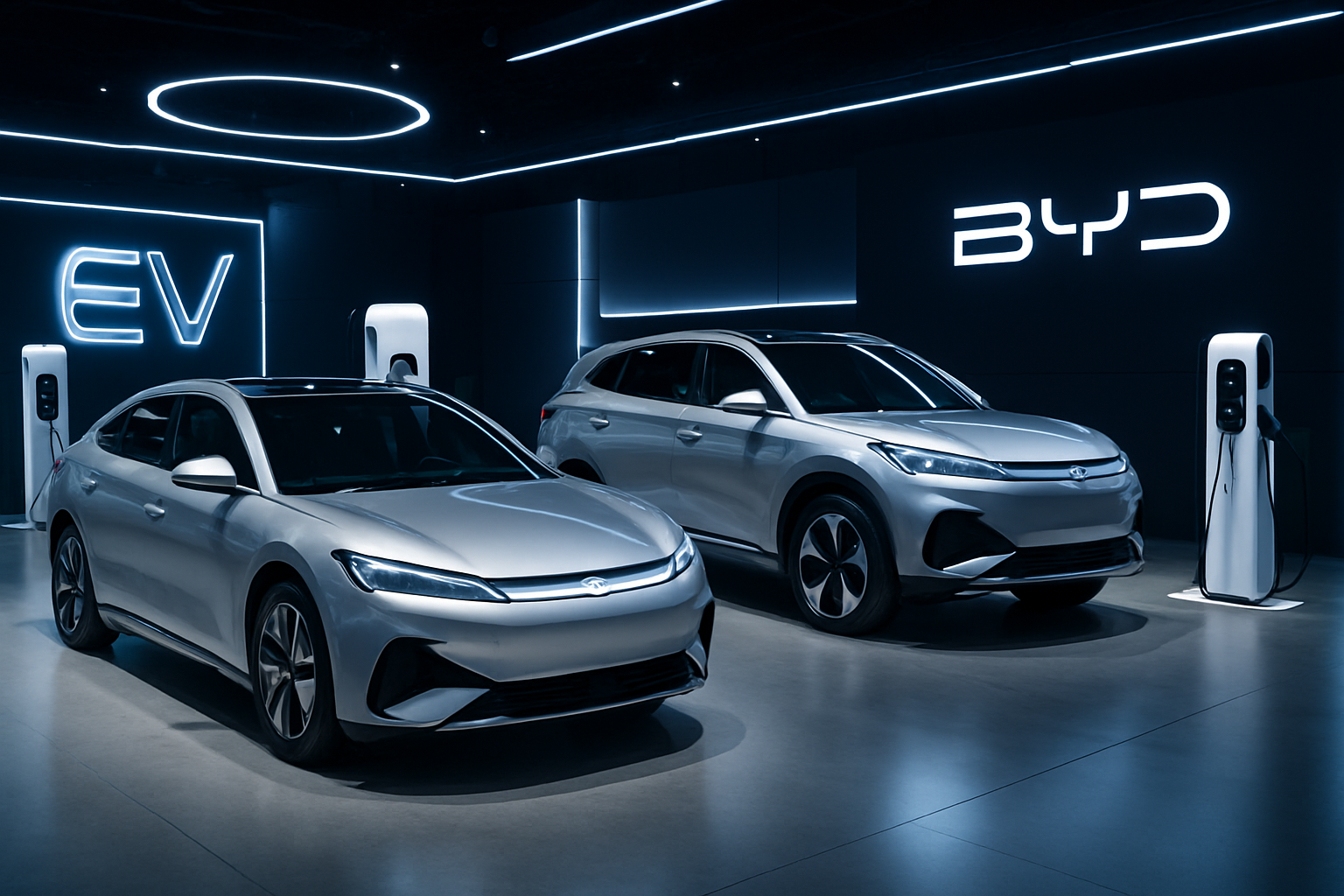
The electric vehicle industry is experiencing unprecedented momentum as Chinese automaker BYD makes historic launches, new training programs address technician shortages, and automotive technology advances reshape global transportation infrastructure.
BYD Makes History with Right-Hand Drive Launch
Brunei has become the first country to launch the right-hand drive version of the BYD M9, marking a significant milestone for the Chinese automaker's global expansion. The announcement was made by Chan Key Hong, managing director of Maju Motors, BYD's distributor in Brunei, during an official ceremony at Jerudong Park Colonnade.
The 7-seater BYD M9 represents a technological breakthrough in the plug-in hybrid electric vehicle (PHEV) segment. The vehicle delivers a combined range of 1,047 kilometers—the longest EV range for a PHEV in Brunei—while maintaining impressive performance specifications. The M9 accelerates from zero to 100km/h in just 8.5 seconds and achieves fuel consumption of only 2 liters per 100 kilometers.
"This launch ceremony was attended by 50 new BYD M9 customers, who viewed their new plug-in hybrid electric vehicles at the showcase," according to industry reports. The vehicle is powered by a high-output 1.5T plug-in hybrid engine and enhanced by DiSus-C technology, which improves ride comfort and driving stability.
Addressing the Skills Gap: New EV Training Programs
As electric vehicle adoption accelerates globally, a critical shortage of skilled technicians has emerged as a significant challenge. The Bahamas is addressing this issue directly through a new initiative called BPATH (Bahamas Professional and Technical Advancement Hub), which focuses on hands-on training, mentorship, and direct job placement in key industries, including electric vehicle repairs and artificial intelligence.
The program represents a strategic response to the evolving automotive landscape. "Expanding opportunity means creating real pathways for Bahamians to earn, grow, and build lasting careers," according to official statements about the initiative. The training program opens doors to practical skills development in emerging technologies, allowing participants to secure steady employment while moving their families and communities forward.
This educational approach reflects a broader global trend. Industry experts have noted that the transition to electric vehicles requires not only new manufacturing capabilities but also comprehensive retraining of automotive service professionals. Traditional mechanics must acquire new skills in battery management systems, electric drivetrains, and sophisticated diagnostic equipment.
Global Automotive Technology Evolution
The electric vehicle sector continues to evolve with remarkable speed, driven by technological advances and changing consumer preferences. Recent developments in battery technology, charging infrastructure, and vehicle design are creating new possibilities for widespread EV adoption.
Historical context from industry analysis reveals that electric vehicle battery lifespans are significantly exceeding early predictions. Tesla Model S vehicles from 2012-2014 with over 200,000 miles show 85-92% battery capacity retention, while Nissan Leaf vehicles from 2011-2013 demonstrate 75-85% capacity retention after a decade of operation. This data suggests practical EV battery lifespan may extend 15-20 years or 300,000+ miles, far beyond initial manufacturer warranties.
These developments occur within a complex global supply chain environment. China maintains dominance with 60% of critical materials production and 90% of refining capacity for lithium, cobalt, and rare earth elements essential for EV batteries. Meanwhile, memory chip shortages continue to drive semiconductor prices up sixfold, affecting vehicle control systems across the industry.
Regional Developments and Market Expansion
The Egyptian automotive market is witnessing significant expansion with diverse offerings emphasizing competitive pricing and variety in design and performance capabilities. Meanwhile, automotive heritage continues to play an important role in consumer preferences, as demonstrated by luxury brand cultural significance beyond mere transportation functionality.
European markets are experiencing their own transformation. Recent regulatory changes, including China's upcoming ban on hidden car door handles effective January 2027, are forcing manufacturers to prioritize safety over design aesthetics. This regulation affects major manufacturers including Tesla, BYD, NIO, and XPeng, requiring mechanical release compliance.
The regulatory shift represents a broader trend toward functional safety in the premium electric vehicle segment. Companies must redesign vehicles to ensure emergency accessibility while maintaining aerodynamic efficiency—a challenge that may drive innovation in door handle technology and potentially influence safety standards globally.
Infrastructure and Charging Network Expansion
Infrastructure development remains crucial for EV adoption success. Countries worldwide are investing heavily in charging networks, with some achieving remarkable progress. Austria has doubled its EV infrastructure by adding 1,000 public charging stations, demonstrating a coordinated investment approach that supports widespread electric vehicle adoption.
Estonia maintains European leadership with 88% renewable electricity and the continent's largest battery storage system serving 90,000 households. This combination of clean electricity generation and storage capacity creates an ideal environment for electric vehicle integration with the broader energy system.
The infrastructure challenge extends beyond charging stations to include grid integration, energy management, and ensuring adequate electricity supply during peak demand periods. Success requires coordination across multiple sectors, including utilities, automotive manufacturers, and government agencies.
Economic and Environmental Implications
The electric vehicle revolution represents one of the most significant industrial transformations in modern history. Total cost of ownership calculations now favor EVs when extended battery life is considered, supporting a robust used EV market and making electric vehicles economically attractive for a broader range of consumers.
Environmental benefits extend beyond reduced emissions. The shift to electric vehicles supports renewable energy integration, reduces air pollution in urban areas, and decreases dependence on fossil fuel imports. However, the transition also creates new challenges, including responsible battery disposal and sustainable sourcing of critical materials.
Climate context adds urgency to these developments. January 2026 marked the 18th consecutive month of global temperatures exceeding 1.5°C above pre-industrial levels, underlining the critical importance of transportation electrification for achieving climate goals.
Looking Ahead: Integration and Innovation
The convergence of electric vehicle technology with other innovations is creating new possibilities. Vehicle-to-grid (V2G) capabilities allow EVs to function as mobile energy storage systems, supporting electrical grids during peak demand periods. This integration transforms vehicles from simple transportation devices into active components of the energy system.
Automotive manufacturers are increasingly incorporating smartphone integration as a core design principle rather than an afterthought. Advanced connectivity enables energy management, route optimization, and performance monitoring while supporting the sophisticated software systems that modern electric vehicles require.
Success in the evolving automotive landscape requires coordination across multiple domains: vehicle production, charging infrastructure, grid integration, supply chain security, and workforce development. The industry transformation demands sustained investment, international cooperation, and innovative technical solutions to address the complex challenges of sustainable transportation.
As demonstrated by recent developments from Brunei to the Bahamas, the electric vehicle revolution is not limited to traditional automotive markets. Global adoption is creating opportunities for countries to participate in the clean energy transition while building new industrial capabilities and addressing local employment needs through targeted training programs.