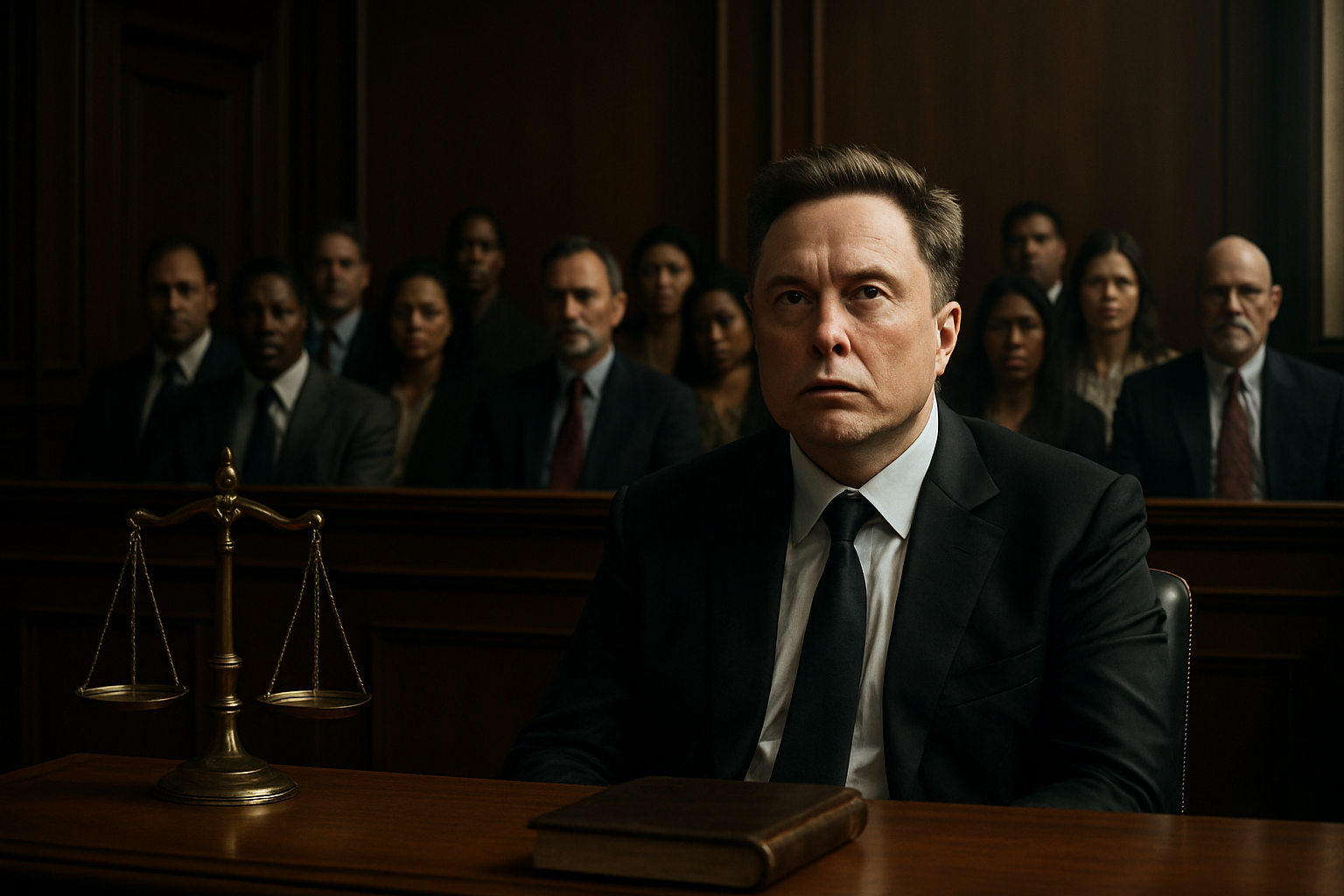
A federal jury in California delivered a landmark verdict Friday finding that Elon Musk misled Twitter shareholders in an effort to drive down the company's share price during his $44 billion acquisition of the social media platform in 2022.
The mixed verdict represents a significant legal blow to the world's wealthiest individual, with plaintiff attorneys calculating potential damages at approximately $2.6 billion according to shareholder attorney Francis Bottini. However, the jury stopped short of finding a systematic fraud conspiracy, viewing Musk's actions as reckless and misleading rather than part of a coordinated scheme.
Key Findings and Implications
The San Francisco federal jury specifically determined that two tweets posted by Musk in May 2022 contained false statements that directly contributed to Twitter's stock decline. The jury ruled that Musk manipulated the stock price through misleading public statements about fake bot accounts, strategic delays, and calculated market actions designed to pressure shareholders into accepting a lower acquisition price than the company's true value.
Minutes after the verdict was announced, Musk's legal team informed AFP that their client intends to appeal the decision, which they characterized as a "setback" rather than a definitive loss. The announcement comes amid unprecedented legal scrutiny of Musk's business empire across multiple jurisdictions.
Global Legal Challenges Mount
The Twitter verdict occurs during an extraordinary period of international legal pressure on Musk's technology empire. French cybercrime investigators recently raided X platform offices over allegations that the Grok AI chatbot violated regulations regarding sexual deepfakes and child safety measures. Spanish authorities have launched criminal investigations into social media platforms, including X, over AI-generated child sexual abuse material.
This coordinated international response represents the most aggressive regulatory challenge to social media platforms in internet history, with Spain implementing the world's first criminal executive liability framework that creates personal imprisonment risks for technology executives beyond traditional corporate penalties.
The $1.25 Trillion Business Context
The legal challenges come at a particularly complex time for Musk's business operations. His February 2026 announcement of a $1.25 trillion merger between SpaceX and xAI created the world's most valuable private company, combining rocket technology, satellite internet, artificial intelligence platforms, and social media operations under unified control.
The merger aims to address AI industry infrastructure challenges by building space-based data centers powered by solar energy, responding to a global semiconductor shortage that has driven memory chip prices up sixfold. Despite these ambitious plans, the mounting legal liabilities could significantly impact investor confidence and regulatory approvals across multiple jurisdictions.
Precedent for Tech Executive Accountability
Legal experts describe the verdict as a critical test of democratic institutions' ability to hold powerful technology leaders accountable regardless of their wealth or public profile. The case establishes important boundaries between acceptable business negotiation tactics and illegal market manipulation, particularly regarding social media executives' communications that affect market valuations.
"This verdict demonstrates that powerful technology leaders remain subject to securities laws and investor protection regardless of business success or public profile."
— Financial Law Expert Analysis
The decision could influence corporate transaction behavior and executive accountability standards across the technology sector, serving as a cautionary tale about the legal consequences of public statements interpreted as market manipulation.
Regulatory Revolution in Technology Governance
The Musk verdict coincides with the most significant wave of social media regulation in internet history. Australia's under-16 social media ban eliminated 4.7 million teen accounts, proving the technical feasibility of aggressive age verification measures. European nations are coordinating unprecedented regulatory responses, with multiple countries implementing restrictions that prevent "jurisdictional shopping" where platforms relocate to avoid oversight.
Research shows that 96% of children aged 10-15 use social media, with 70% experiencing harmful content exposure and over 50% encountering cyberbullying. These statistics have driven government officials worldwide to implement stricter platform accountability measures, often using industry resistance as evidence supporting regulatory necessity.
Financial and Market Implications
Despite Musk's net worth exceeding $800 billion, providing substantial resources for legal judgments, the potential $2.6 billion in damages represents meaningful consequences that could affect future venture financing, regulatory approvals, and investor confidence across his multiple companies including Tesla, SpaceX, and AI ventures.
The verdict contributes to broader market volatility in the technology sector, where the "SaaSpocalypse" phenomenon has eliminated hundreds of billions in market capitalization as AI systems replace traditional software functions and regulatory uncertainty creates investment hesitation.
International Coordination and Enforcement
The case demonstrates the modern reality of global technology companies requiring coordination between international legal authorities. The international dimension spanning U.S. federal courts to European regulatory agencies reflects increasing cooperation between jurisdictions seeking to establish comprehensive legal oversight of technology executives operating across multiple countries.
This coordination suggests that the era of technology executives operating beyond meaningful legal accountability may be ending, as democratic institutions worldwide develop more sophisticated mechanisms for enforcing securities laws and investor protection measures against multinational technology leaders.
Looking Forward: Appeals and Broader Impact
The legal proceedings now move to a damages determination phase, with the jury calculating specific financial penalties. Musk's announced appeal could potentially extend the case into 2027, though the mixed verdict provides clear findings of liability that will be difficult to overturn completely.
The outcome will influence technology executive communication standards, corporate governance policies during sensitive transactions, and the broader question of whether democratic institutions can effectively regulate global technology platforms while preserving beneficial innovation and digital connectivity.
This landmark case represents a watershed moment in the intersection of technology, finance, and law, establishing precedents that will likely influence corporate behavior and regulatory frameworks for years to come. As governments worldwide grapple with the challenges of governing rapidly evolving technology companies, the Musk verdict provides crucial evidence that even the world's most powerful technology leaders remain subject to legal accountability when their actions harm investors and markets.