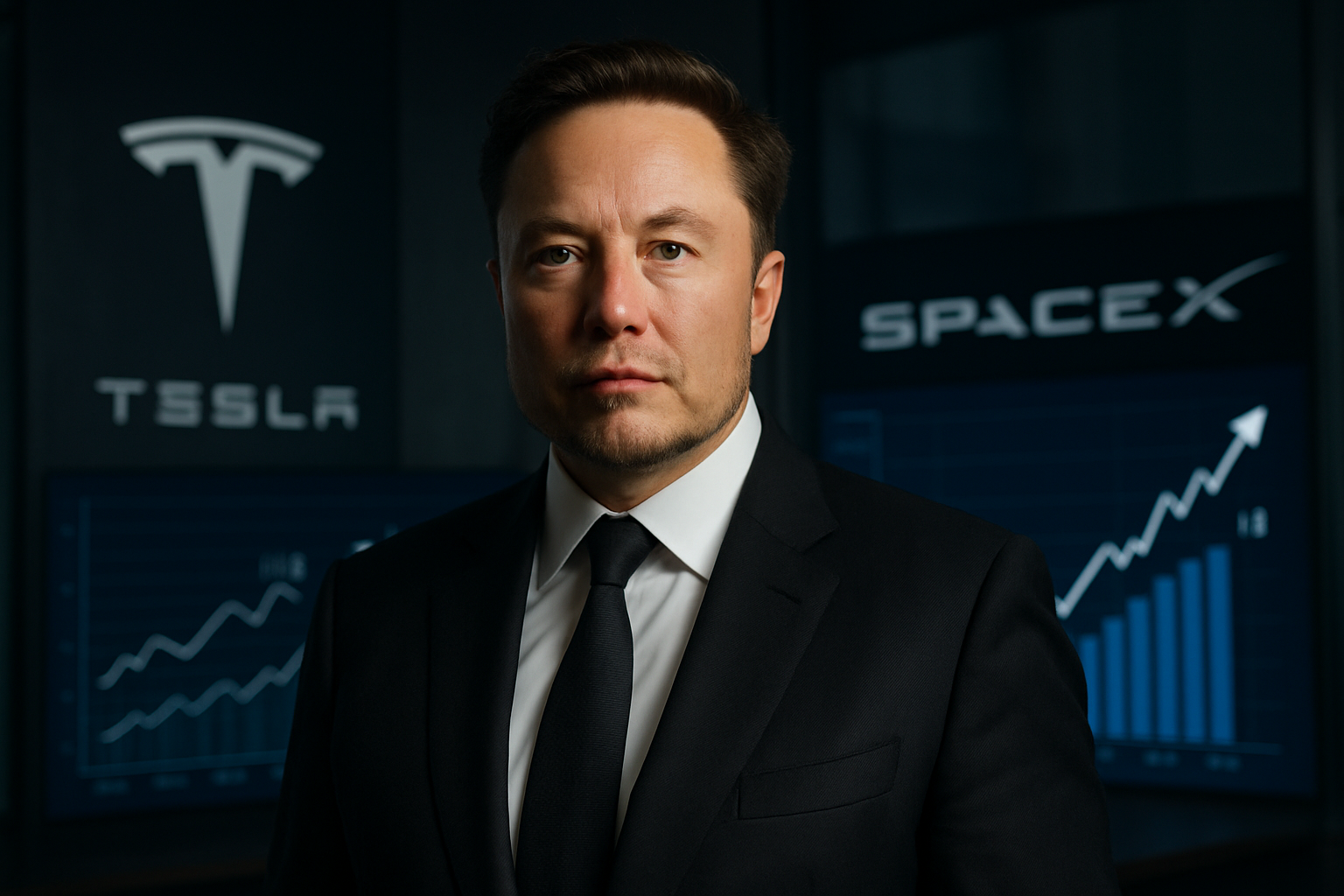
Elon Musk's estimated $839 billion net worth has made him the wealthiest individual ever recorded, according to Forbes' latest World's Billionaires list released Tuesday, as global billionaire wealth surged to an unprecedented $20.1 trillion.
The Tesla and SpaceX CEO topped the Forbes rankings for the second consecutive year after his fortune swelled by approximately $500 billion over the past 12 months, driven primarily by rising valuations at both Tesla and SpaceX, which is targeting a public offering in 2026.
Historic Wealth Milestone
Musk's achievement represents a watershed moment in modern capitalism, as he becomes the first person to surpass the $800 billion threshold. This milestone comes despite significant volatility in Tesla's stock price throughout 2025, which saw the electric vehicle company's shares initially plummet before recovering dramatically.
The Swedish financial press noted that Musk is not only the world's richest individual but also "the first person ever to reach a fortune of over 800 billion dollars," cementing his position atop the global wealth hierarchy.
Path to Trillionaire Status
Financial analysts are now speculating whether Musk could become the world's first trillionaire, with his wealth trajectory suggesting this milestone could be achievable within the next few years. The rapid appreciation of SpaceX's valuation, combined with Tesla's continued market dominance in the electric vehicle sector, provides multiple pathways for further wealth accumulation.
SpaceX, in particular, has emerged as a key driver of Musk's wealth expansion. The aerospace company is preparing for what could be the largest initial public offering in history, with potential valuations exceeding $1 trillion. The company's strategic pivot from Mars colonization to lunar settlement development has attracted significant investor interest, with its more pragmatic 10-year timeline for establishing a self-sustaining Moon city appealing to both institutional and retail investors.
Global Billionaire Boom
Musk's record-breaking wealth is part of a broader surge in global billionaire fortunes. Forbes reported that 400 new billionaires were added to their global list, bringing the total combined wealth of the world's billionaires to a historic $20.1 trillion. This represents the largest single-year increase in billionaire numbers in Forbes history.
The wealth concentration comes amid ongoing global economic volatility, inflation concerns, and geopolitical tensions. However, technology innovation continues to drive wealth creation through artificial intelligence, renewable energy, biotechnology, and space exploration sectors.
Tesla's Remarkable Recovery
Tesla's stock performance has been particularly noteworthy, with the company recovering from significant losses in 2025 to reach new heights in early 2026. Danish media outlets reported that "Tesla stock took a big dive in 2025, but it has risen again, so Elon Musk is still the world's richest."
The electric vehicle manufacturer has benefited from increased global adoption of sustainable transportation, expanded production capacity, and breakthrough developments in battery technology. Tesla's Semi truck production, which began large-scale manufacturing in early 2026, has opened new commercial markets and revenue streams.
SpaceX: The Wealth Multiplier
SpaceX's contribution to Musk's wealth cannot be overstated. The company's $1.25 trillion merger with xAI in February 2026 created the world's most valuable private company, combining rocket technology, satellite internet through Starlink, and artificial intelligence capabilities.
The merged entity's ambitious plans for space-based data centers, powered by solar energy, address the growing energy consumption challenges of AI infrastructure. This innovative approach to computing infrastructure has attracted significant investor attention and contributed substantially to the company's sky-high valuation.
Regulatory Challenges and European Tensions
Despite his financial success, Musk has faced increasing regulatory scrutiny, particularly in Europe. French authorities conducted cybercrime raids on X's Paris offices, investigating allegations related to the Grok AI chatbot and content moderation failures. These legal challenges, while significant, appear to have minimal impact on his overall wealth trajectory.
Musk has been vocal in his criticism of European regulatory initiatives, particularly Spain's aggressive social media restrictions for children under 16, which include unprecedented criminal liability for platform executives. His characterization of such measures as "fascist totalitarian" has drawn sharp responses from European leaders.
The Broader Economic Impact
The concentration of wealth among tech billionaires raises important questions about economic inequality and market dynamics. With $20.1 trillion representing enormous capital influence on investment markets and political campaigns, critics argue this level of wealth concentration could have significant societal implications.
The tech sector's dominance in wealth creation is particularly evident, with multiple technology leaders seeing substantial increases in their net worth despite broader market volatility. The "SaaSpocalypse" of February 2026, which eliminated hundreds of billions in technology stock market capitalization, appears to have been a temporary setback rather than a fundamental correction.
Future Wealth Trajectory
Looking ahead, Musk's wealth trajectory appears positioned for continued growth. SpaceX's planned June 2026 IPO could potentially add hundreds of billions to his net worth, depending on market reception and valuation multiples. The company's shift toward more achievable lunar colonization goals, combined with its integrated AI and satellite capabilities, positions it as a dominant force in the emerging space economy.
Tesla's continued expansion into new markets, including commercial vehicles and energy storage systems, provides additional growth opportunities. The company's vehicle-to-grid technology and bidirectional charging capabilities could transform both transportation and energy sectors.
Global Context and Implications
Musk's historic wealth milestone occurs during what industry observers describe as a transition from the "AI revolution to space economy golden age." This period is characterized by massive investments in artificial intelligence infrastructure, space technology, and sustainable energy solutions.
The global semiconductor shortage, with memory prices increasing sixfold, has created both challenges and opportunities for tech leaders. Companies like Tesla and SpaceX, with their integrated approach to technology development, may be better positioned to navigate supply chain constraints than competitors relying on external suppliers.
As the world's richest person, Musk's investment decisions and business strategies will likely influence entire industries. His recent focus on space-based infrastructure, lunar colonization, and AI integration suggests that the next phase of technological development will be increasingly focused on expanding human presence beyond Earth while solving terrestrial challenges through innovative approaches.