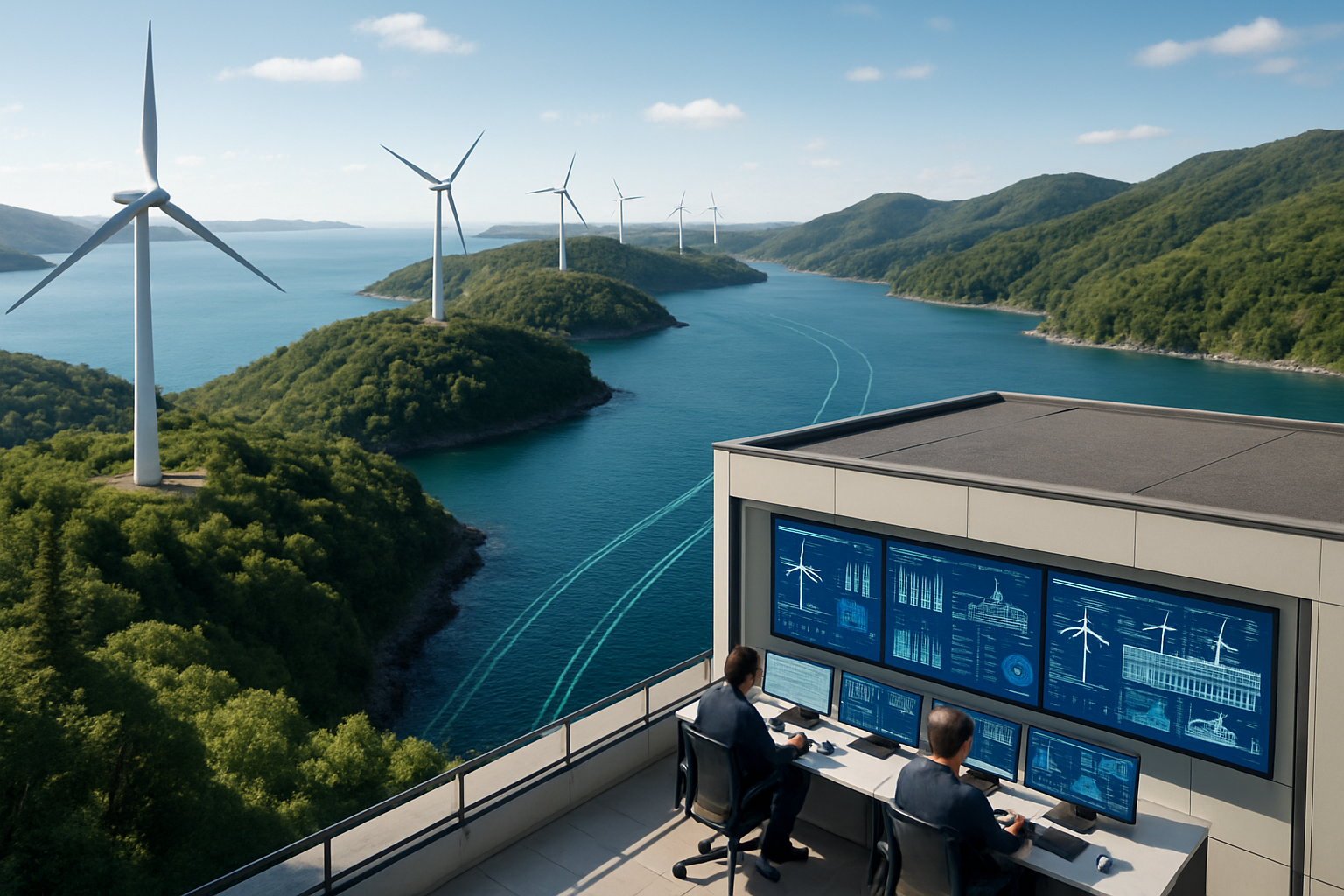
The global energy transition is accelerating across multiple continents, but new developments in the Philippines and Caribbean region highlight the complex tensions between renewable energy development and environmental conservation as nations race to meet climate targets.
Two major energy infrastructure projects currently making headlines demonstrate both the promise and challenges of the worldwide shift toward clean energy. In the Philippines, environmental conservationists are opposing a massive wind farm project they believe threatens critical ecosystems, while in the Caribbean, the United States has approved a groundbreaking submarine power cable linking the Dominican Republic to Puerto Rico.
Philippines Wind Farm Sparks Environmental Controversy
The Masungi Georeserve Foundation Inc. (MGFI), renowned for protecting the popular ecotourism site Masungi Georeserve, has emerged as an unlikely opponent of renewable energy development. The organization is leading opposition to Rizal Wind Energy Corporation's (RWEC) proposed 603-megawatt wind farm, creating what many see as an ironic situation where environmental conservationists are fighting against clean energy infrastructure.
The massive wind project would traverse several villages in Antipolo and Tanay, areas covered by the Upper Marikina River Basin Protected Landscape. A coalition of green groups convened by Masungi has warned that the project poses risks to the watershed, the Sierra Madre mountain range, and the karst conservation area.
"The issue is not whether turbines sit on protected land, but rather the cumulative impact of the entire project on the ecosystem."
— Masungi Georeserve Foundation Statement
The Department of Environment and Natural Resources (DENR) has rejected Masungi's appeal for a cease-and-desist order, stating that RWEC has remained compliant with government regulations. This decision underscores the regulatory challenges facing countries trying to balance rapid renewable energy deployment with environmental protection.
The controversy illustrates a growing global dilemma: as nations accelerate their transition away from fossil fuels, conflicts are emerging between different environmental priorities. Wind and solar projects, while essential for combating climate change, can sometimes clash with biodiversity conservation and ecosystem protection efforts.
Caribbean Powers Forward with Submarine Cable Innovation
Meanwhile, in the Caribbean, the United States administration has granted presidential permits authorizing construction of an underwater electrical cable connecting the Dominican Republic to Puerto Rico, marking a significant milestone for regional energy integration. The project, valued at several billion dollars, represents one of the most ambitious cross-border renewable energy infrastructure initiatives in the Americas.
The Caribbean Transmission Development Company (CTDC) has received non-objection notifications from the U.S. State and Defense Departments, clearing the way for construction to begin. While the Department of Energy has not yet issued an official announcement, a formal public announcement is scheduled for February 17 in the Dominican Republic.
This submarine cable project exemplifies the innovative approaches being deployed to accelerate renewable energy adoption. By connecting national grids across maritime borders, the cable will enable more efficient distribution of clean energy resources throughout the Caribbean region, reducing dependence on fossil fuel imports and improving energy security.
Regional Energy Integration Benefits
The Dominican Republic-Puerto Rico cable represents more than just energy infrastructure; it's a cornerstone of Caribbean energy independence. The project will allow both territories to share renewable energy resources more effectively, with excess solar and wind power generated in one location supplementing demand in the other during peak usage periods.
Energy experts view the project as a model for similar cross-border renewable energy initiatives worldwide. The technical challenges of laying submarine cables in hurricane-prone waters, combined with the diplomatic coordination required between multiple jurisdictions, make this a significant achievement in international clean energy cooperation.
Global Context: Critical Materials and Supply Chain Challenges
These regional developments occur against a backdrop of mounting global challenges in renewable energy deployment. Recent warnings from European Union auditors highlight a critical materials shortage threatening climate goals, with China controlling 60% of global production and 90% of refining capacity for essential materials like lithium, cobalt, and rare earth elements.
The supply chain vulnerabilities identified by EU auditors underscore the geopolitical dimensions of the energy transition. Countries pursuing ambitious renewable energy targets must navigate not only environmental and regulatory challenges but also strategic concerns about material dependencies and supply security.
Despite these challenges, momentum for renewable energy continues building globally. Recent developments across multiple continents demonstrate sustained commitment to clean energy infrastructure, even as projects face local opposition and technical obstacles.
Climate Urgency Drives Policy Decisions
The urgency driving these energy infrastructure projects becomes clearer when viewed against current climate data. January 2026 marked the hottest month ever recorded, with 18 of the past 19 months exceeding 1.5°C above pre-industrial levels. These temperature anomalies persist despite natural La Niña cooling cycles, indicating that underlying warming trends now override natural climate variability.
Countries worldwide are responding with increasingly ambitious renewable energy targets and infrastructure investments. From Belize's IAEA-supported climate-smart agriculture projects to Cambodia's climate finance workshops strengthening green investment capacity, nations are implementing coordinated responses combining technological innovation with financial frameworks.
The Philippines wind farm controversy and Caribbean cable project represent two sides of this global energy transition: the local environmental tensions that can arise from rapid renewable development, and the international cooperation required to build resilient clean energy networks.
Balancing Development and Conservation
The challenge exemplified by the Masungi controversy - balancing rapid renewable energy deployment with environmental protection - is becoming increasingly common worldwide. Environmental groups that have historically advocated for renewable energy now find themselves navigating complex trade-offs between different conservation priorities.
This evolution in environmental advocacy reflects the maturation of the renewable energy sector. As wind and solar projects become mainstream infrastructure rather than experimental technology, they face the same siting challenges and environmental impact assessments as conventional power plants.
Successful navigation of these challenges will likely require more sophisticated environmental impact assessments, enhanced stakeholder engagement processes, and innovative project designs that minimize ecosystem disruption while maximizing clean energy generation.
Future Implications
The outcomes of projects like the Philippines wind farm and Dominican Republic-Puerto Rico cable will influence renewable energy development strategies globally. Success in resolving environmental conflicts while maintaining project viability could establish templates for similar initiatives worldwide.
As the global energy transition accelerates, the experiences in these regions offer valuable lessons about the complex interplay between climate urgency, environmental protection, and energy infrastructure development. The challenge moving forward will be maintaining the pace of renewable energy deployment while ensuring that clean energy projects themselves contribute to, rather than detract from, broader environmental conservation goals.
With climate targets becoming increasingly urgent and renewable energy technology rapidly advancing, 2026 is shaping up to be a pivotal year for determining how the world balances the need for rapid clean energy deployment with environmental stewardship and community concerns.