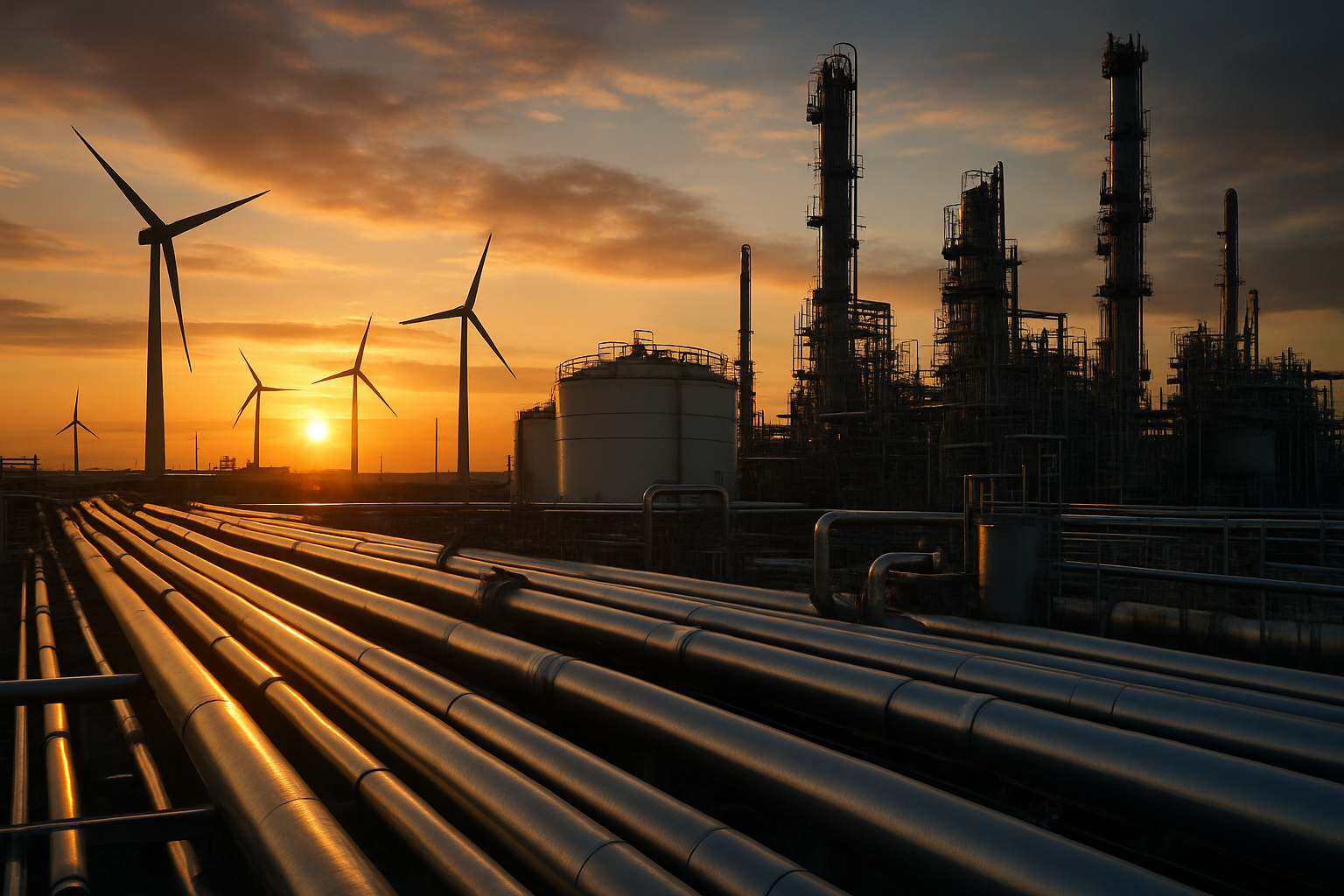
The global energy sector continues its complex transformation as February 2026 witnesses significant oil price movements, critical infrastructure challenges, and remarkable renewable energy achievements across multiple continents. From Azerbaijan's crude price surge to Guyana's hydropower success, the month highlights both the persistent reliance on fossil fuels and the accelerating transition toward sustainable energy solutions.
Oil Markets React to Supply Chain Disruptions
Azerbaijan's flagship Azeri Light crude has climbed above $72 per barrel in international markets, reflecting broader tensions affecting global oil supply chains. The price increase comes amid significant infrastructure disruptions in Central Europe, where the Druzhba pipeline system faces continued operational challenges.
Slovakia and Hungary have been forced to release substantial quantities from their strategic petroleum reserves, with reports indicating both countries are drawing down stockpiles to maintain energy security. The situation has prompted discussions with Croatia regarding alternative supply routes, though Zagreb has indicated willingness to assist only with non-Russian crude sources.
These developments underscore the ongoing vulnerabilities in European energy infrastructure, particularly as the region continues to navigate the complex task of diversifying supply sources while maintaining operational stability. The Druzhba pipeline disruptions represent a continuation of supply chain challenges that have periodically affected Central European energy markets throughout the recent period.
Remarkable Renewable Energy Achievements in Guyana
In stark contrast to fossil fuel supply challenges, Guyana demonstrates the transformative potential of renewable energy infrastructure. The country's two mini-hydropower plants in Region Nine have achieved extraordinary results in less than two years of operation, saving the government over 17,000 drums of fossil fuel.
The 0.7 megawatt Moco Moco Hydropower Plant, commissioned in December 2024, generates approximately 4,565 MWh of electricity annually. Following closely, the larger 1.5 MW Kumu Hydropower Station, operational since July 2025, contributes approximately 9,700 MWh of clean energy annually to the national grid.
"These facilities represent a paradigm shift in our energy independence strategy, demonstrating how strategic renewable investments can deliver immediate and measurable benefits to both government finances and environmental sustainability."
— Dr. Mahendar Sharma, CEO, Guyana Energy Agency
Both facilities were rehabilitated by Sri Lankan firm Vidullanka PLC under a comprehensive $12.85 million program funded by the Islamic Development Bank (IsDB). The project exemplifies successful international cooperation in renewable energy development, with developing nations leveraging expertise and financing from multiple partners to achieve energy transformation goals.
Unprecedented Energy Demand Growth Projections
Guyana's energy sector faces an extraordinary challenge alongside its renewable successes. According to Guyana Power and Light (GPL), the country's rapid economic development is driving electricity demand projections that border on the unprecedented in modern energy planning.
Current peak demand stands at 236 megawatts, but GPL forecasts indicate this will surge to approximately 1,650 MW—or 1.6 gigawatts—by 2030. This represents a staggering 600 percent increase in generating capacity requirements within just five years.
Head of Executive Management at GPL, Kesh Nandlall, described the scale of the challenge during the recent Guyana Energy Conference and Supply Chain Expo: "That means 600 per cent increase in our generating capacity from now to 2030. This growth trajectory reflects not just population increases but fundamental economic transformation requiring comprehensive energy infrastructure development."
The dramatic projection represents more than typical growth patterns, reflecting Guyana's position as one of the world's fastest-growing economies due to significant oil discoveries and associated development projects. The energy demand increase encompasses residential, commercial, and industrial expansion across multiple sectors simultaneously.
European Energy Infrastructure Under Pressure
Central Europe continues to face significant energy infrastructure challenges, with Slovakia and Hungary implementing emergency measures to maintain supply security. The ongoing disruptions to traditional supply routes have forced both countries to tap into strategic petroleum reserves—stockpiles typically reserved for genuine emergency situations.
The situation has prompted renewed discussions about alternative supply arrangements, with Croatia emerging as a potential partner for Mediterranean route access. However, Croatian officials have indicated that assistance would be provided only for crude oil from non-Russian sources, reflecting the complex geopolitical considerations affecting European energy partnerships.
These developments occur within the broader context of European energy transformation, where traditional supply relationships continue to evolve alongside accelerated renewable energy deployment. The continent faces the dual challenge of maintaining energy security during the transition while investing billions in clean energy infrastructure.
Technology Integration and Digital Monitoring
The success of Guyana's hydropower projects reflects broader trends in energy infrastructure development, where digital monitoring, smart grid management, and automated efficiency systems enable superior performance measurement and optimization. These facilities incorporate advanced control systems that provide real-time data on generation capacity, maintenance needs, and environmental impacts.
Such technological integration represents a significant departure from traditional energy infrastructure development, where projects often operated with limited monitoring capabilities. Modern renewable energy facilities increasingly feature predictive maintenance systems, automated demand response capabilities, and integration with national grid management systems.
The combination of renewable energy generation with sophisticated monitoring technologies enables more precise measurement of environmental and economic benefits, providing data crucial for policy development and future investment decisions.
International Cooperation and Investment Patterns
The Guyana hydropower success demonstrates effective international cooperation models, with Islamic Development Bank financing, Sri Lankan technical expertise, and local implementation creating a framework for sustainable development. This approach contrasts with traditional energy infrastructure projects that often relied on single-country financing and implementation arrangements.
Such multilateral approaches are becoming increasingly common in renewable energy development, as countries leverage diverse expertise, financing sources, and technological capabilities to achieve energy transformation goals more effectively than through purely domestic or bilateral arrangements.
The economic multiplier effects extend beyond immediate energy savings to include job creation in maintenance and operations, enhanced technical capabilities within local workforces, and improved energy access for rural communities previously dependent on expensive fossil fuel-based generation.
Supply Chain Challenges and Strategic Reserves
The Central European situation highlights persistent vulnerabilities in global energy supply chains, where infrastructure disruptions can quickly translate into supply security challenges requiring emergency responses. Strategic petroleum reserve releases represent significant policy decisions, as these stockpiles are intended for genuine emergency situations rather than routine supply management.
The situation reflects broader patterns in global energy markets, where supply chain resilience requires not only diverse sourcing but also robust infrastructure networks capable of handling supply route changes without major disruptions to end consumers.
Croatia's conditional offer of assistance—limited to non-Russian crude sources—illustrates how geopolitical considerations increasingly influence energy infrastructure partnerships and supply route development across Europe.
Economic Implications and Market Dynamics
The 600 percent energy demand growth projected for Guyana represents both opportunity and challenge, requiring unprecedented infrastructure investment while potentially creating one of the world's most rapidly expanding energy markets. This growth trajectory demands careful planning to ensure adequate generation capacity while maintaining grid stability and affordability.
Such rapid growth creates opportunities for both renewable and conventional energy development, as the scale of demand increase may require diverse generation sources during the transition period. The challenge lies in ensuring that rapid capacity additions maintain system reliability while advancing sustainability goals.
The economic implications extend beyond energy sector investment to encompass broader economic development, as adequate electricity supply becomes crucial for manufacturing, services, and residential development across all economic sectors.
Looking Forward: Energy Security and Sustainability
February 2026's energy sector developments illustrate the complex interplay between traditional energy security concerns and accelerating renewable energy deployment. While oil price volatility and supply chain disruptions continue to challenge energy planners, successful renewable projects demonstrate viable pathways toward greater energy independence and environmental sustainability.
The contrast between Central Europe's supply challenges and Guyana's renewable success highlights different approaches to energy security—traditional supply diversification versus domestic renewable capacity development. Both approaches remain relevant as countries navigate the energy transition period.
Success in managing this transition requires continued international cooperation, strategic infrastructure investment, and policy frameworks that balance immediate energy security needs with long-term sustainability goals. The experiences documented in February 2026 provide valuable lessons for energy planners worldwide as the global energy system continues its fundamental transformation.