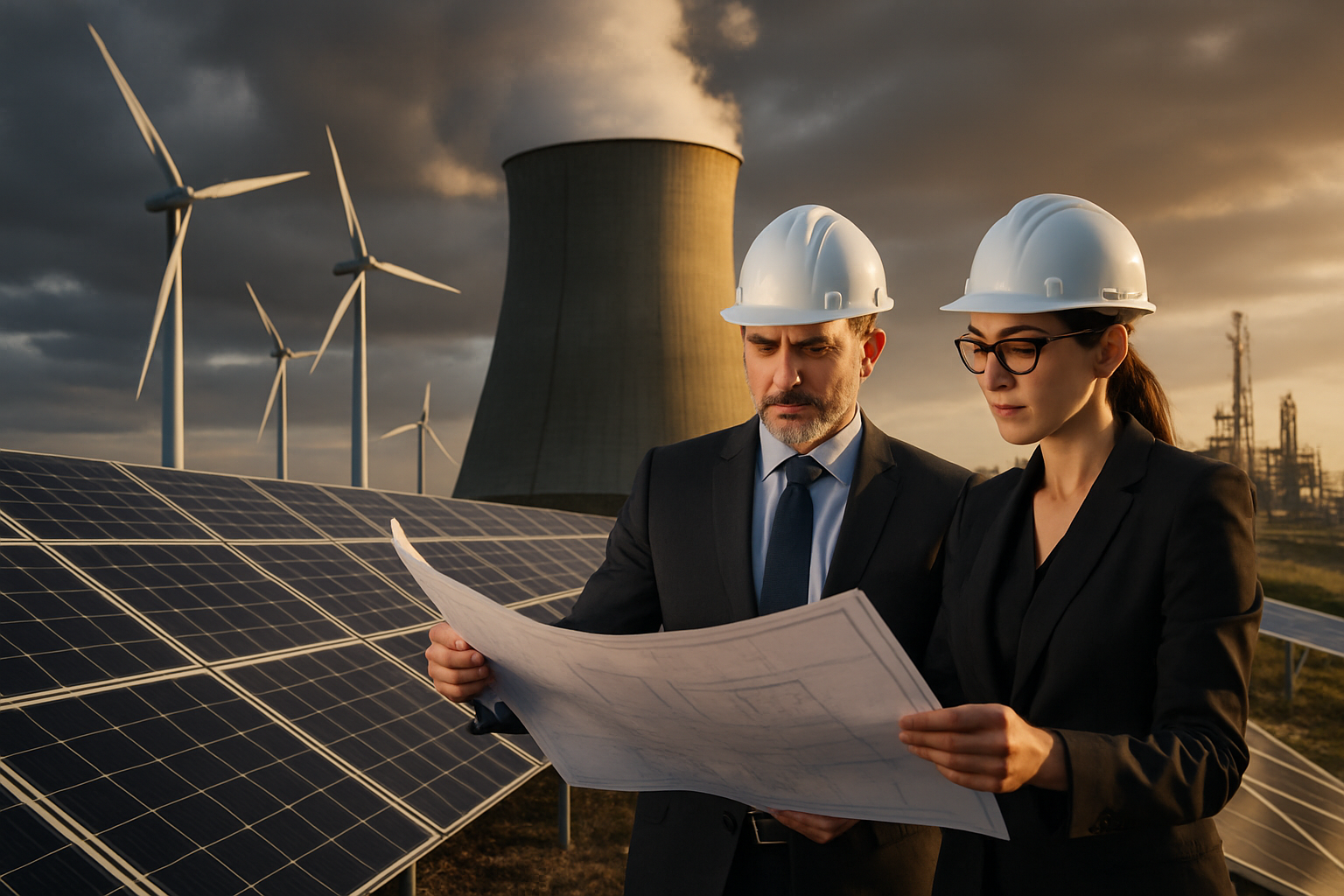
The global energy sector is experiencing a profound transformation as Azerbaijan attracts unprecedented US business investment while Japan restarts its largest nuclear power plant, signaling a new era of international energy cooperation and strategic realignment.
The convergence of these developments represents a critical moment for global energy security, with traditional fossil fuel producers expanding into renewable energy partnerships and nuclear power nations demonstrating renewed confidence in atomic energy. These parallel developments are reshaping regional energy dynamics and challenging existing supply chain dependencies.
US-Azerbaijan Energy Partnership Takes Center Stage
The US Chamber of Commerce has identified Azerbaijan as a pivotal regional coordinator in the energy sector, with American companies increasingly viewing the South Caucasus nation as a strategic hub connecting East and West. This represents a fundamental shift in how US corporations approach energy investment in the region.
The Chamber's assessment comes as Azerbaijan's strategic position between Europe and Asia offers unique advantages for American energy companies seeking diversified partnerships. The country's role as a connecting hub between Eastern and Western markets has attracted significant attention from US businesses looking to establish regional operations.
"Azerbaijan can play regional coordinating role in energy sector"
— US Chamber of Commerce Official
Current trade figures reveal the enormous potential for growth in US-Azerbaijan commercial relations. According to the Observatory of Economic Complexity, Azerbaijan exported $27.2 billion globally in 2024, ranking 71st worldwide. However, exports to the United States totaled only $74.9 million, dominated by aluminum plating ($31.7 million), explosive ammunition ($8.13 million), petroleum resins ($6.51 million), ferroalloys ($6.79 million), and diamonds ($2.51 million).
Japan's Nuclear Renaissance Begins
In a parallel development that underscores global energy sector confidence, Tokyo Electric Power Company (TEPCO) has restarted Reactor No. 6 at the Kashiwazaki-Kariwa Nuclear Power Plant, the world's largest nuclear power facility. This milestone represents Japan's renewed commitment to nuclear energy as a cornerstone of its energy security strategy.
The restart comes after years of rigorous safety assessments and regulatory reviews following the 2011 Fukushima disaster. The decision to bring the massive facility back online signals Japan's determination to maintain a diversified energy portfolio that includes nuclear power alongside renewable energy sources.
This development aligns with broader global nuclear renaissance trends, including Hungary's Paks-2 construction launch in February 2026, representing Europe's largest nuclear construction project. The International Atomic Energy Agency (IAEA) has provided strong support for these nuclear initiatives, recognizing their importance for carbon-neutral electricity generation.
Regional Energy Hub Development
The South Caucasus and Central Asia are emerging as strategically important regions for American businesses, according to senior US Chamber of Commerce officials. This recognition has prompted a comprehensive reassessment of energy investment opportunities across the region.
Azerbaijan's positioning as a key regional energy hub builds on its existing energy infrastructure and geographical advantages. The country serves as a crucial transit route for energy resources between the Caspian Basin and European markets, while also offering access to Asian energy demand centers.
The US Chamber of Commerce has announced plans to expand its activities in Azerbaijan, reflecting growing confidence in the market's investment potential. American companies are particularly interested in Azerbaijan's role in regional energy coordination, which could facilitate broader market access across the South Caucasus and Central Asian regions.
Strategic Investment Context
These energy sector developments occur within a broader context of global energy transformation and supply chain diversification. The US-EU-Japan Critical Minerals Partnership, announced in February 2026 with 55 countries participating, demonstrates coordinated Western efforts to reduce dependence on Chinese-controlled supply chains for critical materials.
China currently controls 60% of global production and 90% of refining capacity for lithium, cobalt, and rare earth elements essential for renewable energy infrastructure. This dependency has prompted major economies to seek alternative partnerships and supply chain diversification strategies.
Azerbaijan's strategic location and energy resources position it well to benefit from these diversification efforts. The country's potential role in critical minerals supply chains, combined with its energy sector expertise, makes it an attractive partner for US companies seeking regional alternatives to traditional suppliers.
Nuclear Power's Global Resurgence
Japan's nuclear restart coincides with a broader global nuclear renaissance that includes multiple countries recommitting to atomic energy as a reliable, carbon-free electricity source. The European Union's support for nuclear power as part of its climate neutrality goals has provided additional momentum for nuclear energy development.
Hungary's Paks-2 nuclear project, which officially began construction in February 2026, represents a $39.1 billion investment incorporating Russia's latest VVER reactor technology. The project has received complete IAEA backing after extensive safety and regulatory reviews, demonstrating international confidence in modern nuclear technology.
Estonia's opening of the largest battery storage facility in continental Europe, with capacity to serve 90,000 households, complements nuclear power development by providing grid stability solutions for renewable energy integration. This combination of nuclear baseload power and advanced storage systems offers a pathway toward energy independence while maintaining reliability.
Tourism and Economic Diversification
Beyond energy sector cooperation, US-Azerbaijan relations are expanding into tourism and broader economic partnerships. The US Chamber of Commerce has identified Azerbaijani tourism as "an attractive destination for global investors," suggesting opportunities for American companies across multiple sectors.
This diversification strategy reflects Azerbaijan's broader economic development goals, moving beyond traditional energy exports toward a more balanced economic portfolio. The country's high investment potential for US companies extends across tourism, technology, agriculture, and infrastructure development sectors.
The growing partnership demonstrates how energy cooperation can serve as a foundation for broader economic relationships, creating opportunities for mutual investment and technology transfer across multiple industries.
Global Energy Security Implications
The convergence of US-Azerbaijan energy cooperation and Japan's nuclear restart reflects broader global energy security considerations. Recent geopolitical tensions have highlighted the importance of diversified energy partnerships and reliable supply chains for critical energy infrastructure.
Azerbaijan's role as a regional energy coordinator could prove crucial for European energy security, particularly given ongoing challenges in energy supply chains. The country's position between major energy-producing regions and key demand centers makes it a strategic partner for both American companies and European energy consumers.
Japan's nuclear restart demonstrates confidence in advanced nuclear technology as a reliable, long-term energy solution. The facility's restart provides substantial baseload electricity generation capacity while supporting Japan's carbon neutrality goals and energy independence objectives.
Future Outlook and Challenges
Despite the promising developments in US-Azerbaijan cooperation and Japan's nuclear renaissance, significant challenges remain for global energy sector transformation. Infrastructure investment requirements, regulatory frameworks, and technological development needs require sustained international cooperation and substantial financial commitments.
The success of these energy partnerships will depend on continued political support, technological innovation, and market development. Azerbaijan's ability to serve as an effective regional energy hub will require infrastructure investments and regulatory frameworks that support international cooperation.
Japan's nuclear program faces ongoing public scrutiny and safety requirements that demand the highest technical standards and transparent operational practices. The success of the Kashiwazaki-Kariwa restart could influence global nuclear energy development and public acceptance of nuclear power.
As the global energy sector continues evolving toward greater diversification and security, the partnerships emerging between the United States and Azerbaijan, combined with Japan's nuclear renaissance, represent important steps toward a more resilient and sustainable global energy system.