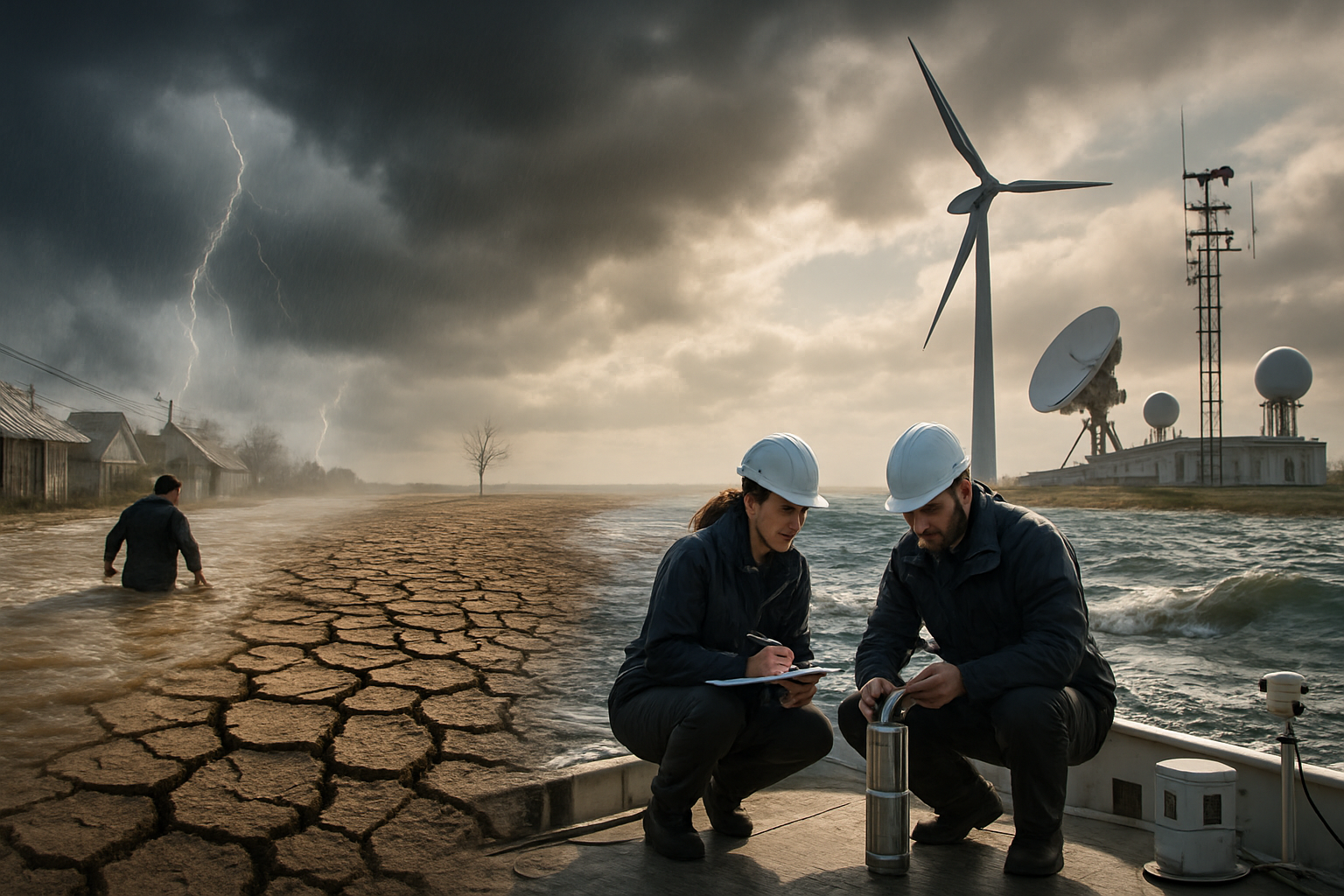
Environmental disasters are converging across multiple continents as extreme weather patterns intensify, marine ecosystems face unprecedented threats, and pollution concerns mount, highlighting the accelerating pace of global climate challenges during February 2026.
From record-breaking rainfall in Australia's Queensland to pollution crises affecting marine life across European waters, the latest developments demonstrate how environmental challenges have evolved from isolated regional concerns to interconnected global emergencies requiring immediate coordinated action.
Australia Faces Unprecedented Weather Extremes
Australia is experiencing some of its most severe weather patterns on record, with Queensland communities bracing for what meteorologists are calling a potential "cyclone sandwich" situation. The Bureau of Meteorology has issued warnings for dangerous thunderstorms bringing "apocalyptic rain" to Sydney and surrounding regions, trapping commuters in hazardous flash flooding conditions.
Queensland's outback regions are simultaneously experiencing their wettest February day since 2010, with Birdsville recording 93 millimeters of rainfall. The extreme conditions have cut off communities and interrupted supply chains, forcing regional residents to scramble for essential supplies to weather the prolonged wet period.
The dramatic weather shift comes as the continent previously faced complex scenarios where the driest regions suddenly recorded their wettest conditions in decades, highlighting the unpredictable nature of current climate patterns. Emergency services are managing diverse hazards from bushfire risks to major flooding simultaneously across vast geographical areas, straining response capabilities.
South America Grapples with Water System Crises
Colombia is confronting multiple water-related emergencies that threaten millions of residents across several departments. The Institute of Hydrology, Meteorology and Environmental Studies (IDEAM) has declared a red alert for the Cauca River, warning of imminent flooding risks affecting Valle del Cauca, Risaralda, Caldas, and Antioquia departments.
The Caribbean coast is experiencing additional challenges as maritime authorities (DIMAR) warn of rough seas, strong winds, and irregular rainfall patterns affecting the Colombian Caribbean. A stationary weather system is altering maritime conditions in the region, forcing enhanced safety measures for nautical and coastal activities, with February 26-27 identified as the most critical days.
These developments reflect broader regional patterns where traditional weather systems are being disrupted by changing atmospheric conditions, creating compound threats that challenge conventional emergency response frameworks.
Marine Ecosystems Under Severe Pressure
European marine environments are facing critical threats from both climate change and pollution sources. Research published in Nature Ecology & Evolution reveals alarming findings about ocean warming impacts on fish populations, with every tenth of a degree of ocean warming per decade reducing fish populations by 7.2%.
The study, which examined 33,000 marine populations in the northern hemisphere between 1993 and 2021, isolated the effects of chronic, long-term seabed warming from shorter events such as marine heatwaves. The research found unambiguous evidence that accelerating ocean floor warming is decimating fish populations at rates that compound over time across entire ocean basins.
"To put it simply, the faster the ocean floor warms, the greater the impact on marine life populations. The numbers become almost impossible to absorb when compounded over time."
— Nature Ecology & Evolution Research Team
Pollution Threats Escalate Globally
Romania is confronting a significant environmental threat as Australian research reveals that perfluorooctane sulfonate (PFOS) from the category of substances known as "forever pollutants" can accumulate in bee colonies and contaminate honey. This discovery threatens pollinators, food security, and potentially human health.
The University of New England (UNE) research team's findings indicate these toxic substances from the "eternal pollutants" category pose risks to bee populations that serve as critical pollinators for global food systems. The contamination pathway from industrial sources to food chains demonstrates how pollution challenges have evolved beyond traditional point sources to systemic environmental threats.
Climate Context Drives Urgency
These converging environmental challenges occur during a critical climate period, with January 2026 confirmed as the hottest month in recorded history—the 18th consecutive month exceeding 1.5°C above pre-industrial levels. This unprecedented warming trend is overriding natural climate variability, including La Niña cooling effects that typically reduce global temperatures.
The sustained temperature elevation demonstrates that human-induced climate change has fundamentally altered Earth's atmospheric systems beyond natural recovery mechanisms, creating compounding environmental effects across multiple systems simultaneously.
Interconnected Global Responses Required
Environmental challenges now demonstrate global interconnectedness, where atmospheric conditions contributing to extreme weather in one region influence systems worldwide. Ocean currents carry pollution across continents, air masses transport particulate matter across nations, and climate change affects global weather patterns regardless of political boundaries.
The diversity of environmental approaches across regions provides resilience against single-solution dependencies, but success increasingly depends on unprecedented international cooperation. Advanced air quality monitoring, environmental DNA tracking, and satellite monitoring systems are providing tools for rapid threat response and evidence-based policy making.
Economic and Social Implications
The convergence of environmental challenges carries massive economic implications extending beyond immediate crisis costs. Tourism revenues, agricultural productivity, transportation systems, and healthcare expenditures are all affected by the cascading impacts of extreme weather, marine ecosystem degradation, and pollution exposure.
However, environmental protection is increasingly recognized as an economic development engine rather than a regulatory burden. Countries implementing comprehensive environmental protection demonstrate greater economic resilience and attract sustainable investment opportunities across multiple sectors.
Technology and Traditional Knowledge Integration
Successful environmental responses require sophisticated integration of cutting-edge technology with traditional ecological knowledge and community-based management systems. Advanced monitoring provides real-time data supporting strategic planning, but technology alone is insufficient without community engagement and traditional ecological knowledge systems.
The combination of satellite monitoring, environmental sensors, and AI-powered analysis with local environmental expertise represents the maturation of environmental protection strategies that recognize the limitations of purely technological or traditional approaches alone.
Critical Action Window Narrowing
February 2026 represents a critical juncture for global environmental protection, with the choice between reactive crisis management and proactive ecosystem service management becoming increasingly urgent. The window for effective climate action is narrowing as ecological systems approach critical thresholds that could trigger irreversible changes.
Tools and knowledge exist for comprehensive environmental protection, but success depends on rapid scaling through enhanced international cooperation, sustained financial commitments, and recognition that environmental protection serves as essential infrastructure for human prosperity and planetary sustainability.
The convergence of environmental challenges across continents in February 2026 may prove decisive for conservation approaches in the coming decades, influencing environmental protection strategies for generations while affecting global food security, climate stability, and human settlement patterns worldwide.