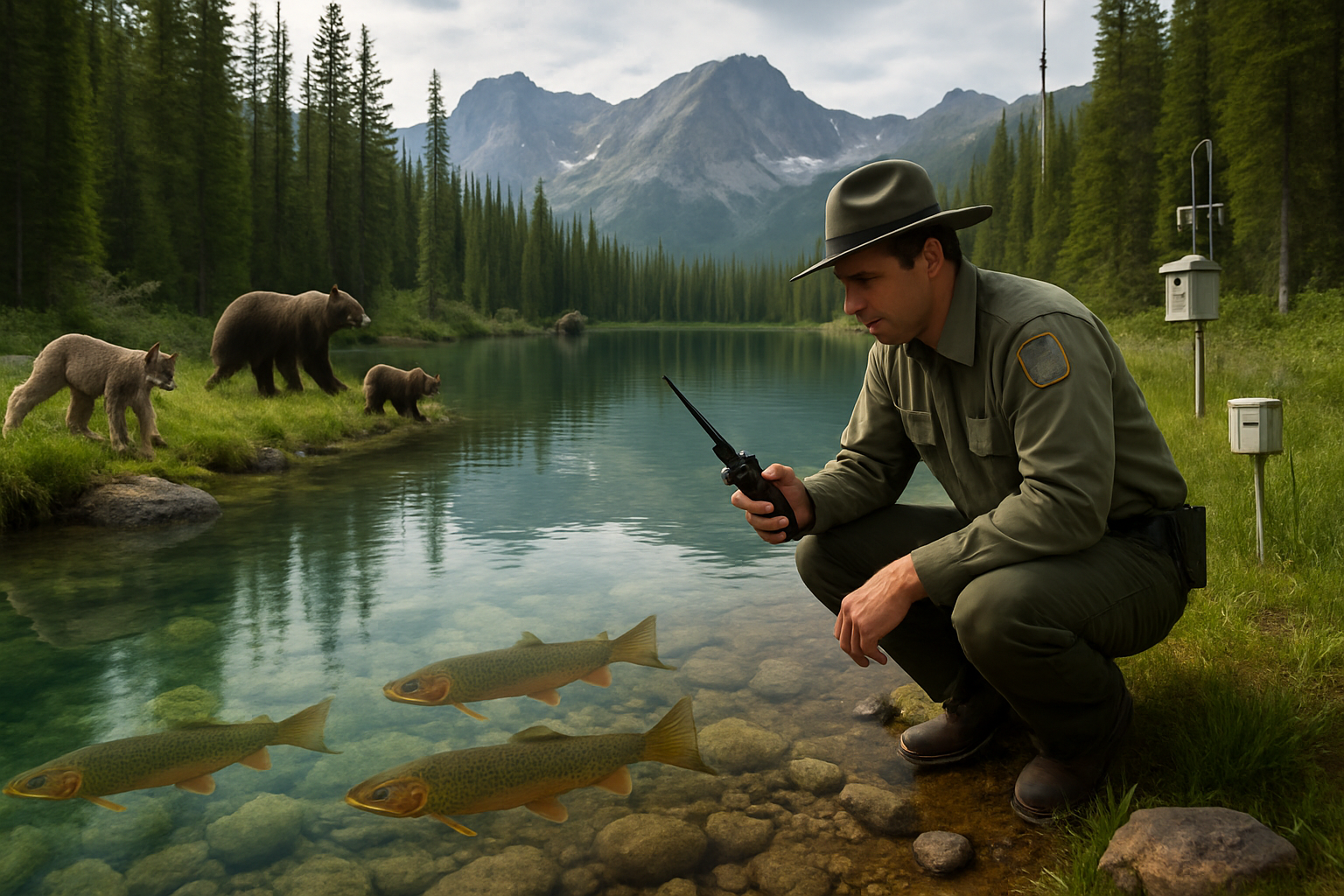
A remarkable environmental conservation renaissance is sweeping across nations worldwide, as governments and organizations deploy cutting-edge technologies alongside traditional ecological knowledge to reverse decades of biodiversity loss, even as the planet experiences its most challenging climate conditions in recorded history.
From Canada's ambitious fish reintroduction programs to Slovakia's alarming wildlife decline discoveries, recent developments reveal both unprecedented conservation successes and sobering environmental challenges. Parks Canada is preparing to reintroduce westslope cutthroat trout to Margaret Lake and other locations in Banff National Park this spring, marking a significant milestone in restoring native fish populations to pristine alpine waters.
The westslope cutthroat trout initiative represents a sophisticated approach to species recovery, combining decades of scientific research with indigenous ecological knowledge. These native fish, once abundant throughout the Rocky Mountain region, have faced severe population declines due to habitat fragmentation, climate change, and competition from non-native species.
Wildlife Crisis Emerges in European Ecosystems
While conservation successes mount in North America, alarming discoveries in Slovakia's Mala Fatra National Park paint a stark picture of European wildlife decline. Research teams documented the presence of only one Eurasian lynx in the entire region, a dramatic reduction from historical populations. The findings revealed that bears are increasingly dependent on artificial feeding stations near tourist areas, while wolves have virtually disappeared from the ecosystem.
This wildlife crisis in Central Europe reflects broader patterns of ecosystem disruption occurring across the continent. Traditional predator-prey relationships that evolved over millennia are breaking down as climate change and human pressures reshape mountain environments. The near-absence of large carnivores has cascading effects throughout the food web, altering vegetation patterns and ungulate populations.
"What we're seeing in Mala Fatra is not just the loss of individual species, but the collapse of entire ecological networks that have existed for thousands of years."
— Conservation biologist familiar with the research
Technology Revolutionizes Conservation Approaches
Modern conservation efforts increasingly rely on sophisticated integration of cutting-edge technology with traditional ecological knowledge. Environmental DNA sampling allows scientists to detect species presence without direct observation, while satellite monitoring provides real-time tracking of wildlife movements and habitat changes. Artificial intelligence systems now analyze vast datasets to predict conservation outcomes and optimize resource allocation.
The success of these technological approaches depends heavily on community engagement and respect for traditional stewardship practices. Indigenous communities possess generations of ecological knowledge that proves invaluable for understanding species behavior, habitat requirements, and sustainable management strategies.
Genetic screening programs ensure that reintroduced populations maintain sufficient diversity to thrive long-term, while GPS tracking and environmental sensors provide unprecedented insights into wildlife behavior and ecosystem health. This technology-tradition synthesis represents a fundamental evolution in conservation methodology, moving beyond purely scientific or traditional approaches toward comprehensive frameworks that respect cultural knowledge while leveraging global technological capabilities.
Global Conservation Renaissance Context
These developments occur within what experts are calling a "global conservation renaissance" - an unprecedented surge of coordinated environmental protection efforts spanning multiple continents. Recent successes include Ecuador's reintroduction of 158 giant tortoises to Floreana Island after a 150-year absence, Zimbabwe's world-first DNA forensic wildlife crime prosecution, and Croatia's record griffon vulture populations in the northern Adriatic.
The conservation momentum builds despite - or perhaps because of - the most challenging environmental conditions in recorded history. January 2026 marked the hottest month ever recorded, extending an unprecedented streak of 21+ consecutive months with global temperatures exceeding 1.5°C above pre-industrial levels. This sustained warming has completely overridden natural climate variability, including La Niña cooling effects that typically moderate global temperatures.

Economic Dimensions of Environmental Protection
Contemporary conservation increasingly demonstrates that environmental protection functions as an economic development strategy rather than a regulatory burden. Countries implementing comprehensive wildlife protection consistently show greater economic resilience and attract sustainable investment across eco-tourism, green technology manufacturing, and environmental services sectors.
Canada's fish reintroduction programs support a multi-billion-dollar outdoor recreation economy while positioning the nation as a global leader in freshwater conservation. The economic multiplier effects include improved public health through ecosystem services, enhanced agricultural productivity, and reduced infrastructure costs through natural disaster prevention.
Slovakia's wildlife monitoring efforts, while revealing troubling trends, contribute to environmental research capabilities that attract international scientific partnerships and climate finance opportunities. Even concerning conservation findings generate valuable knowledge that supports broader European Union biodiversity protection strategies.
Climate Crisis Compounds Conservation Challenges
The unprecedented climate conditions create compound environmental effects that traditional conservation approaches struggle to address. Rising temperatures alter precipitation patterns affecting forest regeneration, while increased extreme weather frequency disrupts marine food chains and terrestrial habitats. Species that evolved specific migration patterns over millennia now face rapidly changing conditions that challenge their adaptive capacity.
For westslope cutthroat trout, climate change brings warmer water temperatures, altered stream flows, and increased competition from heat-tolerant non-native species. Conservation managers must now account for rapidly changing baseline conditions while maintaining long-term species recovery goals.
European mountain ecosystems face similar challenges as traditional habitat boundaries shift upward with warming temperatures, forcing wildlife into smaller, more fragmented spaces. The lynx decline in Slovakia likely reflects these broader habitat pressures as prey availability and denning sites change with ecosystem conditions.
Adaptive Management Requirements
Successful conservation in the climate change era requires adaptive management strategies that can respond quickly to changing conditions. Traditional protected area approaches designed for stable environmental conditions must evolve to address rapidly shifting baselines and increased environmental variability.
Emergency response capabilities are expanding to address climate-driven wildlife displacement, extreme weather impacts on breeding cycles, and ecosystem collapse scenarios. Conservation medicine now includes sophisticated health assessment protocols and rapid intervention capabilities for climate-stressed populations.
International Cooperation Imperative
Environmental challenges increasingly transcend national boundaries through ocean currents, atmospheric systems, and species migrations that connect ecosystems globally. Success requires unprecedented cooperation in coordinated policy frameworks, shared monitoring systems, collaborative enforcement, and innovative financing that recognizes ecosystem services' economic value.
Knowledge sharing between Canadian restoration expertise, European wildlife monitoring capabilities, and global conservation networks creates resilience against single-solution dependencies. The diversity of conservation approaches provides multiple adaptation pathways for addressing complex, interconnected environmental challenges.
Evolution from traditional North-South aid models toward peer-to-peer cooperation recognizes that developing nations increasingly serve as environmental solution providers. Many of the most innovative conservation approaches now emerge from countries previously considered aid recipients.
Critical Action Window Narrows
Environmental scientists warn that the window for effective conservation action is narrowing rapidly as ecological systems approach critical thresholds that could trigger irreversible changes affecting global food security, climate stability, and human settlements. The choice between reactive crisis management and proactive ecosystem service management may determine whether conservation efforts can keep pace with accelerating environmental change during this decisive climate action decade.
Implementation challenges include funding sustainability for developing nations where immediate economic pressures often override long-term environmental considerations. Technical capacity building requires sustained investment in education, training, and institutional development, while climate change disrupts project timelines, demanding adaptive management approaches.
"We have the tools, knowledge, and cooperation frameworks for comprehensive environmental protection. The question is whether we can implement them with sufficient speed and coordination."
— International conservation policy expert
Success Factors for Global Scaling
Successful conservation initiatives consistently demonstrate several key factors: community ownership and engagement, transparent governance frameworks, economic incentives that make protection financially viable, and sophisticated integration of traditional ecological knowledge with modern conservation science.
Canada's fish reintroduction success builds on decades of indigenous fisheries management combined with contemporary genetic analysis and habitat restoration techniques. Slovakia's research capabilities provide essential monitoring data that supports evidence-based policy development across the European Union.
These approaches provide practical templates for scaling environmental protection globally through coordinated international responses that address multiple challenges while building local capacity and fostering international cooperation.
Strategic Significance for Planetary Future
The environmental developments of 2026 may prove decisive for conservation approaches in the decades ahead, influencing global biodiversity protection, climate adaptation, and sustainable development strategies for generations. The integration of cutting-edge technology with traditional ecological wisdom creates adaptable frameworks that respect cultural diversity while leveraging global technological capabilities.
Success depends on sustained international cooperation, enhanced multi-sector coordination, and increased financial commitments that recognize environmental protection as essential infrastructure for human prosperity and planetary sustainability.
The conservation renaissance emerging in 2026 demonstrates that remarkable environmental protection results remain achievable during Earth's most challenging environmental period in recorded history. However, the window for effective action continues narrowing, making coordinated global response with maximum urgency essential for maintaining planetary habitability.
As nations worldwide grapple with unprecedented environmental challenges, the conservation successes and sobering discoveries of recent months provide both hope and urgent lessons for the critical climate action decade ahead. The choices made today regarding environmental protection and species conservation will determine the resilience of natural systems that human prosperity fundamentally depends upon.