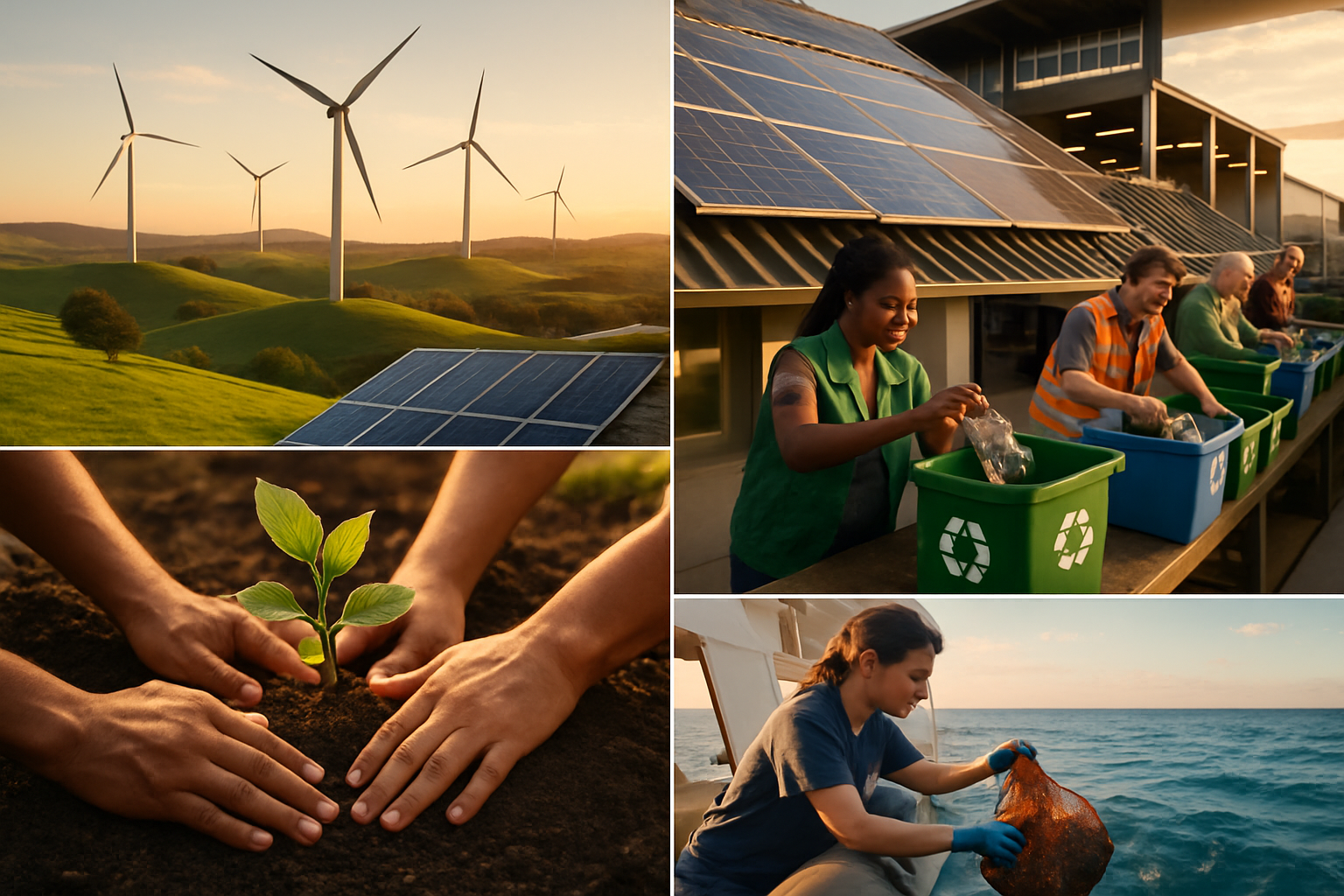
Four nations across three continents are pioneering diverse environmental conservation strategies, from Croatia's groundbreaking geothermal energy expansion to Fiji's sustainable bamboo initiatives, highlighting coordinated global action amid the hottest climate conditions on record.
As environmental challenges intensify worldwide, February 2026 has witnessed remarkable conservation developments spanning renewable energy innovation, sustainable resource management, forest protection, and wildlife preservation. These initiatives demonstrate how nations are adapting traditional conservation approaches with cutting-edge technology while addressing local needs within broader global sustainability frameworks.
Croatia's Geothermal Energy Revolution
Croatia is experiencing a significant expansion in geothermal energy discovery, with new sources identified in the continental region near Virovitica. The exploratory work at the VirGT-1 well represents the first major step toward utilizing deep earth energy for district heating and sustainable development in the area.
According to energy sector analysis, geothermal energy could become an extremely important Croatian energy asset in the coming years. Last year's drilling operations in four different cities yielded encouraging results, demonstrating the country's untapped renewable energy potential. The Virovitica project follows successful geothermal assessments that have positioned Croatia as an emerging leader in sustainable energy development within the European Union.
The initiative aligns with broader European efforts to reduce dependency on fossil fuel imports and achieve climate neutrality targets by 2050. Croatia's geothermal expansion occurs as the EU faces critical challenges in securing sustainable energy sources amid ongoing geopolitical tensions affecting traditional energy supply chains.
Fiji's Bamboo Sustainability Initiative
Fiji's Ministry of Forestry is actively promoting the country's abundant bamboo resources to develop sustainable industries in housing, handicrafts, and eco-tourism. Deputy Conservator Apisai Rinamalo emphasizes that bamboo's exceptional growth rate and scalability make it an ideal long-term building material for community-based livelihoods.
The initiative focuses on increasing awareness of bamboo's crucial role in sustainable development, climate adaptation, and economic diversification. Bamboo cultivation requires minimal water resources compared to traditional timber and can be harvested within three to five years, making it an environmentally superior alternative to conventional construction materials.
This program represents a strategic shift toward renewable resource utilization that can provide immediate economic benefits while supporting long-term environmental goals. Fiji's approach demonstrates how small island developing states can leverage natural resources innovatively to address both economic development and climate adaptation simultaneously.
Kenya's Forest Management Transparency
The Kenya Forest Service (KFS) has dismissed allegations regarding inappropriate conduct by forest rangers in Mt Elgon Forest, specifically claims about exchanging firewood for sexual favors. KFS officials state that no such cases have been reported or documented by authorities in Bungoma County.
This development highlights ongoing challenges in forest management and community relations across Kenya's protected forest areas. Mt Elgon Forest serves as a critical ecosystem providing water catchment services and biodiversity conservation for the region, making transparent and ethical management practices essential for long-term conservation success.
The allegations and subsequent official response underscore the importance of establishing robust oversight mechanisms and community engagement protocols in forest management. Effective forest conservation requires trust between local communities and conservation authorities, particularly in areas where communities depend on forest resources for daily needs.
South Africa's Shifting Poaching Patterns
South Africa's rhino conservation efforts reveal complex dynamics in anti-poaching strategies, with significant changes in poaching patterns between major protected areas. While fewer rhinos were killed in Hluhluwe-iMfolozi Park in KwaZulu-Natal during 2025, poachers intensified activities in Kruger National Park.
This shift in poaching locations demonstrates the ongoing challenges facing wildlife conservation across South Africa's protected areas. The data suggests that poaching syndicates adapt quickly to enhanced security measures, requiring continuous strategy adjustments and resource allocation across multiple conservation sites.
The situation reflects broader patterns in wildlife trafficking, where criminal networks demonstrate remarkable adaptability to enforcement efforts. Conservation organizations must develop flexible, intelligence-driven approaches that can respond rapidly to changing criminal tactics while maintaining consistent protection across all critical habitats.
Global Environmental Context
These conservation initiatives unfold against the backdrop of January 2026 being recorded as the hottest month in human history, marking the 18th of the past 19 months exceeding 1.5°C above pre-industrial levels. This unprecedented warming pattern overrides natural climate variability, including traditionally cooling La Niña conditions, demonstrating the urgent need for accelerated environmental action.
The developments also occur as environmental protection strategies evolve from reactive crisis management toward proactive ecosystem service management. This transformation emphasizes the integration of technological innovation with traditional conservation knowledge, community participation, and economic viability.
"The convergence of climate urgency with innovative conservation approaches represents both our greatest challenge and our most promising opportunity for sustainable development."
— Environmental Policy Expert
Technology Integration and Innovation
Each of these initiatives demonstrates sophisticated integration of technology with traditional conservation approaches. Croatia's geothermal exploration employs advanced drilling techniques and geological analysis, while Fiji's bamboo program utilizes sustainable cultivation methods proven through agricultural science.
Kenya's forest management challenges highlight the need for transparent monitoring systems and community engagement technologies. South Africa's anti-poaching efforts increasingly rely on satellite tracking, genetic analysis for evidence, and coordinated intelligence sharing between conservation areas.
This technology-tradition synthesis represents the maturing understanding that effective environmental protection must combine scientific innovation with natural systems knowledge while serving human communities sustainably.
Economic and Social Implications
These environmental initiatives create substantial economic opportunities while addressing pressing social needs. Croatia's geothermal expansion offers energy independence and job creation in rural areas. Fiji's bamboo program provides sustainable livelihoods while preserving forest ecosystems.
However, success requires addressing social equity concerns and ensuring community participation in decision-making processes. Environmental protection programs that fail to consider local economic needs often face implementation challenges and community resistance.
The most successful conservation initiatives integrate economic development objectives with environmental protection, creating sustainable financing models that benefit local communities while achieving conservation goals.
International Cooperation Framework
These diverse conservation approaches provide valuable templates for international cooperation and knowledge sharing. Different geographical contexts require adapted strategies, but common principles include community engagement, technological integration, and economic sustainability.
The success of these initiatives depends on sustained political commitment, international cooperation, and enhanced financing mechanisms that recognize ecosystem service value. Climate change creates additional urgency for rapid implementation as environmental conditions continue evolving.
Regional networks and international partnerships enable resource sharing, technical assistance, and coordinated policy development that transcends national boundaries for ecosystem management.
Future Implications and Scaling Potential
These February 2026 environmental conservation developments represent fundamental shifts toward sustainable resource management and climate adaptation strategies. The diversity of approaches provides resilience against single-solution dependencies through multiple, complementary strategies that reinforce each other's effectiveness.
Success factors include community ownership, international cooperation, technology-traditional knowledge synthesis, gender integration, and economic development that extends beyond individual project levels. Common challenges involve funding sustainability, technical capacity building, climate adaptation requirements, and sustained political commitment.
The window for effective environmental action continues narrowing, but these initiatives demonstrate that tools and knowledge exist for comprehensive conservation strategies. The key lies in political will, scientific knowledge, and community support alignment for coordinated global response.
As these conservation models mature and demonstrate measurable outcomes, they offer essential templates for scaling environmental protection efforts globally. The combination of direct conservation action, sustainable resource development, community engagement, and technological innovation provides comprehensive frameworks for addressing environmental challenges at the speed and scale required for planetary sustainability.