Revolutionary ocean cleanup technology and comprehensive wildlife protection measures are gaining unprecedented momentum globally, as environmental conservation efforts accelerate during a critical period when Earth has experienced 18 consecutive months of temperatures exceeding 1.5°C above pre-industrial levels.
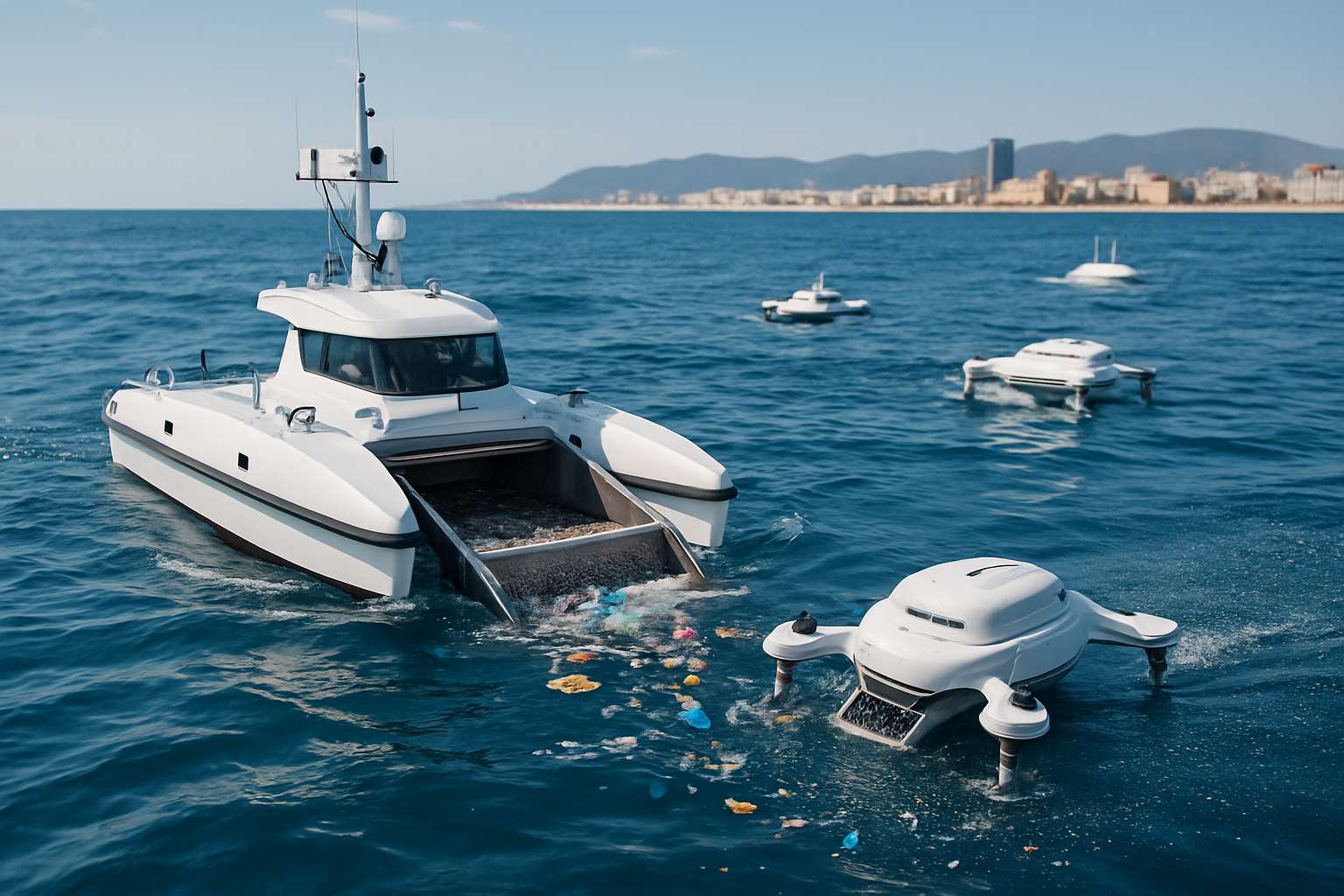
Telefónica Tech is set to demonstrate at the Mobile World Congress (MWC) how Internet of Things (IoT) and 5G connectivity are playing pivotal roles in protecting marine ecosystems. The technology company will unveil its pilot project for collecting waste and microplastics using connected aquatic drones, developed in collaboration with the Port Authority of Valencia. This groundbreaking initiative represents a significant advancement in combining cutting-edge technology with environmental protection.
Marine Technology Revolution
The aquatic drone project showcases how advanced connectivity can enable real-time monitoring and collection of marine debris, including the increasingly problematic microplastics that pose severe threats to oceanic food chains. The drones utilize IoT sensors and 5G networks to provide precise navigation and efficient waste collection capabilities, marking a technological breakthrough in marine conservation efforts.
This innovation emerges against the backdrop of a global marine conservation crisis that has been unfolding across multiple nations. According to comprehensive analysis from February 2026, coordinated environmental threats span from Cyprus to New Zealand, Finland to Palau, revealing systemic challenges to global ocean health that demand immediate technological solutions.
Enforcement Against Illegal Deforestation
Meanwhile, in Argentina's Chaco province, authorities have taken decisive action against illegal deforestation, seizing four bulldozers during an operation that detected the illegal clearing of 550 hectares of native forest using the "chain-pulled" method. The operation, conducted in the Río Muerto area, demonstrates strengthening enforcement against environmental crimes.
The Ministry of Production has warned that fines for such violations could exceed the value of the affected lands, signaling a major shift toward more severe penalties for environmental destruction. This enforcement action reflects growing recognition that traditional deterrents have been insufficient to protect vital forest ecosystems.
"The challenge for 2026 is not to identify the problem, but to assume responsibility for solving it."
— Environmental analysts emphasizing the urgency of moving beyond symbolic commitments to binding environmental action
Global Conservation Context
These developments occur during January 2026, which has been confirmed as the hottest month in recorded history, extending an unprecedented streak of warming that demonstrates human-induced climate change is fundamentally overriding natural climate variability. The persistence of extreme temperatures, even during La Niña cooling conditions, underscores the accelerating pace of environmental change.
The convergence of advanced technology solutions with strengthened enforcement mechanisms represents a critical evolution in environmental protection strategies. From innovative marine cleanup systems to decisive action against illegal logging, conservation efforts are becoming more sophisticated and effective.
Technology-Community Integration
Successful environmental protection increasingly requires the sophisticated integration of cutting-edge technology with traditional ecological knowledge and community-based management. The Spanish aquatic drone project exemplifies this approach, combining advanced digital monitoring with local maritime expertise and community engagement.
Similarly, enforcement actions in Argentina build upon decades of traditional forest stewardship knowledge while utilizing modern satellite monitoring and legal frameworks to protect native ecosystems. This synthesis of technological innovation with established conservation practices is proving essential for addressing the scale and urgency of current environmental challenges.
Economic Dimensions of Conservation
Environmental protection is increasingly recognized as an economic development engine rather than a regulatory burden. The marine cleanup technology sector represents billions in potential export revenue and job creation in high-tech manufacturing and environmental services. Spain's position as a leader in this field could attract significant international investment and partnerships.
Meanwhile, enforcement against illegal deforestation protects long-term economic interests by preserving ecosystem services, maintaining biodiversity, and ensuring sustainable land use. The economic costs of environmental degradation—including lost ecosystem services, reduced agricultural productivity, and climate change impacts—far exceed the investments required for proactive environmental protection.
International Cooperation Imperatives
Transnational environmental challenges demand unprecedented international cooperation, as pollution plumes, climate systems, and migratory species cross boundaries, making unilateral efforts insufficient. Ocean currents carry plastic pollution across continents, while atmospheric patterns transport emissions and particulate matter across nations.
The collaboration between Telefónica Tech and the Port Authority of Valencia provides a model for how public-private partnerships can drive environmental innovation. Such cooperative frameworks are essential for scaling successful technologies and approaches globally, enabling rapid deployment of effective conservation solutions.
Implementation Challenges and Solutions
Despite promising technological advances, significant implementation challenges remain. Funding sustainability is particularly challenging for developing nations, where immediate economic pressures often override long-term environmental considerations. Technical capacity building requires sustained investment in education, training, and institutional development.
Climate change itself disrupts project timelines and operational conditions, requiring adaptive management approaches that can respond to rapidly changing environmental conditions. However, the diversity of conservation approaches provides resilience against single-solution dependencies, offering multiple complementary strategies that can reinforce each other's effectiveness.
Regional Integration and Scaling
The success of local environmental initiatives depends increasingly on regional integration and international cooperation frameworks. Spain's marine cleanup technology could be adapted for Mediterranean-wide deployment, benefiting from EU coordination and funding while addressing shared challenges of marine pollution.
Argentina's enforcement actions align with broader Latin American efforts to strengthen environmental protection, including initiatives across Mexico, Brazil, and other regional partners. Regional cooperation enables knowledge sharing, coordinated enforcement, and the development of compatible legal frameworks.
Future Trajectories and Strategic Significance
February 2026 environmental conservation developments represent a critical juncture in global environmental protection strategy. The combination of technological innovation and strengthened enforcement demonstrates that effective environmental action requires both proactive solutions and reactive deterrents.
The window for effective climate action is narrowing rapidly, but these developments suggest that the tools, knowledge, and political will for comprehensive environmental protection are emerging. Success depends on sustained international cooperation, enhanced coordination across sectors and scales, and increased financial commitments that recognize environmental protection as essential infrastructure for human prosperity and planetary sustainability.
The coordination between marine technology innovation and forest protection enforcement provides templates for scaling environmental protection efforts globally. This comprehensive framework addresses environmental challenges at the required speed and scale, offering hope that conservation can keep pace with accelerating environmental change during this critical climate action decade.