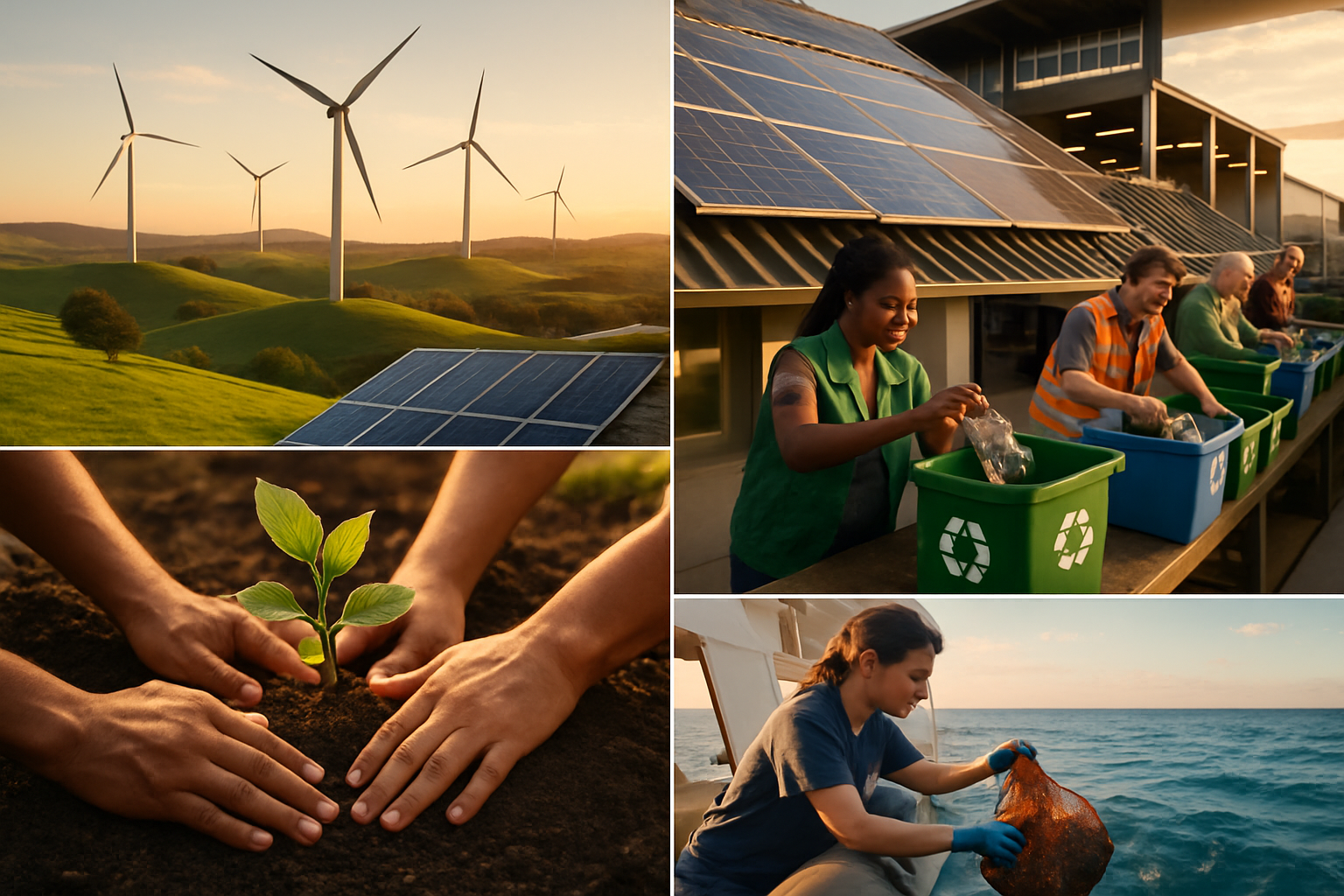
A coordinated surge of environmental conservation initiatives across Mexico, Portugal, and the United Kingdom demonstrates unprecedented global momentum in marine protection, plastic pollution reduction, and corporate climate accountability during the critical month of February 2026.
The convergence of three distinct yet interconnected environmental developments—a successful whale calf rescue in Mexico's protected waters, Portugal's call for decisive action on plastic pollution treaties, and UK campaigners targeting bank climate commitments—reflects the sophisticated, multi-front approach now characterizing global environmental protection efforts.
Mexican Marine Sanctuary Success Story
In a remarkable demonstration of conservation effectiveness, Mexico's National Commission of Natural Protected Areas (Conanp) successfully rescued and returned a male humpback whale calf to the sea at the Barra de la Cruz–Playa Grande Sanctuary, one of Oaxaca's strategically important protected coastal areas.
The nearly five-meter whale calf was discovered stranded between Friday night, February 6, and Saturday morning, February 7, during routine monitoring patrols of the protected marine sanctuary. The successful rescue operation highlights the critical importance of Mexico's established network of Natural Protected Areas along its extensive coastline.
The incident occurred as a result of high tide conditions that left the young whale stranded on the protected beach. The swift response by Conanp demonstrates the effectiveness of systematic monitoring and rapid intervention protocols that have been developed for Mexico's marine protected areas.
Portugal's Plastic Treaty Urgency Call
Simultaneously, Portuguese environmental analyst Luís R. Vieira issued a stark warning about the global plastic pollution crisis, emphasizing that 2026 represents a critical decision point for international environmental action. In his analysis published in PÚBLICO, Vieira argued that "the challenge for 2026 is not to identify the problem, but to assume responsibility for solving it."
Vieira's commentary, titled "Beyond the Green Illusion: The Real Test of the Plastics Treaty in 2026," highlights how every year of delay strengthens global plastic dependency and reduces political maneuvering space for effective action. His analysis comes as international negotiations on a comprehensive plastics treaty face mounting pressure for concrete implementation measures.
The Portuguese perspective emphasizes the urgency of moving beyond symbolic environmental commitments toward binding, enforceable agreements that address the fundamental systems driving plastic pollution. This call for action reflects growing recognition that environmental protection requires political courage and systematic economic transformation, not merely technological solutions.
UK Banking Climate Accountability Campaign
In the United Kingdom, environmental campaigners are preparing to challenge bank leadership through shareholder activism, targeting financial institutions that retreat from climate commitments. ShareAction, a responsible investment campaign group, announced plans to issue detailed reports to pension funds and asset managers evaluating whether 34 of the world's largest lenders are maintaining their climate goals.
The campaign represents a sophisticated approach to corporate environmental accountability, using financial market mechanisms to hold bank leadership responsible for environmental backtracking. The initiative calls on institutional shareholders to vote against re-election of bank chairs who "water down their lenders' climate commitments" during 2026.
This financial sector focus reflects growing recognition that banking and investment decisions fundamentally shape global environmental outcomes. By targeting the financial infrastructure that enables or constrains environmental destruction, the UK campaign addresses systemic drivers of environmental degradation rather than merely symptomatic issues.
Global Context and Strategic Coordination
These developments occur within the broader context of unprecedented global environmental challenges. January 2026 was recorded as the hottest month in human history, with 18 of the past 19 months exceeding 1.5°C above pre-industrial levels, demonstrating that climate warming is overriding natural variability patterns including La Niña cooling effects.
The coordination evident across these three initiatives—marine conservation, plastic pollution reduction, and financial sector accountability—reflects the evolution of environmental protection from reactive crisis management to proactive, multi-sector strategic intervention. This approach recognizes that effective environmental protection requires simultaneous action across conservation, regulation, and economic systems.
Marine Conservation Innovation
Mexico's successful whale rescue operation exemplifies the sophisticated marine conservation infrastructure that has developed across global protected area networks. The Barra de la Cruz–Playa Grande Sanctuary represents one of many strategically located marine protected areas that serve as critical refuges for marine biodiversity while supporting sustainable coastal community livelihoods.
The rapid response protocol demonstrated in the whale rescue reflects years of investment in monitoring systems, trained personnel, and emergency intervention capabilities. Such infrastructure provides the foundation for effective marine conservation amid increasing pressures from climate change, pollution, and human activity.
This success connects to broader marine conservation efforts documented globally, including recent initiatives in Saint Vincent and the Grenadines, where the Environment Fund celebrated the first anniversary of the Orca Protection Agreement, demonstrating innovative partnerships between conservationists and traditional maritime communities.
Plastic Pollution Treaty Implementation
Portugal's call for urgent action on plastic pollution reflects the critical juncture facing international environmental negotiations in 2026. The global plastics treaty under development represents one of the most significant environmental agreements since the Paris Climate Accord, with the potential to fundamentally reshape global production, consumption, and waste management systems.
Vieira's analysis emphasizes that effective plastic pollution reduction requires addressing the economic and political systems that drive overproduction and inadequate waste management, rather than relying solely on downstream cleanup efforts or consumer behavior changes.
The Portuguese perspective aligns with broader European Union initiatives to strengthen environmental regulation and reduce dependency on environmentally destructive economic patterns. Recent EU efforts include enhanced critical materials recycling to reduce import dependencies and build sustainable circular economy models.
Financial Sector Climate Responsibility
The UK ShareAction campaign targeting bank climate commitments represents a sophisticated understanding of how financial sector decisions drive environmental outcomes. By focusing on institutional shareholders—pension funds and asset managers—the campaign leverages the fiduciary responsibilities of these institutions to their beneficiaries, many of whom face direct climate change impacts.
This approach recognizes that effective climate action requires transforming the financial infrastructure that currently enables environmentally destructive investments while constraining financing for sustainable alternatives. The campaign's focus on bank leadership accountability reflects growing recognition that corporate governance failures represent a fundamental barrier to environmental progress.
The timing of this campaign coincides with broader concerns about corporate climate commitment reversals as economic pressures mount. The ShareAction initiative provides a model for using financial market mechanisms to maintain environmental accountability even when regulatory or political pressure weakens.
Technological Integration and Community Engagement
Across all three initiatives, success depends on sophisticated integration of technological capabilities with community engagement and institutional capacity. Mexico's marine rescue required monitoring technology, rapid response protocols, and trained personnel. Portugal's plastic treaty advocacy leverages research, policy analysis, and public communication. The UK banking campaign utilizes financial market data, shareholder governance mechanisms, and institutional investor coordination.
This technological integration reflects the maturation of environmental protection strategies that combine cutting-edge capabilities with traditional conservation knowledge and community participation. The approach demonstrates that effective environmental action requires both scientific innovation and social cooperation.
Implementation Challenges and Opportunities
Despite the coordination evident in these initiatives, significant implementation challenges remain. Funding sustainability poses ongoing concerns, particularly for developing nations undertaking conservation efforts. Technical capacity building requires sustained investment in education, training, and institutional development. Climate change itself disrupts project timelines and operational conditions, requiring adaptive management approaches.
However, the diversity of approaches represented in these three initiatives provides resilience against single-solution dependencies. Mexico's marine conservation, Portugal's plastic treaty advocacy, and UK financial sector campaigns demonstrate that environmental protection can advance through multiple, complementary strategies that reinforce each other's effectiveness.
Future Implications and Strategic Significance
The February 2026 environmental conservation surge represents a fundamental evolution in global environmental protection strategy. The coordination across marine conservation, plastic pollution reduction, and financial sector accountability demonstrates the sophisticated, multi-sector approach required for effective environmental action in an era of accelerating climate change.
These initiatives provide templates for scaling environmental protection efforts globally. The combination of direct conservation action, international treaty development, and financial market accountability offers a comprehensive framework for addressing environmental challenges at the speed and scale required by current conditions.
Success in these coordinated efforts will depend on sustained international cooperation, enhanced multi-sector coordination, and increased financial commitments that recognize environmental protection as essential infrastructure for human prosperity and planetary sustainability. The February 2026 developments suggest that such coordination is not only possible but actively emerging as the standard for effective environmental action in the coming decade.