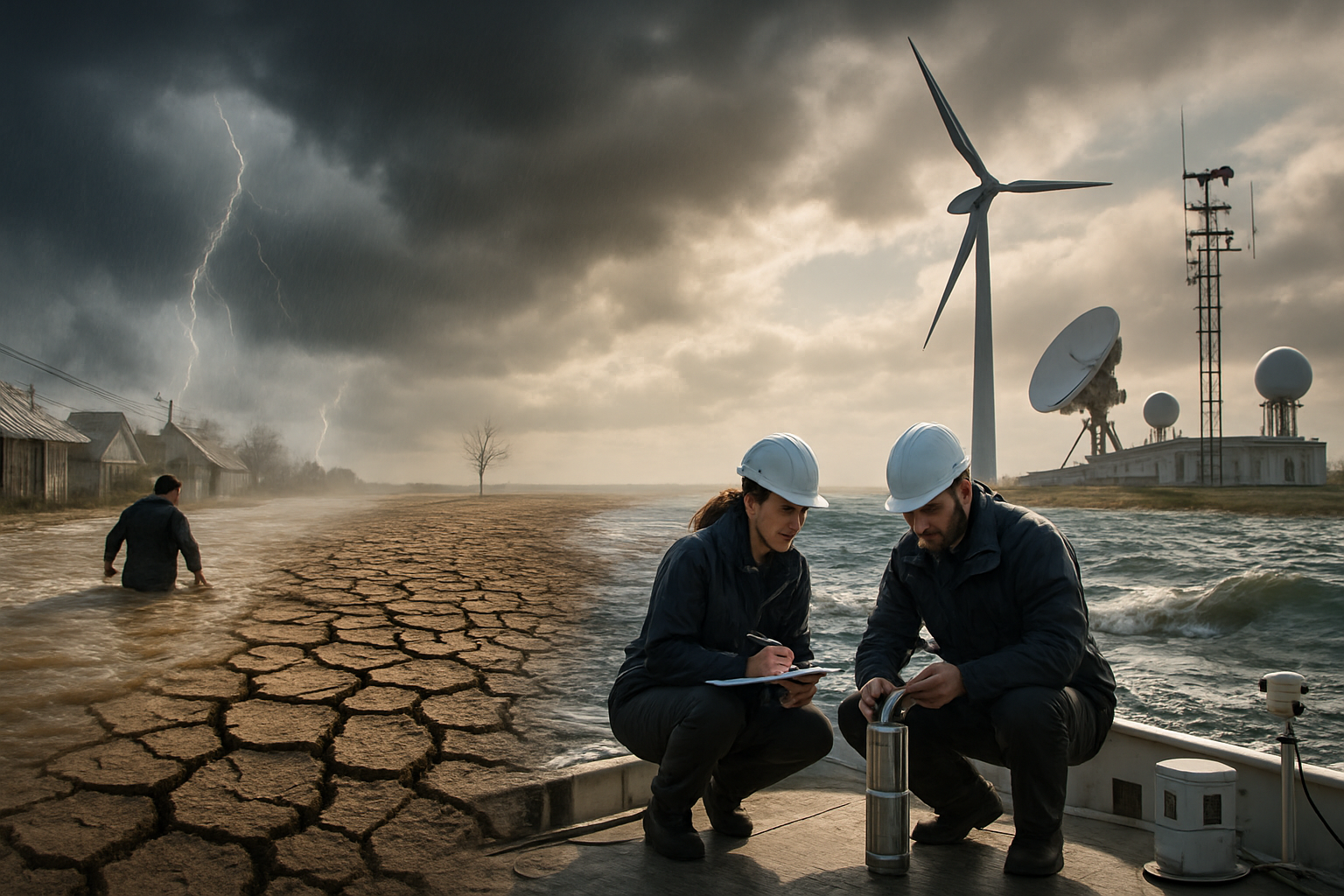
Mexico City has entered its third consecutive day of environmental emergency as Phase I atmospheric contingency measures remain in effect due to dangerous ozone levels, forcing event cancellations and vehicle restrictions while environmental crises mount globally from Cyprus to Portugal.
The Environmental Commission of the Megalopolis (CAMe) confirmed Saturday that Mexico City and surrounding areas continue to experience hazardous air quality, with ozone concentrations exceeding safe limits across multiple monitoring stations. The extended emergency has triggered the "Hoy No Circula" (Today Don't Drive) program, targeting specific vehicle categories to reduce emissions contributing to the pollution crisis.
This air quality emergency represents just one facet of mounting environmental challenges worldwide, occurring during what climate scientists confirm as the 18th consecutive month of global temperatures exceeding 1.5°C above pre-industrial levels. The convergence of urban pollution, climate change, and ecosystem degradation is creating compound environmental threats that traditional conservation approaches struggle to address.
Mexico City's Air Quality Crisis Deepens
The atmospheric contingency began Thursday and shows no signs of immediate resolution, with meteorological conditions preventing the dispersion of pollutants across the Mexico City Metropolitan Area. Authorities have implemented comprehensive vehicle restrictions while canceling outdoor events to protect public health from dangerous particulate matter and ozone exposure.
The crisis affects over 21 million residents in the world's fourth-largest metropolitan area, highlighting the vulnerability of megacities to environmental degradation. The extended nature of this emergency—now approaching unprecedented duration—demonstrates how climate change is amplifying traditional pollution challenges through altered weather patterns that trap contaminants closer to ground level.
Ancient Marine Life Under Climate Pressure
Meanwhile, in the Arctic waters, Greenland sharks—ancient marine giants that can live for centuries in some of Earth's coldest and darkest waters—face mounting pressures from climate change and commercial fishing encroaching on their remote habitat. These remarkable creatures, once dismissed as slow and clumsy, are revealing new secrets about deep-sea survival strategies at a time when their centuries-old lifestyle faces unprecedented disruption.
The Greenland shark's plight exemplifies how climate change is affecting species adapted to extreme environments over geological timescales. As Arctic waters warm and commercial activities expand northward, these living fossils of the deep face environmental changes occurring far faster than their evolutionary adaptations can accommodate.
"These sharks have survived for hundreds of years by adapting to some of the most extreme conditions on Earth, but climate change is creating challenges unlike anything they've faced in their evolutionary history."
— Marine biologist, Arctic Research Institute
Mediterranean Environmental Initiatives
Across the Mediterranean, environmental awareness campaigns are mobilizing communities to address local ecological challenges. In Cyprus, the city of Larnaca is preparing for a major environmental discussion on February 17, where coastal engineering experts and environmental researchers will examine the city's pressing environmental problems and potential solutions.
The initiative, organized by Larnaka Talks, represents a growing trend of community-based environmental action where local experts collaborate with residents to identify practical approaches to environmental challenges. The discussion will feature Dr. Xenia Loizidou, a coastal engineer and president of the AKTI Studies and Research Centre, addressing how environmental improvements can enhance quality of life for Larnaca residents.
Plastic Pollution: Beyond Simple Solutions
In Portugal, environmental analyst Maria Elvira Callapez has issued a nuanced perspective on plastic pollution, arguing that plastic materials are "neither an enemy to eliminate nor a universal solution." Her analysis, published during a period of intensified environmental awareness, emphasizes the need for thoughtful consideration of plastic's utility, environmental responsibility, and informed consumer choices.
This perspective reflects a maturing understanding of environmental challenges that moves beyond simplistic bans toward comprehensive approaches addressing production systems, consumption patterns, and waste management infrastructure. The plastic debate illustrates how effective environmental protection requires balancing practical utility with ecological responsibility through evidence-based policy making.
Climate Science and Policy Disconnect
The environmental challenges emerging in February 2026 occur against the backdrop of the hottest January on record, marking unprecedented global warming that continues despite natural cooling patterns like La Niña effects. This warming trend demonstrates that human-induced climate change has fundamentally altered atmospheric systems, creating environmental conditions that override natural climate variability.
The persistence of extreme environmental conditions—from Mexico City's air quality crisis to Arctic ecosystem disruption—reflects a dangerous acceleration in climate impacts that is outpacing both natural adaptation and policy responses. Environmental scientists warn that the window for effective climate action continues to narrow as ecological systems reach critical thresholds.
Technology and Traditional Knowledge Integration
Successful environmental protection increasingly requires sophisticated integration of cutting-edge technology with traditional ecological knowledge and community-based management. From advanced air quality monitoring systems in Mexico City to traditional coastal protection methods in Cyprus, effective environmental responses combine scientific innovation with time-tested approaches to ecosystem management.
This integration is particularly evident in marine conservation efforts, where satellite tracking, environmental DNA analysis, and artificial intelligence are combined with generations of traditional ecological knowledge to protect species like the Greenland shark and Mediterranean seabirds.
Economic Dimensions of Environmental Protection
Environmental protection is increasingly recognized as an economic development strategy rather than a regulatory burden. The costs of environmental degradation—including healthcare expenses from air pollution, infrastructure damage from extreme weather, and tourism losses from ecosystem destruction—often far exceed the investments required for proactive environmental protection.
Mexico City's air quality crisis, for example, generates massive economic costs through healthcare expenses, reduced productivity, and decreased quality of life, while targeted investments in clean transportation and emissions reduction could provide long-term economic benefits alongside health improvements.
International Cooperation Imperative
The transnational nature of environmental challenges demands unprecedented international cooperation, as pollution plumes, climate systems, and migratory species cross boundaries, making unilateral efforts insufficient. Ocean currents carry plastic pollution across continents, air masses transport particulate matter across nations, and climate change affects global weather patterns regardless of political borders.
Effective environmental protection requires coordinated international responses that combine global expertise with local implementation, enhanced by technology transfer, knowledge sharing, and cooperative financing mechanisms that recognize environmental challenges as shared global responsibilities.
Implementation Challenges and Opportunities
Environmental protection faces systematic implementation challenges, particularly for developing nations where immediate economic pressures often override long-term environmental considerations. Funding sustainability, technical capacity building, and climate change disruption of project timelines all require adaptive management approaches that can respond to rapidly changing conditions.
However, the diversity of environmental approaches provides resilience against single-solution dependencies. Success stories from community-based conservation, technological innovation, and policy reform offer multiple pathways for addressing environmental challenges through coordinated action that builds local capacity while contributing to global environmental goals.
Future Environmental Trajectory
The environmental challenges of February 2026 represent a critical juncture for global environmental protection. The choice between reactive crisis management—as seen in Mexico City's emergency response—and proactive ecosystem service management will likely determine whether environmental protection can keep pace with accelerating environmental change.
Tools and knowledge exist for effective environmental protection, but success depends on rapid scaling of successful approaches through international cooperation, enhanced coordination across sectors and scales, and increased financial commitments that recognize environmental protection as essential infrastructure for human prosperity and planetary sustainability.
As Mexico City struggles with its air quality emergency and environmental challenges mount globally, the urgent need for comprehensive, coordinated environmental action becomes increasingly clear. The window for effective intervention continues to narrow, making the environmental decisions of 2026 potentially decisive for the trajectory of global environmental protection in the decades ahead.