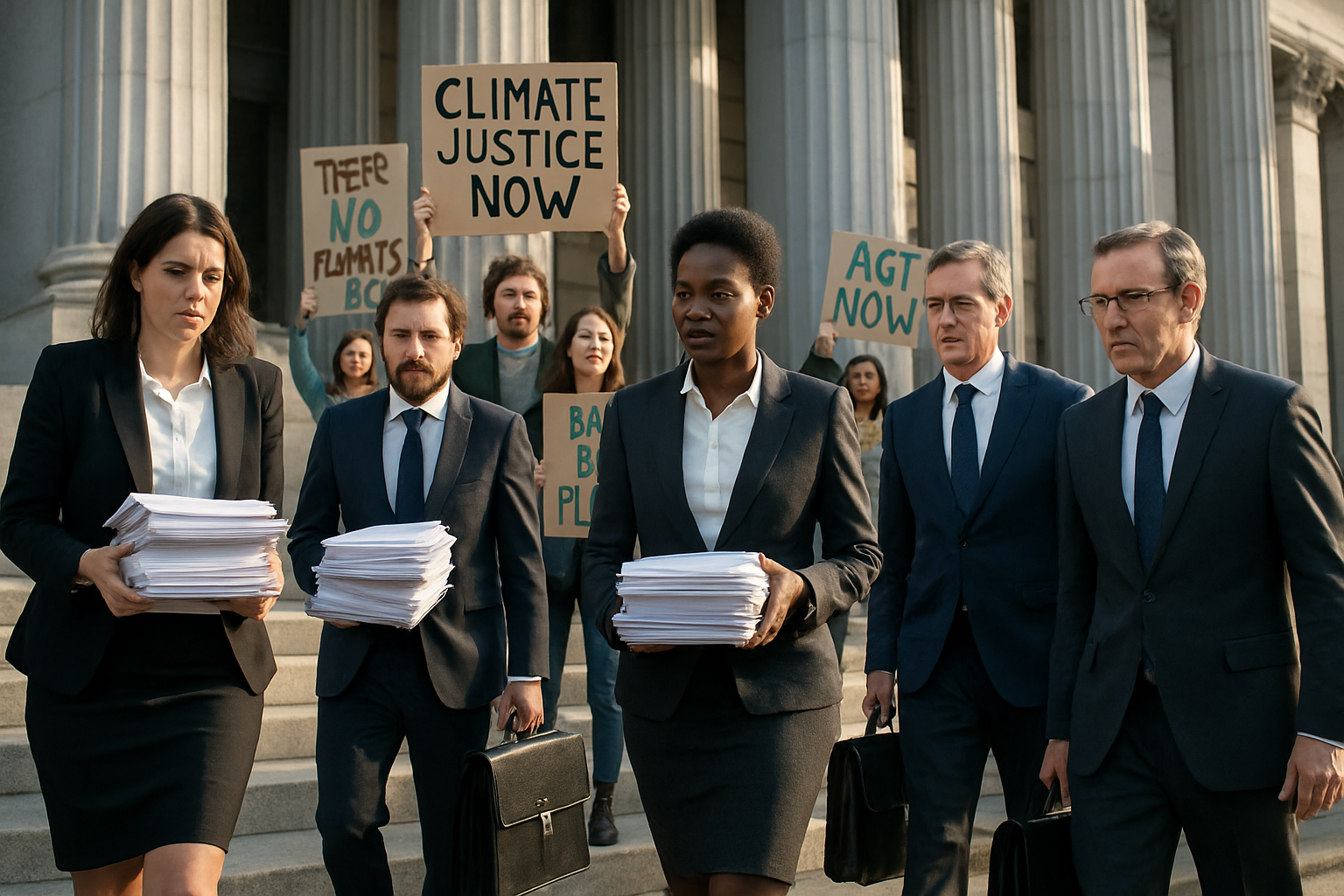
Environmental organizations across the United States have launched a coordinated legal offensive against the Trump administration's sweeping climate policy rollbacks, challenging what EPA Administrator Lee Zeldin called the "largest deregulatory action in American history."
The legal challenges target the administration's February 13, 2026 decision to formally revoke the Obama-era 2009 endangerment finding that established greenhouse gases as threats to public health, eliminating the federal government's authority to regulate emissions from vehicles, power plants, and industrial sources nationwide.
Unprecedented Scale of Regulatory Reversal
The Trump administration's climate rollback affects emission standards for vehicle and engine models from 2012 to 2027, impacting millions of cars already on American roads. The decision removes the legal foundation for all federal climate regulations built over 15 years, representing what environmental historians describe as the most comprehensive environmental policy reversal in modern American history.
President Trump characterized climate science as the "biggest scam in history" and dismissed Obama-era climate regulations as a "catastrophic con job." The timing is particularly striking, occurring during the 18th consecutive month that global temperatures have exceeded 1.5°C above pre-industrial levels, with January 2026 confirmed as the hottest month on record.
Coalition of Legal Challenges
Environmental groups and Democratic states are pursuing multiple court challenges, arguing that the EPA failed to consider current climate science when revoking the endangerment finding. The coalition includes major national environmental organizations and state attorneys general from jurisdictions that have maintained their own emission standards.
"The government claims it alone has the power to erase, alter, remove and hide historical accounts," stated one federal judge in a related case, invoking George Orwell's "1984" to criticize the administration's approach to environmental policy.
— Federal Judge, recent Trump administration ruling
The legal challenges are built on the precedent set by the 2007 Supreme Court case Massachusetts v. EPA, which established that the EPA must make scientific determinations about greenhouse gas dangers. However, the current conservative Supreme Court majority may be more receptive to arguments about regulatory overreach than previous challenges.
International Context and Scientific Evidence
The policy reversal occurs as climate scientists warn that Earth is entering a climate phase potentially incompatible with human civilization. Recent scientific data shows human-induced climate change now overrides natural climate variability, including La Niña cooling effects that typically reduce global temperatures.
International reactions have been critical, with former President Barack Obama condemning the decision as leaving Americans "less safe, less healthy" and calling it a "gift to billionaire polluters." European officials have expressed serious concerns about American climate leadership credibility, creating a stark contrast with the EU's commitment to 90% emissions reduction by 2040.
Economic and Industry Impact
The automotive industry faces massive uncertainty after investing billions of dollars in clean technology compliance based on federal standards that have now been eliminated. The decision creates a complex regulatory patchwork, with Democratic states maintaining their own standards while federal coordination has been removed.
This fragmented approach represents a fundamental shift from a coordinated national climate strategy to what experts describe as a "natural federalism experiment" that tests whether state and local climate action can be sufficient without federal leadership.
Public Health Implications
Medical and scientific organizations have condemned the decision, citing extensive research linking air pollution to respiratory disease, cardiovascular problems, and premature death. The American Lung Association warns of worsened air quality in communities already disproportionately affected by pollution, with health impacts expected to particularly affect vulnerable populations.
Legal Strategy and Precedents
Environmental lawyers are employing multiple legal strategies, including challenges based on the Administrative Procedure Act, constitutional due process arguments, and claims that the administration failed to follow proper regulatory procedures. The cases will test the balance between executive authority and scientific evidence in environmental policy-making.
The legal challenges face significant procedural and evidentiary hurdles, but environmental groups argue that the scientific evidence for climate change has only strengthened since the original 2009 endangerment finding was established.
State-Level Response
California and other Democratic-led states are maintaining their own emission standards through programs like Advanced Clean Cars II, but the loss of federal coordination significantly weakens national emissions reduction effectiveness. This creates compliance complications for businesses operating across multiple states with different regulatory frameworks.
The state response reflects broader questions about whether local and regional climate action can adequately address a global crisis without coordinated federal leadership and international cooperation.
Historical Significance
Environmental policy experts describe the rollback as the most comprehensive reversal of American climate policy since the environmental movement began in the 1970s, exceeding even Reagan administration rollbacks in scope and impact. The decision creates a template for systematic deregulation across government agencies and represents a fundamental test of whether state and local action can address climate change without federal coordination.
The legal challenges will likely take years to resolve, creating prolonged uncertainty for industries, environmental advocates, and communities affected by climate change and air pollution.
Global Environmental Leadership Vacuum
The timing of the U.S. climate policy rollback during accelerating global climate impacts creates what international observers describe as a dangerous leadership vacuum. With climate data showing unprecedented warming and environmental crises converging worldwide, the American retreat from climate action leaves critical gaps in international coordination efforts.
European officials privately express concerns about the precedent this sets for other nations' potential climate policy rollbacks, challenging global cooperation frameworks essential for addressing transnational environmental challenges.
Looking Ahead
The success or failure of these legal challenges will influence global environmental regulation approaches and international climate cooperation effectiveness for decades to come. As environmental groups prepare for what may be a protracted legal battle, the stakes extend far beyond American borders to encompass the future of international environmental governance and humanity's response to accelerating climate change.
The legal offensive represents what may be the most significant test of environmental law and policy in American history, occurring at a critical moment when scientists warn that the window for effective climate action is rapidly closing.