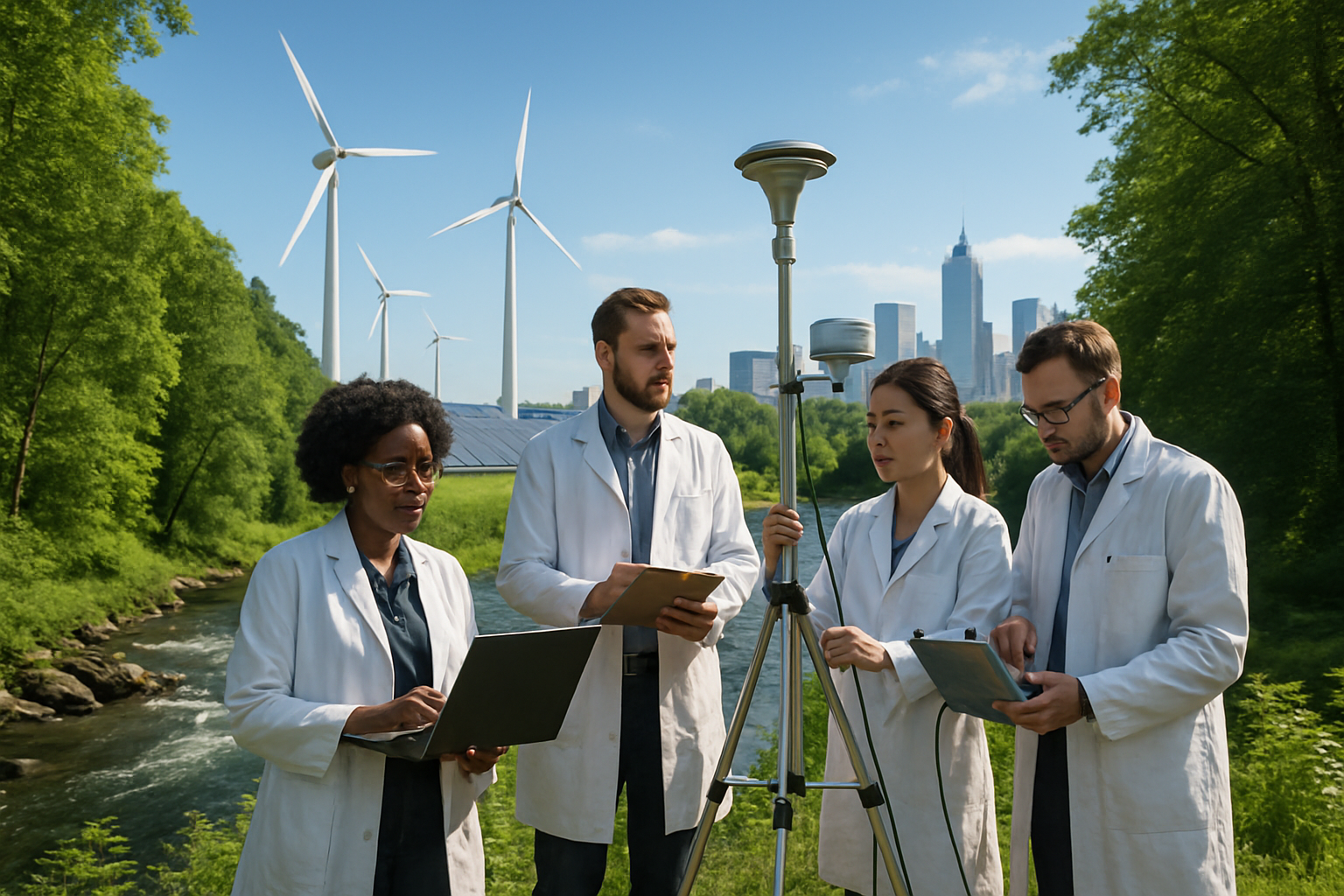
A groundbreaking study reveals Northern European cities are preventing hundreds of deaths annually through improved air quality and green spaces, while Jordan advances climate-friendly cooling initiatives as global environmental action accelerates during Earth's most challenging climate period.
New research from Northern European cities demonstrates that environmental improvements are directly saving lives, with cleaner air and expanded green spaces preventing approximately 15 premature deaths per year in Tartu alone, according to a comprehensive long-term study covering multiple urban areas across the region.
Northern Europe's Clean Air Success Story
The extensive research provides concrete evidence that sustained environmental protection efforts are yielding measurable health benefits across Northern European urban centers. The study examined the correlation between air quality improvements, urban green space expansion, and mortality rates over multiple years, revealing a direct relationship between environmental investment and public health outcomes.
These findings represent a significant validation of proactive environmental policies that treat clean air and green urban planning as essential public health infrastructure rather than optional amenities. The research methodology tracked air pollution levels, particulate matter concentrations, and green space accessibility alongside detailed health outcome data to establish causational relationships.
Jordan's Climate Cooling Leadership
Environment Minister Ayman Suleiman participated in the opening session of the Sustainable Cooling Forum organized by the United Nations Industrial Development Organization, featuring high-level international participation from government representatives, international organizations, and cooling and energy sector experts.
According to a ministry statement, Minister Suleiman emphasized in his video conference address that "cooling has become not a luxury option but an essential necessity for protecting public health, ensuring continuity of vital services, enhancing economic productivity, and protecting food security amid environmental challenges."
This commitment reflects a broader regional understanding that climate adaptation technologies, particularly cooling systems, must transition from environmentally damaging solutions to climate-friendly alternatives that address rising temperatures while minimizing environmental impact.
Global Environmental Context
These environmental initiatives emerge during an unprecedented period of global warming, with January 2026 confirmed as the hottest month on record, extending a streak of consecutive months exceeding critical temperature thresholds. The sustained warming demonstrates that human-induced climate change has fundamentally altered Earth's atmospheric systems beyond natural recovery mechanisms.
The timing of these positive developments is particularly significant as they demonstrate that coordinated environmental action can achieve measurable results even during accelerating climate change. The Northern European air quality improvements and Middle Eastern cooling innovations represent templates for scaling environmental protection globally.
Technology and Tradition Integration
The most successful environmental programs demonstrate sophisticated integration of cutting-edge technology with traditional ecological knowledge and community-based management systems. This synthesis represents a fundamental evolution in environmental protection methodology, moving beyond purely technological or traditional approaches toward comprehensive frameworks that combine scientific rigor with cultural sensitivity.
Advanced air quality monitoring systems provide real-time data for rapid public health responses, while cooling technology development leverages both innovation and traditional building practices adapted to local climate conditions. This integration addresses the critical challenge of scaling protection efforts globally while respecting local cultural autonomy and traditional management systems.
Economic Development Through Environmental Protection
Environmental protection increasingly functions as an economic development strategy rather than a regulatory burden. Countries and cities implementing comprehensive environmental improvements demonstrate greater economic resilience and attract sustainable investment across multiple sectors including eco-tourism, green technology manufacturing, and environmental services.
The Northern European air quality improvements support tourism revenue and international investment while positioning the region as a leader in sustainable urban development. Jordan's cooling technology commitments create opportunities for green technology partnerships and position the country as a regional leader in climate adaptation solutions.
Implementation Challenges and Success Factors
Successful environmental initiatives consistently demonstrate several key factors: community ownership and engagement, transparent governance frameworks, economic incentives that make protection financially viable, and sophisticated integration of traditional ecological knowledge with modern environmental science.
Challenges include funding sustainability, particularly for developing nations where immediate economic pressures can override long-term environmental considerations, and the need for technical capacity building through sustained investment in education, training, and institutional development. Climate change continues to disrupt project timelines, requiring adaptive management approaches that can respond to rapidly changing conditions.
Critical Action Window
Environmental scientists warn that the window for effective climate action is narrowing rapidly as ecological systems approach critical thresholds that could trigger potentially irreversible changes affecting global food security, climate stability, and human settlements.
The choice between reactive crisis management and proactive ecosystem service management may prove decisive in determining whether environmental protection efforts can keep pace with accelerating environmental change during this critical decade for climate action.
Future Implications
The coordinated environmental progress across Northern Europe and the Middle East provides practical templates for scaling environmental protection globally through comprehensive approaches that address multiple challenges while building local capacity and fostering international cooperation.
Success depends on sustained international cooperation, enhanced coordination across multiple sectors and scales, and increased financial commitments that recognize environmental protection as essential infrastructure for human prosperity and planetary sustainability. The integration of cutting-edge technology with traditional ecological wisdom creates adaptable frameworks that respect cultural diversity while leveraging global technological capabilities.
These developments offer hope and practical guidance for the massive coordinated effort required to maintain planetary habitability during Earth's most challenging environmental period in recorded history, demonstrating that effective environmental action remains achievable through innovation, cooperation, and sustained commitment to protecting the environmental systems upon which all life depends.