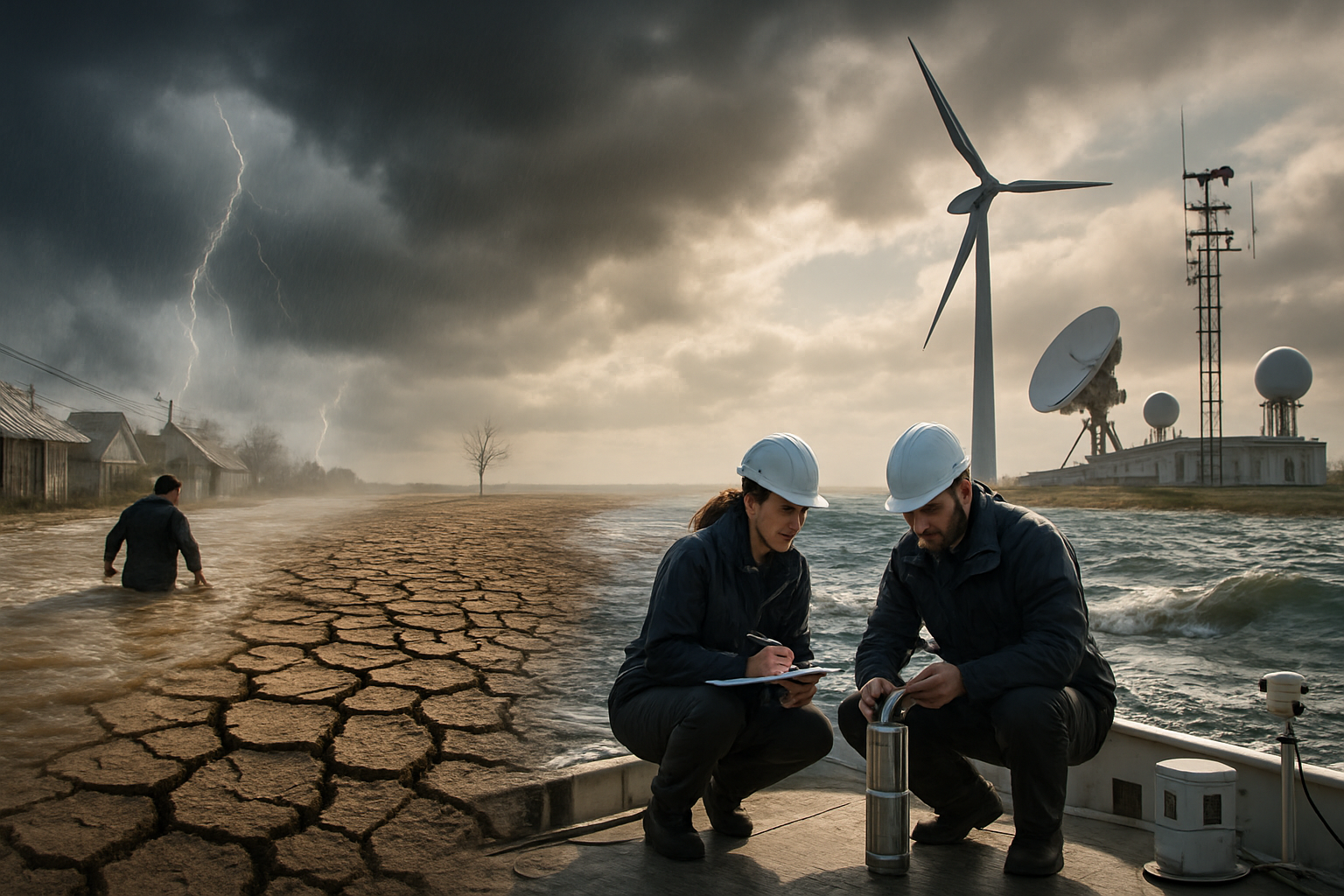
As global temperatures soar to historic heights for the 18th consecutive month, February 2026 has emerged as a pivotal moment in the climate crisis, with environmental threats converging across multiple continents while political setbacks threaten coordinated international action.
The month has witnessed an unprecedented convergence of environmental challenges, from the Trump administration's sweeping rollback of U.S. climate regulations to the alarming expansion of tropical diseases into European territories. Meanwhile, natural disasters and pollution crises from Mexico City to Portugal have pushed emergency services to their operational limits.
Record-Breaking Climate Conditions Persist
January 2026 has been confirmed as the hottest month in recorded history, marking the 18th of the past 19 months to exceed 1.5°C above pre-industrial levels. This extraordinary warming trend demonstrates that human-induced climate change has now overridden natural climate variability, including La Niña cooling effects that typically bring global temperature reductions.
The persistent temperature elevation is creating cascading environmental effects across the globe. In Latvia, scientists have linked the climate crisis to the expanding range of Chikungunya fever, a tropical infection that causes severe joint pain and was previously confined to warmer climates. The disease's potential spread across much of Europe represents a stark illustration of how rising temperatures are reshaping disease patterns.
Political Setbacks Threaten Climate Action
The most significant political development affecting global climate action came from the Trump administration's announcement of what the White House called the "largest deregulatory action in American history." EPA Administrator Lee Zeldin formally revoked the Obama-era 2009 endangerment finding that established greenhouse gases as threats to public health, effectively eliminating federal authority to regulate emissions from vehicles, power plants, and industrial sources.
"Climate science is the biggest scam in history," Trump declared, dismissing climate regulations as a "catastrophic con job."
— President Donald Trump
The decision affects emission standards for vehicle and engine models from 2012-2027, creating massive uncertainty for the automotive industry that has invested billions in federal compliance. This represents the most comprehensive environmental policy reversal in modern American history, occurring precisely when global temperatures are reaching critical thresholds.
International reaction has been swift and critical. Former President Barack Obama condemned the decision as leaving Americans "less safe, less healthy," calling it a "gift to billionaire polluters." European officials have expressed serious concerns about the undermining of climate cooperation, creating a stark contrast with the EU's commitment to 90% emissions reduction by 2040.
Environmental Disasters Strain Global Response
The month has also seen a cascade of environmental emergencies testing international response capabilities. Mexico City has endured its most sustained air quality crisis since the 1990s, with the Environmental Commission of the Megalopolis extending Phase I atmospheric contingency measures for multiple consecutive days, affecting over 21 million residents.
Dangerous ozone levels have persisted due to high solar radiation and elevated temperatures of 25-27°C, creating optimal conditions for pollution formation. The crisis has forced implementation of vehicle restrictions, work-from-home recommendations, and health warnings for vulnerable populations including children and the elderly.
In Portugal, coffee production faces mounting pressure from global warming, with prices reaching historic highs in early 2025 as climate change threatens traditional growing regions. The crisis illustrates how environmental challenges are directly impacting global food security and economic stability.
Asteroid Threat Compounds Environmental Concerns
Adding to environmental anxieties, NASA has issued a concerning warning about thousands of unidentified asteroids, declaring that Earth remains defenseless against potential impacts. The space agency emphasized the alarming quantity and immense size of these untracked objects, warning that "we should catch them before they catch us."
While not directly related to climate change, the asteroid warning reflects the broader environmental vulnerabilities facing humanity as multiple threats converge simultaneously.
Conservation Efforts Show Promise Amid Crisis
Despite the mounting challenges, some positive developments offer hope for environmental protection. Conservation initiatives across multiple continents demonstrate sophisticated approaches to ecosystem management, from Indonesia's successful pangolin rescue operations to innovative waste management programs transforming urban environmental challenges.
African nations have emerged as climate leaders, with countries like Namibia positioning themselves as "global players in delivering climate solutions." These efforts represent a fundamental shift from viewing African nations as aid recipients to recognizing them as solution providers leveraging renewable resources and innovative governance.
Technology and Traditional Knowledge Integration
Successful environmental protection increasingly requires sophisticated synthesis of cutting-edge technology with traditional ecological knowledge and community-based management. Examples include advanced air quality monitoring systems combined with traditional environmental stewardship, and satellite tracking technologies enhanced by indigenous conservation practices.
Economic Implications of Environmental Crisis
The environmental challenges of February 2026 carry massive economic implications. Mexico City's air quality crisis generates substantial costs through increased healthcare expenses, reduced productivity, and decreased quality of life. Meanwhile, climate-related agricultural disruptions are affecting global food prices and supply chains.
Conversely, environmental protection is increasingly recognized as an economic development engine rather than a regulatory burden. Countries implementing comprehensive environmental protection demonstrate greater economic resilience and attract sustainable investment, while environmental degradation costs often exceed the investments required for proactive protection.
International Cooperation Under Strain
The convergence of environmental crises has exposed the limitations of current international cooperation frameworks. Transnational environmental challenges demand unprecedented coordination as pollution plumes, climate systems, and migratory species cross boundaries, making unilateral efforts insufficient.
The U.S. climate policy rollback creates a significant leadership vacuum at precisely the moment when coordinated global action is most crucial. European nations and emerging economies must now compensate for reduced American participation in climate initiatives.
Looking Forward: Critical Juncture
February 2026 represents a critical juncture for global environmental protection. The choice between reactive crisis management and proactive ecosystem service management may determine whether environmental protection can keep pace with accelerating environmental change.
Tools and knowledge exist for effective environmental protection, but success depends on rapid scaling through international cooperation, enhanced coordination across sectors and scales, and increased financial commitments recognizing environmental protection as essential infrastructure for human prosperity and planetary sustainability.
As scientists warn that Earth may be entering a climate phase potentially incompatible with human civilization, the environmental decisions made in 2026 could prove decisive for the trajectory of global environmental protection in the decades ahead. The window for effective climate action is narrowing rapidly, making coordinated international responses more critical than ever before.