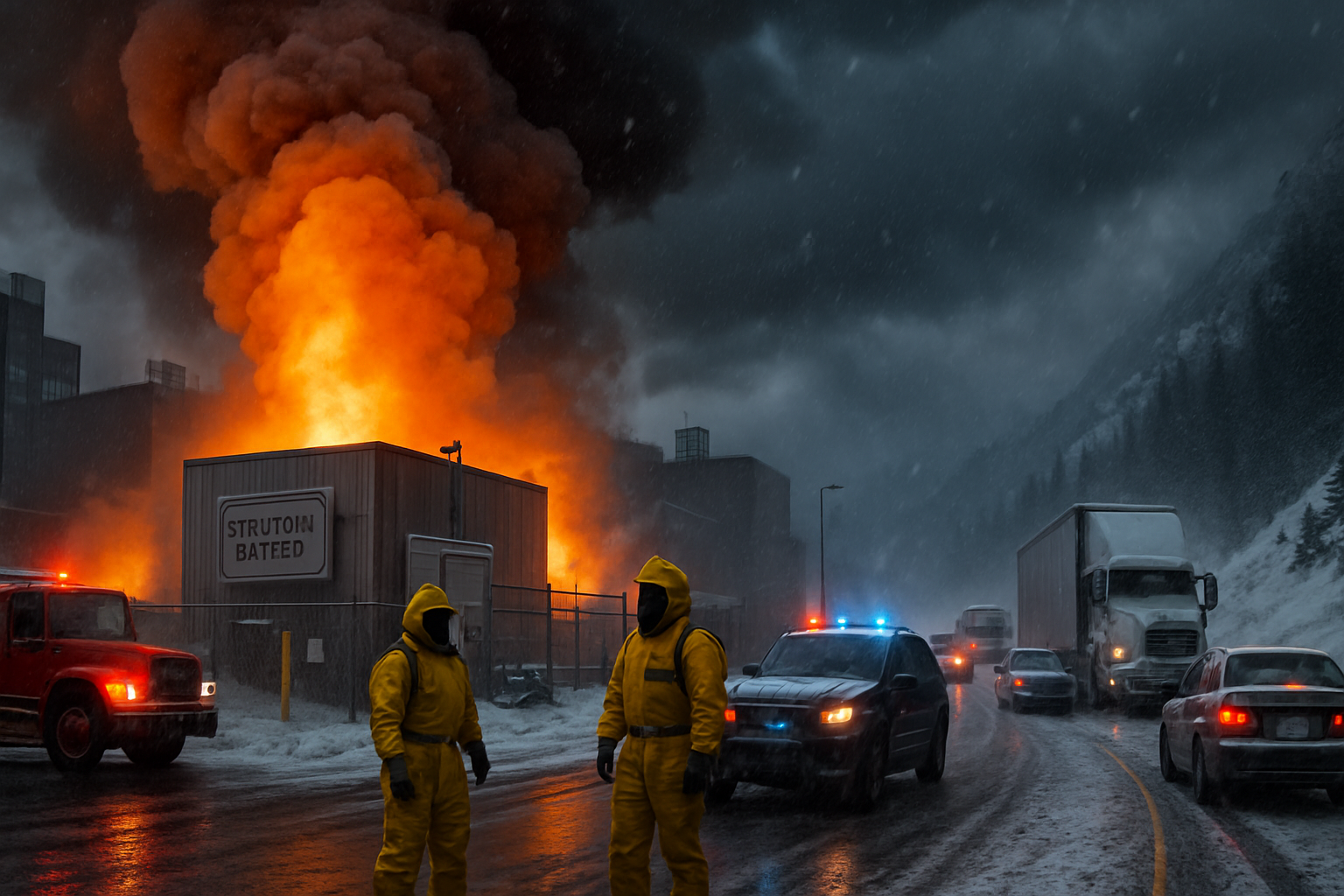
Environmental emergencies spanning from industrial hazmat incidents to extreme weather events are simultaneously overwhelming response systems across Australia and Norway, as a lithium-fueled fire sends toxic smoke across Perth while dangerous snow conditions block major transportation routes.
The convergence of industrial accidents and severe weather conditions has exposed critical vulnerabilities in global infrastructure systems, with emergency responders scrambling to manage multiple crisis scenarios that traditional emergency planning frameworks were never designed to handle simultaneously.
Perth Lithium Fire Creates Hazmat Emergency
A dangerous lithium battery fire erupted at Li-ion Energy recycling plant in Maddington, Perth, on Sunday afternoon, sending thick toxic smoke spiraling across the city's southeastern suburbs for hours. The blaze began around 1:30 PM local time, quickly escalating as batteries inside the workshop fueled the flames with hazardous materials.
The co-owner of the facility was rushed to hospital as emergency services battled to contain the fire, which destroyed approximately $7 million worth of recycling plant stock. Authorities immediately issued hazmat warnings for parts of Perth, advising residents to stay indoors and close windows and ventilation systems to avoid exposure to toxic fumes.
"Batteries inside the Maddington workshop fueled the flames as the co-owner was rushed to hospital and residents were warned to stay indoors."
— Emergency Services Report
The incident highlights growing concerns about the safety of lithium battery recycling operations as the world rapidly transitions to renewable energy storage systems. The toxic smoke contained dangerous chemical compounds released when lithium-ion batteries burn at high temperatures, creating respiratory hazards that can persist for hours after initial containment.
Norwegian Transport Networks Paralyzed by Snow
Simultaneously, Norway's mountain passes between east and west faced severe disruption as extreme weather conditions created what meteorologists described as "major challenges" for transportation infrastructure. Only one road remained open for free traffic movement, while the rest experienced dangerous snow squalls and convoy driving conditions.
The weather emergency forced authorities to implement emergency protocols across multiple mountain routes, with drivers warned to prepare for extended waiting periods and possible overnight delays. The conditions represent part of a broader pattern of increasingly unpredictable weather that has characterized the 2026 winter season.
Climate Context and Infrastructure Strain
These incidents occur against the backdrop of what climate scientists are calling unprecedented environmental volatility. The convergence of industrial hazmat emergencies with severe weather events illustrates how modern infrastructure systems face compound threats that traditional emergency planning never anticipated.
Emergency services in both countries reported operating at capacity limits, highlighting how simultaneous environmental challenges strain response systems designed for isolated incidents. The Perth fire required specialized hazmat protocols while Norwegian authorities deployed snow removal equipment and emergency shelter resources across vast geographic areas.
Transport and Economic Impacts
The dual emergencies created cascading effects across regional economies. In Perth, air quality warnings forced the suspension of outdoor activities and created health risks for vulnerable populations with respiratory conditions. The toxic smoke plume affected multiple southeastern suburbs, disrupting normal business operations and requiring extensive air quality monitoring.
Norway's transport disruptions impacted both passenger and freight movement across critical mountain corridors connecting eastern and western regions of the country. The convoy driving requirements and road closures created delays that rippled through supply chains and passenger services, with some routes experiencing backup times measured in hours.
Emergency Response Evolution
The simultaneous nature of these environmental incidents represents what emergency management experts are calling a new paradigm in disaster response. Rather than dealing with isolated regional events, response agencies increasingly face compound disasters that require coordination across multiple specialties and geographic areas.
In Perth, fire services worked alongside hazmat specialists and health authorities to manage both immediate fire suppression and longer-term air quality concerns. Norwegian authorities coordinated between meteorological services, transportation agencies, and emergency response teams to maintain public safety across mountain regions.
Lessons for Infrastructure Resilience
Both incidents underscore the critical importance of climate-resilient infrastructure design and emergency preparedness. The lithium battery fire highlights safety concerns in renewable energy infrastructure that must be addressed as battery storage systems proliferate globally. Meanwhile, Norway's weather challenges demonstrate how traditional transportation networks must adapt to increasingly volatile climate conditions.
Environmental protection experts emphasize that these incidents provide valuable lessons for building more resilient systems. Modern infrastructure must account for the possibility of simultaneous environmental stresses rather than planning for isolated events. This includes enhanced safety protocols for emerging technologies like large-scale battery storage and improved weather resilience for critical transportation networks.
Looking Forward: Adaptation Strategies
The Perth fire has prompted calls for enhanced safety standards in lithium battery handling and recycling operations, including improved containment systems and emergency response protocols. Australian authorities are reviewing regulations governing battery recycling facilities to prevent similar incidents as the industry rapidly expands.
In Norway, transportation officials are investing in enhanced weather monitoring systems and improved snow management capabilities for mountain passes. The goal is creating more resilient transportation networks capable of maintaining critical connections even during extreme weather events.
As environmental challenges continue to intensify, both incidents serve as reminders that modern societies must prepare for increasingly complex emergency scenarios. The convergence of industrial hazards with extreme weather represents a new category of environmental risk that requires innovative approaches to emergency management, infrastructure design, and public safety planning.