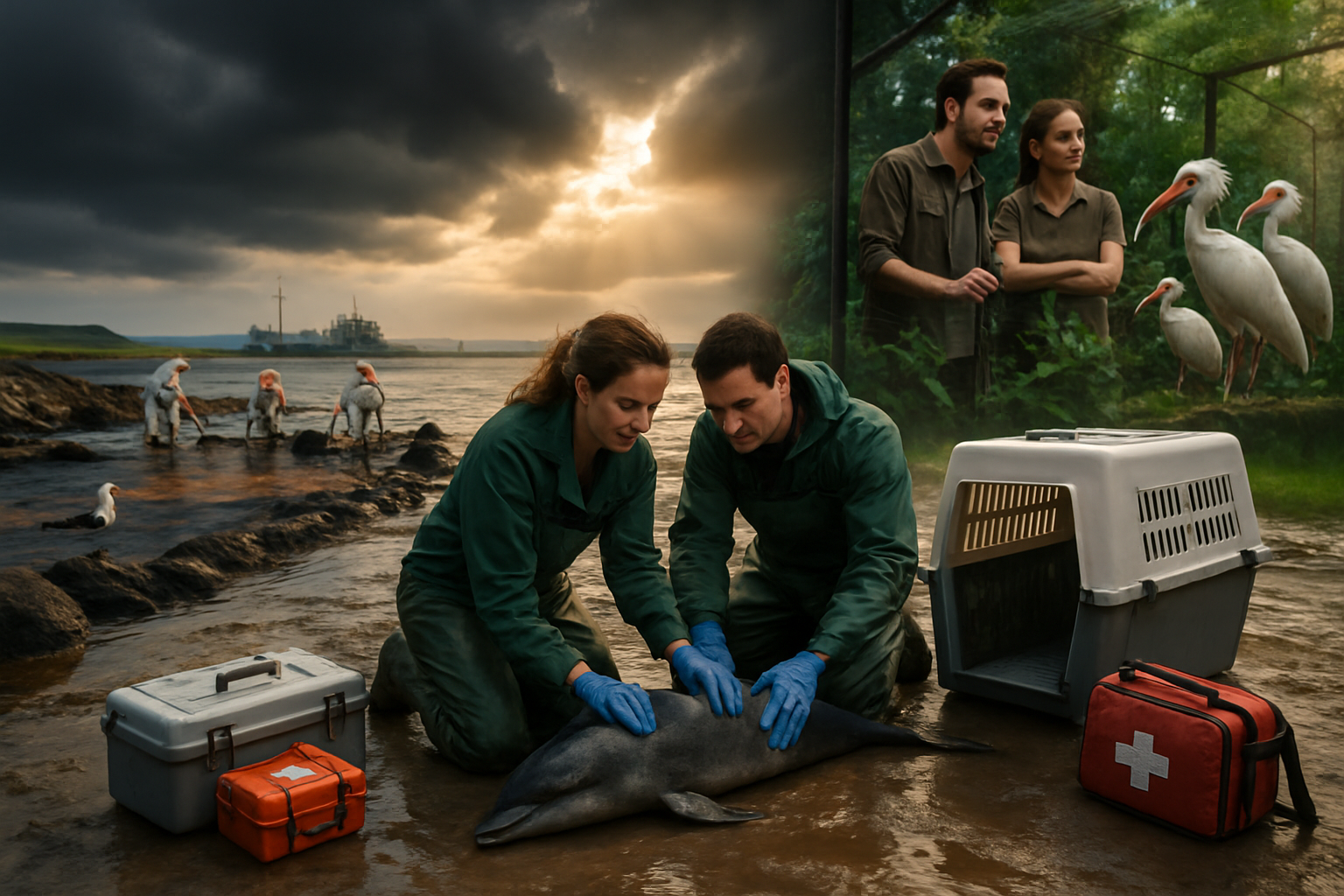
Environmental and wildlife protection efforts face mounting pressure as crisis incidents across multiple continents demonstrate the accelerating pace of ecological challenges, with marine mammal rescues, oil spills, and invasive species threats highlighting the complex interconnected nature of global environmental degradation.
The latest developments from March 2026 paint a stark picture of environmental stress across diverse ecosystems, from the Wadden Sea mudflats of the Netherlands to New Zealand's coastal waters and Portugal's terrestrial environments. These incidents occur during what scientists have confirmed as the 19th consecutive month of global temperatures exceeding 1.5°C above pre-industrial levels, creating compound environmental effects that traditional conservation approaches struggle to address.
Netherlands Marine Rescue Operations
In the Netherlands, two harbor porpoises trapped on Wadden Sea mudflats near Vlieland required emergency rescue operations after becoming unable to return to deeper waters during tidal changes. The marine mammals are currently recovering at a specialized rehabilitation center in Harlingen, where veterinarians are monitoring their condition closely.
The rescue operation highlights the sophisticated marine conservation infrastructure that has developed across the Netherlands' protected coastal regions. Harbor porpoises, while not endangered, serve as indicator species for the health of North Sea ecosystems and are protected under European Union conservation directives.
Simultaneously, Dutch authorities faced a more serious crisis at Wildlands Adventure Zoo in Emmen, where three Madagascar crested ibises died from a confirmed viral disease outbreak. The zoo was forced to close its bird exhibit as a precautionary measure, demonstrating how quickly infectious diseases can threaten captive populations of endangered species.
"The loss of even a few individuals of critically endangered species represents a significant blow to global conservation efforts,"
— Conservation veterinarian specializing in avian diseases
Madagascar crested ibises are among the world's most endangered bird species, with fewer than 2,000 individuals remaining in the wild. The species faces severe pressure from habitat destruction in Madagascar and depends heavily on captive breeding programs for population stability.
New Zealand Maritime Pollution Crisis
Across the Pacific, New Zealand confronts a more severe environmental disaster as Akaroa Harbour experiences its second major oil spill in just two months. A navy vessel released hundreds of liters of oil into the marine sanctuary on Sunday, creating immediate threats to local wildlife populations and marine ecosystems.
The repeated pollution incidents in Akaroa Harbour have raised serious concerns among marine biologists and conservation groups about the cumulative impact on one of New Zealand's most pristine coastal environments. The harbour serves as critical habitat for endangered Hector's dolphins, the world's smallest marine dolphin species found only in New Zealand waters.
The timing of these spills coincides with breeding and feeding seasons for multiple marine species, potentially affecting reproductive success and food chain stability throughout the harbour ecosystem. Marine pollution incidents have increased globally as shipping traffic intensifies and climate change creates more severe weather conditions that stress maritime infrastructure.
Portugal's Invasive Species Challenge
Portugal faces a different but equally pressing environmental threat as recent storms have facilitated the spread of invasive biological species throughout the country. Portuguese environmental authorities warn that biological invasions represent one of the primary drivers of biodiversity loss globally, with effects expected to intensify as climate conditions continue changing.
The relationship between extreme weather events and invasive species spread creates a complex management challenge for conservation authorities. Storm damage to natural habitats weakens native ecosystems' resistance to invasive colonization, while changing precipitation and temperature patterns may favor non-native species better adapted to altered conditions.

Technology and Traditional Knowledge Integration
The current environmental crisis has accelerated the integration of cutting-edge technology with traditional ecological knowledge across conservation programs worldwide. Dutch marine rescue operations employ sophisticated GPS tracking and environmental DNA sampling combined with centuries of coastal management expertise from local fishing communities.
Advanced satellite monitoring systems now provide real-time data on oil spill dispersal patterns, enabling rapid response coordination that minimizes environmental damage. In Portugal, researchers combine artificial intelligence analysis of weather patterns with traditional agricultural knowledge to predict and prevent invasive species establishment.
This synthesis represents a fundamental evolution in conservation methodology, moving beyond purely technological solutions toward comprehensive frameworks that respect cultural knowledge while leveraging scientific innovation. The approach has proven particularly effective in addressing complex environmental challenges that require both immediate technical responses and long-term community-based management.
Economic Dimensions of Environmental Protection
The economic implications of environmental degradation extend far beyond immediate cleanup costs. New Zealand's repeated oil spills threaten a marine tourism industry worth hundreds of millions of dollars annually, while also undermining the country's international reputation for environmental stewardship.
Conversely, successful conservation efforts demonstrate environmental protection's function as economic development strategy rather than regulatory burden. The Netherlands' sophisticated marine rescue capabilities support eco-tourism and position the country as a leader in marine conservation technology, attracting sustainable investment and research partnerships.
Countries implementing comprehensive environmental protection consistently demonstrate greater economic resilience and attract sustainable investment across sectors from green technology manufacturing to eco-tourism and environmental services.
Climate Context and Compound Threats
These environmental incidents occur against the backdrop of unprecedented global warming, with January 2026 confirmed as the hottest month in recorded history. The sustained temperature elevation demonstrates that human-induced climate change has fundamentally altered Earth's atmospheric systems beyond natural recovery mechanisms.
The compound nature of current environmental threats—combining climate change with pollution, habitat destruction, and invasive species—creates challenges that traditional conservation approaches struggle to address effectively. Marine ecosystems face simultaneous pressures from warming waters, chemical contamination, and physical disturbance, while terrestrial environments battle invasive species expansion enabled by altered climate conditions.
International Cooperation Requirements
Effective environmental protection increasingly requires unprecedented international cooperation, as pollution plumes, atmospheric systems, and species migrations cross political boundaries, making unilateral conservation efforts insufficient. Ocean currents carry oil pollution across continents, while climate-enabled invasive species spread rapidly through international trade and transportation networks.
The diversity of approaches across different countries provides resilience against single-solution dependencies, offering multiple adaptation pathways for addressing complex environmental challenges. Knowledge sharing between Dutch marine rescue expertise, New Zealand's marine pollution response capabilities, and Portuguese invasive species management creates a global conservation knowledge network.
"Environmental challenges transcend national borders, requiring coordinated international responses that combine the best innovations from every participating nation,"
— International environmental cooperation specialist
Implementation Challenges and Solutions
Funding sustainability remains critical, particularly for developing nations where immediate economic pressures often override long-term environmental considerations. Technical capacity building requires sustained investment in education, training, and institutional development, while climate change continues to disrupt project timelines, demanding adaptive management capabilities.
However, recent conservation successes demonstrate that effective environmental protection is achievable through proper planning, community engagement, and international support. The challenge lies in scaling these successes rapidly enough to address accelerating environmental change during what scientists describe as a critical climate action decade.
Strategic Significance for Global Conservation
March 2026 represents a critical juncture for global environmental protection, with the choice between reactive crisis management and proactive ecosystem service management potentially determining whether conservation efforts can keep pace with accelerating environmental change.
The environmental action window continues narrowing as ecological systems approach critical thresholds that could trigger irreversible changes affecting global food security, climate stability, and human settlement patterns. However, the tools, knowledge, and cooperation frameworks exist for comprehensive environmental protection, as demonstrated by diverse international initiatives.
Success depends on sustained international cooperation, enhanced multi-sector coordination, and increased financial commitments that recognize environmental protection as essential infrastructure for human prosperity and planetary sustainability. The current environmental crisis, while severe, also offers opportunities for fundamental improvements in how humanity relates to natural systems.
Future Pathways and Hope
Despite the severity of current challenges, environmental conservation has achieved remarkable successes that provide templates for scaling protection efforts globally. Recent achievements include revolutionary species reintroduction programs, innovative marine cleanup technologies, and community-based conservation initiatives that align environmental protection with economic development.
The key lies in rapid implementation of proven conservation strategies while developing adaptive capacity for unprecedented environmental conditions. The convergence of technological innovation, traditional ecological knowledge, and community engagement offers hope for maintaining planetary habitability, but requires immediate and sustained global action.
As environmental challenges accelerate, the human capacity for innovative conservation response must accelerate proportionally. The next crucial months will determine whether the emerging conservation renaissance can grow rapidly enough to address threats at the speed and scale required for planetary sustainability.