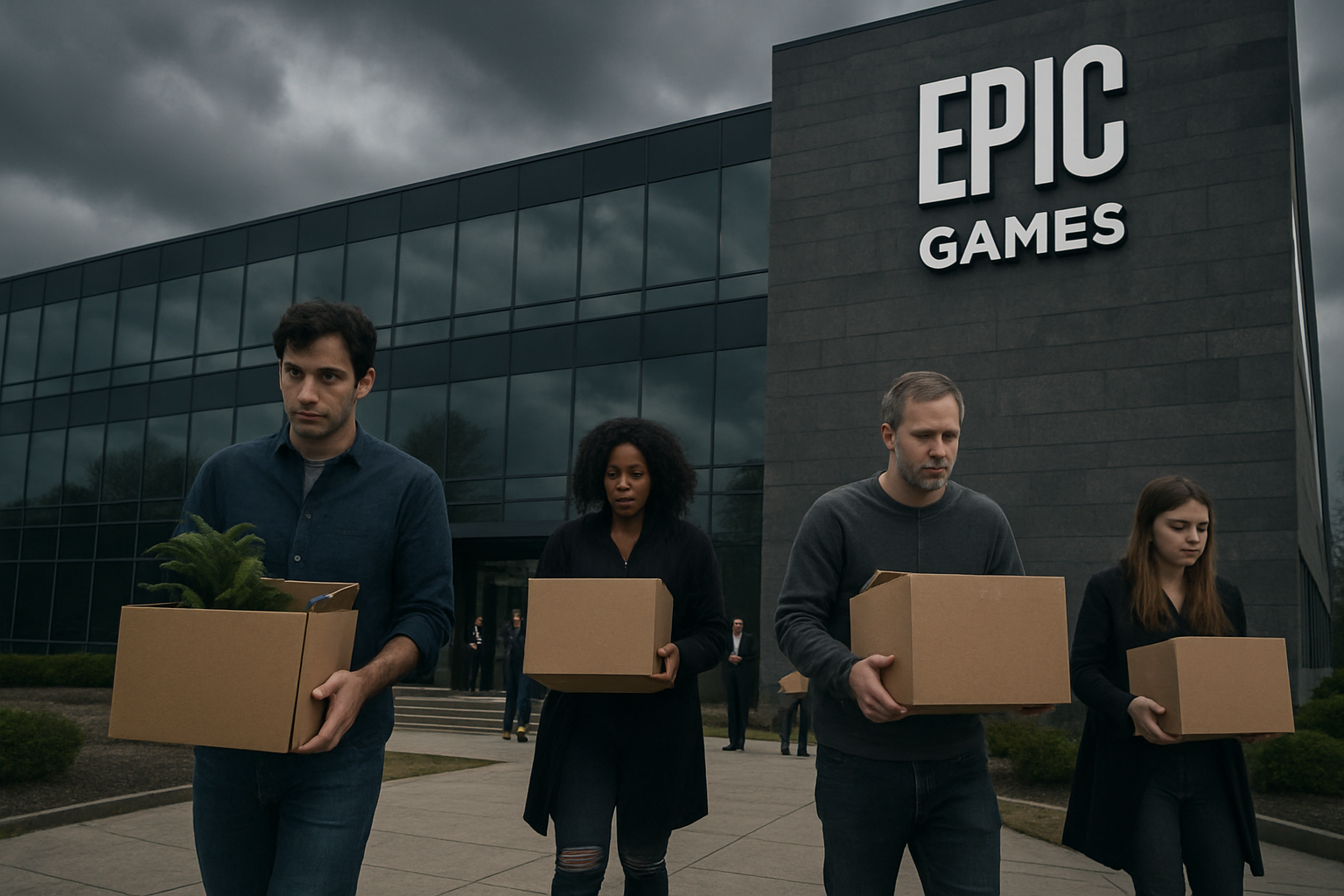
Epic Games announced it will eliminate more than 1,000 jobs following a significant drop in Fortnite engagement, marking the latest major workforce reduction in the video game industry as companies grapple with stalled growth and mounting economic uncertainty.
The layoffs affect Epic Games' workforce as the company confronts declining user engagement for its flagship battle royale game Fortnite, according to sources familiar with the situation. The decision comes as the gaming industry faces unprecedented challenges including global semiconductor shortages, rising development costs, and shifting consumer preferences.
Industry Context and Timing
Epic Games' workforce reduction occurs during what industry analysts have termed the "2026 Gaming Technology Renaissance" - a period marked by both innovation and significant structural challenges. The gaming sector has experienced a wave of layoffs throughout early 2026, with companies ranging from traditional developers to AI-focused platforms restructuring their operations.
The announcement follows a broader pattern of workforce reductions across the technology sector, including Block Inc.'s elimination of 4,000 positions (40% of its workforce) in February 2026, explicitly citing AI advancement as the primary driver. The gaming industry has been particularly vulnerable to these disruptions as companies balance rising development costs with changing player behaviors.
Fortnite's Declining Engagement
Fortnite, which launched as a cultural phenomenon and revolutionized the battle royale genre, has seen its user engagement numbers decline significantly over recent months. The game, which once boasted hundreds of millions of active players worldwide, has faced increased competition from newer titles and changing gaming preferences among younger demographics.
Industry sources suggest that the decline in Fortnite usage has been particularly pronounced in key demographic segments, with players migrating to alternative gaming platforms and experiences. This shift has directly impacted Epic Games' revenue streams, which rely heavily on in-game purchases and seasonal content updates.
"Epic Games will cut more than 1,000 jobs following a drop in engagement for Fortnite, the latest layoffs in the video game industry where growth has stalled due to economic uncertainty."
— CBC News Report, March 24, 2026
Global Gaming Industry Challenges
The layoffs at Epic Games reflect broader challenges facing the global gaming industry in 2026. Companies worldwide are contending with a confluence of factors that have created an extraordinarily difficult operating environment:
- Global semiconductor shortage driving memory chip prices up sixfold, affecting hardware production until 2027
- Consumer electronics costs increasing 20-30% over the past year
- Platform consolidation trends forcing smaller studios to compete with mega-platforms
- Rising development costs for AAA games and live-service titles
- Regulatory intensification across multiple jurisdictions
The memory crisis has been particularly devastating for gaming hardware manufacturers and software developers alike. Samsung, SK Hynix, and Micron are operating at full capacity but remain unable to meet explosive demand from AI development and data center operations, creating supply bottlenecks that have cascaded throughout the gaming ecosystem.
Tim Sweeney's Strategic Response
According to French media reports, Epic Games CEO Tim Sweeney announced the workforce reduction as part of a broader plan to "stabilize the company's finances." The decision represents a significant strategic pivot for Epic Games, which has been one of the most aggressive investors in metaverse technology and digital infrastructure over the past several years.
Sweeney's approach contrasts with some competitors who have pursued alternative strategies during the current crisis. While Epic Games is reducing its workforce, other companies have focused on platform consolidation, with some gaming platforms now operating over 6,000 games from dozens of providers as comprehensive entertainment destinations.
Industry Transformation and AI Impact
The gaming industry is experiencing what experts describe as the most significant transformation since the mobile gaming revolution. The emergence of AI-powered game development tools has created both opportunities and challenges for traditional developers. Some companies have successfully integrated AI as enhancement tools, while others have struggled to adapt to the rapidly changing technological landscape.
The "SaaSpocalypse" phenomenon that eliminated hundreds of billions in market capitalization from traditional software companies throughout early 2026 has also affected gaming companies. AI systems increasingly demonstrate capabilities to replace conventional game development functions, from asset creation to procedural content generation.
Regional Market Variations
The impact of industry challenges varies significantly across global markets. While Western companies have largely pursued traditional layoff strategies, Asian gaming companies have implemented comprehensive worker transition programs emphasizing reskilling over displacement.
Chinese companies like Unitree Robotics have scaled production from 5,500 to 20,000 humanoid robot units, creating employment opportunities even as automation displaces workers elsewhere. This regional variation highlights different approaches to managing technological transformation and workforce adaptation.
Platform Evolution and Competitive Landscape
The gaming industry has evolved from specialized gaming services to comprehensive entertainment destinations that compete directly with traditional streaming platforms. Major platforms now offer thousands of games across multiple categories, sophisticated mobile-first optimization, and AI-powered personalized recommendations.
Epic Games faces intensifying competition from platforms that have successfully navigated the current crisis through diversification and technological innovation. The company's reliance on Fortnite as a primary revenue driver has become a vulnerability in an environment where platform consolidation favors companies with diverse game portfolios.
Economic and Infrastructure Constraints
The global infrastructure crisis has created unexpected challenges for gaming companies. World Bank projections indicate that AI development will require 4.2-6.6 billion cubic meters of water annually by 2027 for data center cooling operations - equivalent to 4-6 times Denmark's total water consumption.
These infrastructure constraints have forced gaming companies to develop more memory-efficient algorithms and alternative deployment strategies. Some companies have thrived under these constraints by developing innovative approaches to cloud computing and AI integration, while others have struggled to adapt.
Future Implications for Epic Games
The workforce reduction at Epic Games represents a critical test of the company's ability to navigate the current industry transformation. The success or failure of this restructuring will likely influence strategic decisions across the gaming industry as companies seek sustainable business models in an increasingly challenging environment.
Epic Games' future strategy will need to address several key challenges: diversifying revenue streams beyond Fortnite, adapting to new technological paradigms including AI integration, and competing effectively in an increasingly consolidated market dominated by platform operators with vast game libraries.
Industry Outlook
March 2026 represents what industry experts characterize as a "civilizational choice point" for the gaming industry. The decisions made by major companies like Epic Games during this period will determine whether the industry serves human creativity and entertainment needs or becomes primarily focused on automation and cost reduction.
Successful companies appear to be those that treat technology as amplification tools for human creativity rather than wholesale replacement mechanisms. The most promising approaches maintain sustained human development commitments while leveraging technological advantages to enhance rather than diminish the gaming experience.
The Epic Games layoffs serve as a stark reminder of the gaming industry's current volatility and the urgent need for companies to develop resilient, adaptable business models that can thrive amid ongoing technological and economic disruption. As the industry continues its transformation, the fate of Epic Games and similar companies will provide crucial insights into the future of interactive entertainment and digital creativity.