The US Department of Justice faces mounting scrutiny from Democratic lawmakers over allegations that it deliberately withheld sensitive Epstein documents containing references to former President Donald Trump, as Hillary Clinton prepares to testify before Congress in what has become the largest international elite criminal network investigation in recent memory.
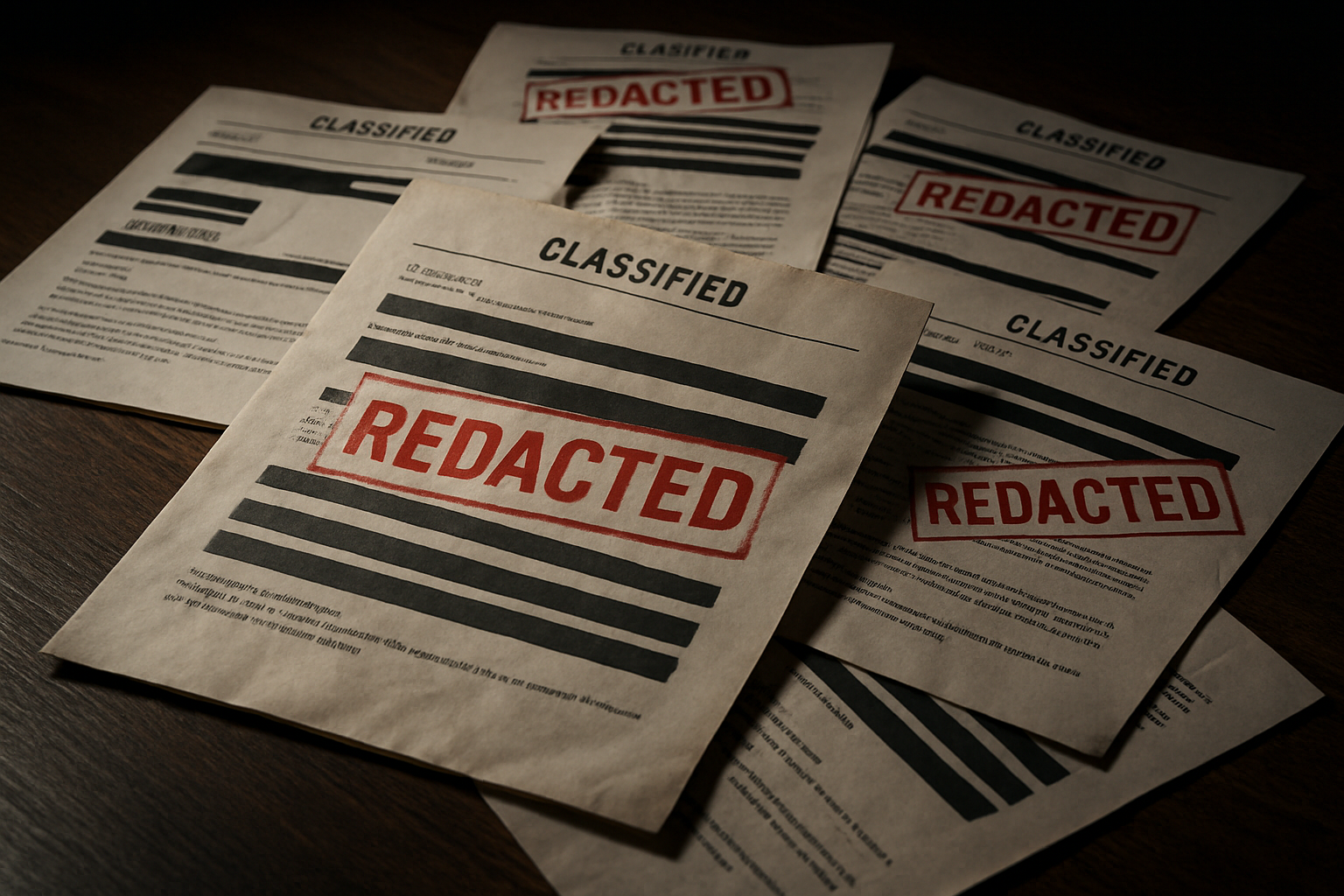
An NPR investigation revealed that dozens of pages from the Epstein files mentioning sexual assault allegations against Trump appear to be missing from the public record, prompting House Oversight Committee member Robert Garcia to flag the apparent gaps and demand explanations from the Justice Department.
Missing Documents Raise Questions
According to reports from multiple international sources, including Le Monde and NPR, the Justice Department prevented the publication of documents related to allegations that Trump sexually assaulted a minor. French media reports indicate these materials were specifically removed from the massive document release that has shaken political establishments across six countries.
Representative Robert Garcia, a Democratic member of the House Oversight Committee, has been leading the charge to understand why these documents were excluded. Sources indicate that the missing materials relate to testimony from a woman who accused Trump of assault decades ago, allegations that Trump has consistently denied.
"This Wednesday it has emerged that there could be missing information in the Epstein Files, in particular relating to a woman who accused Donald Trump of sexual assault decades ago."
— France 24 Report
The controversy comes as Deputy Attorney General Todd Blanche has confirmed that no new federal prosecutions are planned despite what he described as "disturbing" material in the files, citing "technical and human errors" in the document handling process.
International Investigation Expands
The Epstein documents scandal has triggered unprecedented international investigations across multiple countries. European law enforcement officials describe it as the "largest international elite criminal network exposure in recent memory," with active criminal investigations now underway in Latvia, Lithuania, Estonia, Poland, Norway, and France.
In Latvia, President Egils Levits has declared the human trafficking investigation into the "Natalie" modeling agency a national priority. Polish Justice Minister Waldemar Żurek has confirmed evidence of recruitment activities targeting "women, possibly minors" on Polish soil, while Estonia investigates an "agent" who operated across all three Baltic countries.
The Norwegian crisis has reached unprecedented levels, with Crown Princess Mette-Marit mentioned over 1,000 times in the documents and facing potential criminal proceedings from the country's anti-corruption unit, Økokrim. The scandal has already forced the resignation of Jack Lang from the Arab World Institute in France following a criminal investigation into a €50,000 offshore transfer connected to Epstein.
Clinton Testimony Scheduled
Meanwhile, Hillary Clinton is scheduled to testify before Congress regarding the Epstein investigation, marking a significant development in the ongoing probe. Venezuelan sources confirm that both Bill and Hillary Clinton will appear - Hillary on Thursday and Bill on Friday, making Bill Clinton the first former president compelled to testify in a congressional investigation of this nature.
The Clinton testimonies come after months of resistance to congressional subpoenas, with the couple finally agreeing to appear under oath to avoid potential contempt of Congress charges. The hearings are expected to focus on Bill Clinton's documented flights on Epstein's private aircraft and both Clintons' knowledge of any criminal activities.
Corporate and Political Fallout
The scandal has claimed high-profile victims in the corporate world. Goldman Sachs top lawyer Kathy Ruemmler resigned after emails revealed she called Epstein "big brother" and minimized his crimes. DP World CEO Sultan Ahmed bin Sulayem was forced out after being named over 9,400 times in the documents as Epstein's "most trusted friend," leading to investment suspensions from major institutional funders.
In the tech sector, revelations of a 2015 dinner between Epstein and Silicon Valley leaders Mark Zuckerberg, Elon Musk, and Peter Thiel - described by Epstein as "crazy" - have raised questions about the network's penetration into the highest levels of the technology industry.
Victim Protection Failures
The Justice Department's handling of the investigation has faced severe criticism over what officials acknowledge as a "catastrophic" victim protection failure. The DOJ accidentally exposed the identities of approximately 100 survivors, including 31 minors, through what Deputy AG Blanche described as "technical and human error."
Federal judges are now hearing emergency petitions from victims' advocates over the confidentiality breach, which threatens to undermine future law enforcement cooperation and victim willingness to come forward.
Disinformation Challenges
The investigation has been complicated by sophisticated disinformation campaigns. French authorities have detected Russian-linked operations creating false connections between world leaders and Epstein, while artificial intelligence tools can now generate convincing fake images of such meetings "in seconds," according to security experts.
These campaigns appear designed to protect actual perpetrators while undermining legitimate investigations through the spread of false information that complicates verification efforts.
Democratic Accountability Test
Legal experts and international observers characterize the Epstein investigation as a fundamental test of democratic institutions' ability to hold powerful figures accountable regardless of their political connections, financial resources, or international standing.
Enhanced cooperation between European law enforcement agencies has set new precedents for transnational criminal investigations, though significant challenges remain including diplomatic immunity protections, institutional resistance, and complex jurisdictional issues.
The investigation represents what many consider a defining moment for 21st-century international justice cooperation, with the resolution likely to establish crucial precedents for how democratic institutions respond to sophisticated transnational elite criminal networks.
Looking Forward
As more document releases are expected and investigations continue across multiple continents, the ultimate question remains whether this unprecedented exposure of elite criminal networks will lead to meaningful accountability or whether it will demonstrate the continued impunity of powerful figures despite massive public scrutiny.
The coming weeks, with Hillary Clinton's testimony and ongoing international investigations, will likely prove decisive in determining whether democratic institutions can effectively address transnational elite criminal behavior or whether existing power structures will once again prove too resilient to meaningful reform.